
 EN
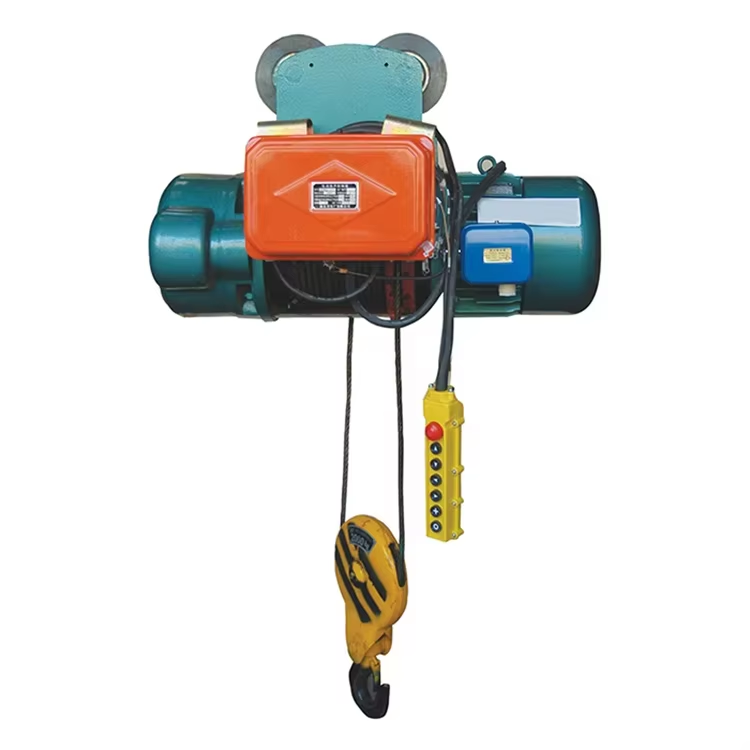
Wire Rope Degradation: Abrasion, Corrosion, and Fatigue Failures
On an electric wire rope hoist, rope degradation typically progresses through three interacting mechanisms: abrasion, corrosion, and fatigue. Each leaves distinct inspection clues and requires a different maintenance response.
Abrasion from misaligned sheaves, improper reeving, or contaminated drum surfaces
Abrasion occurs when the rope rubs against misaligned sheaves, tight grooves, or abrasive contaminants—such as sand, metal fines, or hardened grease—on drum surfaces. Misalignment and improper reeving increase fleet angle, causing the rope to scrape flange edges or adjacent wraps. Visual signs include flat, polished wear facets on outer wires or broken ends worn to knife-edge thickness. This wear reduces rope diameter and breaking strength while creating stress risers that accelerate crack initiation. Maintain sheave alignment, verify groove size matches rope diameter, and clean contact surfaces on schedule. Replace the rope when visible outer-wire wear reaches discard limits specified in ISO 4309 or your jurisdiction’s applicable standard.
Corrosion accelerated by moisture, salt, or chemical exposure in coastal or industrial settings
Corrosion begins as surface pitting when moisture, salt spray, or chemical vapors breach the lubricant film—especially in coastal or chemical processing environments where chlorides, acids, or alkaline agents accelerate attack. Pitting reduces effective wire cross-section, concentrates stress at pit bases, and creates fatigue crack initiation sites. Internal corrosion is particularly dangerous because it remains hidden between strands while the exterior appears sound. Inspectors should look for reddish-brown staining, flaking, or unexplained diameter reduction—and must not rely solely on visual checks in aggressive conditions. Correct lubrication, scheduled cleaning, and dry storage reduce corrosion risk. In severe exposure, specify galvanized or stainless steel rope grades and confirm the hoist’s environmental rating aligns with operating conditions.
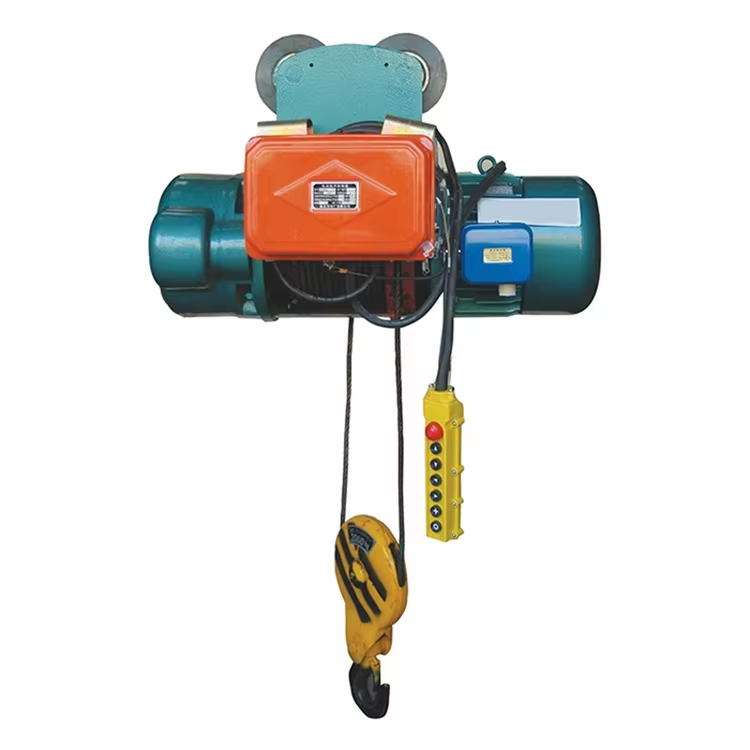
Fatigue failure due to cyclic bending; NDT inspection guidelines per ISO 4309
Fatigue is the most common rope failure mode in electric wire rope hoists, driven by repeated bending over sheaves and drums during each lift cycle. Cracks initiate in individual wires and grow perpendicular to the wire axis. Fatigue breaks often show square or flat ends and cluster at high-stress zones—particularly where the rope contacts sheaves or enters the drum groove. Smaller sheave-to-rope diameter ratios, reverse bends, and vibration all increase cyclic stress. ISO 4309 sets internationally recognized discard criteria for visible broken wires, diameter loss, and localized damage. Nondestructive Testing (NDT) methods such as magnetic flux leakage can detect internal wire breaks before they become visible. Record rope service history, inspect high-cycle zones regularly, and retire the rope before accumulated fatigue breaks reach ISO 4309’s discard limit.
Drive-Train Failures in the Electric Wire Rope Hoist
Drive-train failures in an electric wire rope hoist generally originate in the motor, gearbox, or brake assembly.
Motor faults: voltage imbalance, bearing wear, and insulation breakdown (megger-tested)
Voltage imbalance is a leading cause of stator overheating. NEMA MG 1 limits continuous-duty motors to 1% voltage imbalance; a 5% imbalance can raise winding temperature rise by roughly 50%. Inspect phase-to-phase voltages at the hoist disconnect. Bearing wear results from inadequate lubrication, misalignment, or contaminated grease. Vibration increases as bearing clearance grows; ISO 10816-3 provides severity thresholds, and a rising trend near 4.5 mm/s RMS warrants inspection. Replace bearings when radial play exceeds 0.05 mm or metallic debris appears in the grease. Insulation breakdown stems from moisture, carbon dust, or thermal aging. Megger testing uses a 500 V or 1,000 V DC insulation resistance tester. IEEE 43-2013 recommends a minimum of 1 MΩ per kV plus 1 MΩ at operating temperature. Values below 2 MΩ on a 460 V hoist indicate the need for cleaning or re-varnishing. Trend megger readings over time—a 50% drop between tests signals developing fault.
Gearbox issues: oil leakage, gear pitting, and lubrication errors per DIN 3990
Oil leakage commonly originates from worn seals or blocked breathers. Check for puddles beneath the hoist and verify oil level via the sight glass. Gear pitting appears as small craters on tooth flanks. DIN 3990 permits micro-pitting only if no macro-pitting develops; progressive pitting beyond 5% of tooth area requires gear replacement. Lubrication errors—including wrong viscosity, overfilling, and infrequent changes—accelerate wear. Use ISO VG 220 or 320 gear oil unless the hoist manual specifies otherwise. Oil analysis showing iron above 150 ppm or water above 0.1% indicates abnormal wear or ingress. Change oil after 500–1,000 operating hours or annually. Keep breather filters clean to prevent pressure buildup and seal blowout.
Brake system failure: worn linings, excessive air gap (>0.3 mm), or coil burnout
Brake lining wear reduces stopping torque and compromises load-holding safety. Measure lining thickness; replace when worn to 50% of original thickness or when rivet heads become visible. Air gap between armature and brake disc must remain below 0.3 mm. Wider gaps increase coil current, delay braking, and cause load drift. Adjust the gap per the hoist manual using a feeler gauge. Coil burnout results from overvoltage, dust accumulation on the armature, or prolonged holding of the brake open via the motor circuit. Check coil resistance with a multimeter; a reading outside ±10% of nameplate value indicates damage. Keep the brake enclosure clean and verify rectifier output. A slipping brake unable to stop the rated load—even after adjustment—signals mechanical failure, not a control issue.
Electrical Control and Power Supply Faults in Electric Wire Rope Hoists
Electrical control and power supply faults often halt an electric wire rope hoist before mechanical components fail. The sections below separate no-operation causes from supply-side anomalies.
No-operation causes: control station failure, welded contactors, or emergency stop circuit faults
When the hoist will not start, begin troubleshooting at the control station. Worn buttons, damaged pendants, or faulty radio receivers can block the run command. Welded contactors may hold contacts closed—or prevent opening—causing either no motion or uncontrolled movement. Test contactor continuity and replace pitted contacts. Emergency stop circuits fail through broken wires, loose terminals, or an engaged stop button. Confirm the emergency stop loop closes before resetting. A simple diagnostic sequence isolates these faults: check control transformer output, measure contactor coil voltage, and test emergency stop circuit resistance. These steps help avoid unsafe resets and repeated downtime.
Power supply anomalies: undervoltage (<90%), phase loss, and grounding faults tripping thermal relays
Undervoltage below 90% of rated voltage causes contactor dropout and motor overheating. A loose terminal can mimic undervoltage by adding resistance, so tighten connections before further testing. Phase loss leads to single-phasing, rapid current rise, and thermal relay trips. Grounding faults leak current and may trip protective devices before major damage occurs. Check supply voltage at the hoist disconnect under load, inspect phase rotation and fuses, and megger motor and feeder insulation. Set the thermal relay to the motor’s full-load current and verify its trip class matches application requirements. Routine supply-quality monitoring prevents these electrical faults from damaging the hoist.
Operator-Induced Faults and Improper Use of Electric Wire Rope Hoists
Most electric wire rope hoist failures are not sudden manufacturing defects—they develop from operator habits, improper rigging, or skipped inspections. Side pulling is among the most damaging mistakes: a pull more than 3 degrees from vertical forces the rope out of drum grooves, risking pile-up, pinching, or crushing.
| Operator error | Immediate risk | Corrective action |
|---|---|---|
| Side pull >3° from vertical | Rope jumps drum grooves, pinches, or crushes | Lower the load, reseat rope, and inspect before lifting |
| Exceeding rated capacity | Overstress rope, brake, and gearbox | Verify load weight and stay within the rated limit |
| Shock loading or sudden reversal | Kinks, birdcaging, and rope overlap | Lift and stop smoothly; avoid fast direction changes |
| Lifting with slack rope or unbalanced rigging | Rope kinks, drum crossover, and load swing | Remove slack, balance the load, and lift straight up |
| Dragging or pulling loads sideways | Lateral force on drum, sheaves, and rope | Position the hoist directly above the load |
Training is the strongest safeguard against operator-induced faults. Operators must understand load limits, control station functions, emergency stop operation, and early warning signs—such as rope misalignment, brake drag, or unusual noise. If a wire rope jumps a groove, lowering and reseating it is insufficient if strand breaks or deformation are already present; in those cases, the rope must be removed from service immediately. Consistent observation, documented inspections, and strict adherence to vertical lifting practices keep the electric wire rope hoist operating safely.
FAQ
Why is abrasion dangerous for wire ropes?
Abrasion reduces the rope’s diameter and breaking strength. It also creates stress risers, accelerating crack initiation and increasing the risk of rope failure during operation.
How does corrosion affect wire ropes?
Corrosion reduces the rope’s effective wire cross-section, creates pitting, and serves as initiation sites for fatigue cracks. This can compromise the strength and safety of the wire rope, especially in coastal or industrial environments.
What is fatigue failure in wire ropes?
Fatigue failure occurs due to cyclic bending of ropes over sheaves and drums during repeated lift cycles. Cracks form and grow in individual wires, especially in high-stress zones, potentially leading to rope failure.
What are common issues with the motor in electric wire rope hoists?
Common motor issues include voltage imbalance, bearing wear, and insulation breakdown, all of which can lead to overheating, reduced lifespan, and potential faults in the hoist.
How can operator error cause electric wire rope hoist failures?
Operator errors such as side pulling, exceeding load limits, sudden direction changes, or lifting with slack rope can damage the rope, brake system, and other components. Proper training and adherence to safety protocols can mitigate these risks.