
 EN
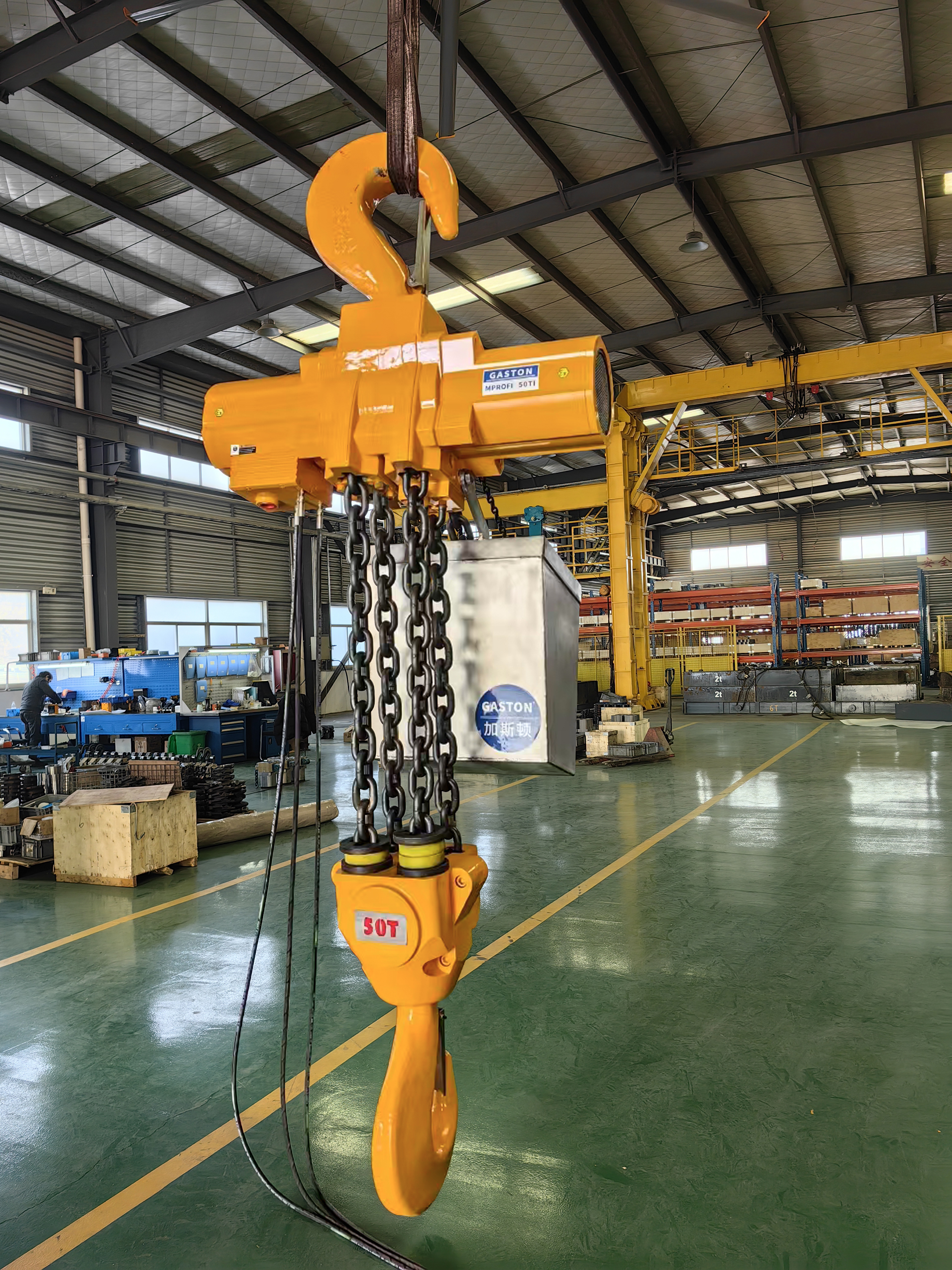
Conduct Rigorous, Standards-Based Wire Rope Inspections
Inspection Frequency and Protocol: Visual Checks vs. NDT Methods per ISO 4309
An electric wire rope hoist demands a tiered inspection protocol aligned with ISO 4309. Routine visual checks are the first line of defense: operators must examine the full rope length before each shift under adequate lighting, focusing on termination points, drum and sheave contact zones, and areas prone to standing moisture. While fast and equipment-free, visual methods cannot reliably detect internal wire breaks or core decay. For deeper assessment, non-destructive testing (NDT)—particularly electromagnetic inspection—classifies defects into loss-of-metallic-area (LMA) and localized-flaw (LF) categories. ISO 4309 ties inspection intervals to service class, load spectrum, and environmental exposure. In practice, many jurisdictions follow OSHA’s monthly requirement and ASME B30.2’s daily visual guidance; high-duty or corrosive environments may warrant weekly—or even daily—NDT spot checks. A qualified inspector should document baseline diameter, rope lay length, and anomaly trends to identify progressive deterioration, not just isolated flaws.
Critical Defect Thresholds: Broken Wires, Corrosion Depth, and Deformation Limits
ISO 4309 defines mandatory discard thresholds for all in-service hoist ropes. Broken wires are assessed per rope lay length or per strand: a common visible limit is six randomly distributed broken wires in one lay length—or three in one strand—though exact values depend on rope construction and duty class. Corrosion becomes critical when pitting or surface scaling reduces nominal diameter by ≥7%, as internal core degradation often exceeds external signs. Deformation limits include kinks, bird caging, flattening, and local diameter reduction exceeding 5–10% of nominal diameter. Shear fractures, heat discoloration, or electric arc damage require immediate removal from service. Each defect must be evaluated against original diameter and documented trend. Critically, multiple sub-threshold defects in the same section—e.g., two broken wires plus moderate corrosion—can collectively accelerate fatigue and trigger discard criteria. Operators must never extend service beyond ISO 4309 limits to meet production demands.
Apply Precision Lubrication to Maximize Electric Wire Rope Hoist Rope Longevity
Penetrating vs. Coating Lubricants: Selecting the Right Formula for Load Cycles and Environment
Precision lubrication begins with matching lubricant type to operating conditions. Penetrating lubricants use low-viscosity carriers to wick into the rope core and internal strands, reducing fretting wear between wires during flexing over sheaves and drums. Coating lubricants form a higher-viscosity surface film that seals out moisture, dirt, and chemical splash—preserving external metal surfaces. In high-cycle operations with frequent bending, internal wear dominates, making penetrating lubricants essential. In low-cycle but highly corrosive environments, a robust coating layer offers superior protection. For high-load, high-cycle lifting, maintenance teams often apply a penetrating lubricant first to replenish the core, then follow with a coating layer for environmental defense—a dual-step method proven especially effective in dusty, humid, or outdoor settings. Using only a surface coating on deep-travel ropes risks starving internal strands and accelerating fatigue. Final selection should reflect temperature range, environmental aggressiveness, and the hoist manufacturer’s lubricant specification.
Real-World Impact: EP-Grade Synthetic Grease Extends Rope Life by 42% in High-Duty Applications
Field data from 2023 shows that switching to an EP (extreme-pressure) synthetic grease extends wire rope service life by up to 42% in high-duty lifting operations. This gain stems from stable viscosity across temperature swings, lower inter-strand friction, and superior resistance to washout and oxidation. EP additives form a durable chemical barrier under heavy load, reducing metal-to-metal contact and preventing micro-pitting—the precursor to premature wire breaks. In repeated load cycles, this translates to longer inspection intervals and fewer replacements. Maintenance logs from high-cycle electric wire rope hoists also report less lubricant throw-off and cleaner working areas, supporting consistent film retention between scheduled applications. These benefits are most pronounced in steel mills, ports, and fabrication shops where hoists operate multiple shifts daily.
Select Optimal Wire Rope Construction for Your Electric Wire Rope Hoist Duty Profile
Matching Rope Lay, Strand Count (e.g., 6×19 vs. 6×36), and Core Type to Load Spectrum and Cycle Frequency
Rope geometry must match your electric wire rope hoist’s actual duty profile—not a generic catalog number. A 6×19 rope features fewer, larger outer wires, delivering high abrasion and crush resistance—ideal for low-cycle, heavy-load lifting with limited drum bending. A 6×36 rope has more, smaller wires and greater flexibility, better withstanding repeated bending over sheaves and drums in high-cycle applications. Core type further refines performance: fiber cores enhance flexibility but reduce crush resistance; independent wire rope cores (IWRC) maintain cross-sectional stability under high bearing pressure and improve fatigue life. Regular lay supports predictable spooling in single-layer hoists; lang lay suits guided, anti-twist systems. For example, a hoist performing thousands of short, repetitive lifts per shift requires a high-flexibility 6×36 IWRC rope—not a stiff 6×19 steel-core alternative. Use ISO 4309:2017 to align strand count, lay, and core with real-world load spectrum and cycle frequency.
Ensure Motor–Rope System Compatibility to Prevent Premature Wear
Torque, Braking Response, and Drum Groove Geometry: Avoiding Rope Twist and Fatigue Amplification
Motor–rope compatibility is foundational to rope longevity. Matching motor output torque to the rope’s rated load stabilizes acceleration and deceleration, minimizing shock loads that accelerate fatigue. On electric wire rope hoists, abrupt or poorly adjusted braking response can induce rope twist and localized strand stress. Similarly, incorrect drum groove geometry—mismatched to rope diameter or lay—causes misaligned spooling, increases lateral abrasion, and transfers torque along the rope. When these elements are incompatible, cyclic bending and twist amplify fretting wear and broken wires. Verify torque settings, braking ramp profiles, and groove dimensions during commissioning—and after any motor, brake, or drum replacement—to protect rope service life.
Frequently Asked Questions (FAQs)
Why are regular wire rope inspections important?
Regular inspections help identify defects like internal wire breaks, corrosion, and deformation early, reducing the risk of equipment failure and ensuring safety during operations.
What is the difference between visual checks and NDT methods?
Visual checks are quick, tool-free inspections performed daily, focusing on visible defects, while non-destructive testing (NDT) uses advanced tools like electromagnetic inspection to identify internal wear and tear.
What are ISO 4309 discard criteria for wire ropes?
Key discard criteria include six randomly distributed broken wires in one rope lay or three in one strand, diameter reduction due to corrosion by ≥7%, and deformation like kinks or birdcages exceeding 5–10% of the nominal diameter.
What type of lubricant should I use for a wire rope hoist?
Use penetrating lubricants for high-cycle operations to protect internal strands, and coating lubricants for low-cycle but highly corrosive environments to seal out external elements.
How can I match rope construction to my hoist’s requirements?
Select rope geometry based on duty profile. For low-cycle heavy loads with limited bending, 6×19 ropes are preferred. For high-cycle applications with frequent bending, 6×36 ropes with IWRC are better suited.
Why is motor–rope compatibility critical?
Proper motor torque, braking response, and drum groove geometry ensure smooth rope operation, prevent twist, reduce fatigue, and extend the rope's service life.
Table of Contents
- Conduct Rigorous, Standards-Based Wire Rope Inspections
- Apply Precision Lubrication to Maximize Electric Wire Rope Hoist Rope Longevity
- Select Optimal Wire Rope Construction for Your Electric Wire Rope Hoist Duty Profile
- Ensure Motor–Rope System Compatibility to Prevent Premature Wear
-
Frequently Asked Questions (FAQs)
- Why are regular wire rope inspections important?
- What is the difference between visual checks and NDT methods?
- What are ISO 4309 discard criteria for wire ropes?
- What type of lubricant should I use for a wire rope hoist?
- How can I match rope construction to my hoist’s requirements?
- Why is motor–rope compatibility critical?