
 EN
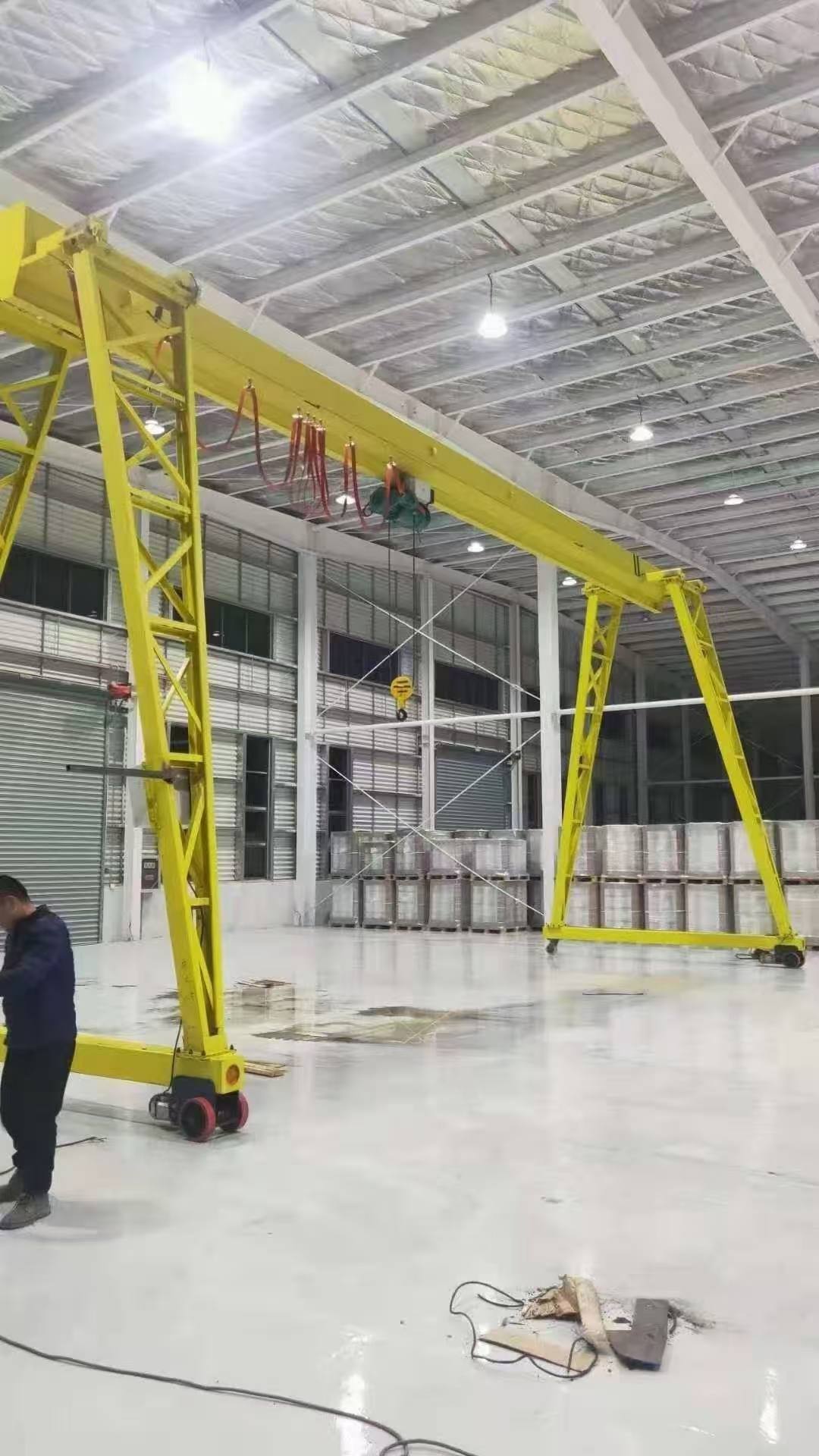
Portable Gantry Crane Fundamentals: Design, Mobility, and SME Fit
A portable gantry crane transforms material handling for small and medium enterprises by combining structural simplicity with effortless relocation. Unlike fixed overhead systems, these cranes do not anchor into the building—preserving floor space and eliminating the need for engineered foundations. Their core value lies in delivering safe, precise lifting where workflows shift and real estate is finite, making them a strategic fit for dynamic SME environments.
Modular Engineering for Rapid Deployment Without Structural Modifications
Portable gantry cranes rely on bolted, pre-engineered modular construction that enables full assembly in under an hour—no welding, drilling, or building alterations required. Main beams, legs, and casters ship as coordinated kits; adjustable height and span settings allow one unit to adapt across varying clearances and aisle widths. Standard capacities range from 0.5 to 5 tons—sufficient for most maintenance, assembly, and warehousing tasks. This plug-and-play design bypasses the cost and lead time of runway beams, concrete footings, or structural steelwork. SMEs can deploy the crane the same day it arrives, reposition it as production lines evolve, or disassemble it for storage during low-demand periods. With no permanent footprint, rented facilities remain unaltered—and the crane moves with the business if it relocates. The result is a lifting solution that scales with operational needs while minimizing both upfront investment and facility disruption.
Weight-to-Capacity Ratio and Foldable Geometry Enable True On-Site Flexibility
Modern aluminum or high-strength steel profiles deliver an exceptional strength-to-weight ratio: portable cranes lift heavy loads yet remain light enough for manual repositioning by one or two operators. Foldable leg designs and telescoping beams reduce the stowed footprint significantly—enabling passage through standard doorways and compact loading into service vans. Lockable polyurethane casters ensure smooth rolling on finished floors and positive locking during lifts, supporting single-operator movement between bays, assembly lines, or outdoor pads. In congested workshops, this geometry eliminates the need for dedicated travel paths—the crane folds and rolls aside when idle. The combination of low dead weight, collapsible structure, and compact storage ensures lifting capacity is available wherever the task arises—not just where infrastructure exists. This adaptability effectively turns every square meter of a facility into a potential production or service zone—without permanent obstruction.
Total Cost Advantage of Portable Gantry Cranes for SMEs
TCO Breakdown: 42% Lower 3-Year Expense vs. Fixed Overhead Systems
A portable gantry crane delivers substantial total cost of ownership (TCO) savings, with a 2023 industry analysis revealing a 42% lower three-year expense compared to fixed overhead systems. Savings begin at installation: no runway beams, building reinforcements, or structural permits are needed. A typical 2-ton portable unit becomes operational within hours—avoiding multi-week timelines and their associated labor costs. Maintenance is simpler, too: no permanently energized conductors or complex festoon systems mean fewer failure points and lower service bills.
| Cost Category | Portable Gantry (3‑Year) | Fixed Overhead (3‑Year) |
|---|---|---|
| Initial purchase & setup | $12,500 | $35,000 |
| Structural modifications | $0 | $8,000 |
| Maintenance & repairs | $2,100 | $4,800 |
| Relocation / reconfiguration | $1,200 | $18,000 (full re‑installation) |
| Total | $15,800 | $65,800 |
Even accounting for frequent repositioning between work zones, the portable design avoids dedicating floor space to a fixed crane bay—and keeps downtime negligible. These straightforward economics make the portable gantry crane a preferred choice for growing small and mid-sized enterprises.
Pay-As-You-Grow Configurations Eliminate Capital Lock-in and Obsolescence Risk
Portable gantry cranes support scalable investment: manufacturers can start with a basic manual-push frame and incrementally add powered travel, height-adjustable posts, or extended-span beams as demand grows—without discarding existing components. This modular expansion avoids obsolescence, since all parts remain interchangeable and upgrades install as quick field retrofits. When production lines shift or facilities relocate, the entire crane moves intact—eliminating de-installation costs and preserving full asset utility in any new layout or site. Several leading suppliers offer lease-to-own programs aligned with actual usage, further protecting working capital. By matching expenditure to real-time operational need, SMEs maintain financial agility while ensuring heavy-lifting capability remains continuously available.
Operational Impact: How Portable Gantry Cranes Solve Real SME Space and Workflow Challenges
Urban Facility Constraints: Replacing Forklift Workarounds in High-Density Warehouses
Urban SMEs often operate in aging, space-constrained warehouses with narrow aisles and limited overhead clearance—conditions where traditional forklifts pose safety risks and consume excessive maneuvering space. A portable gantry crane sidesteps these bottlenecks entirely: its compact footprint and caster-wheel mobility let a single operator lift 1–2-ton loads through standard doorways, eliminating the 3-meter turning radius required by counterbalance forklifts. Unlike permanently installed overhead systems, it requires no roof reinforcement or runway steel—saving $15,000–$20,000 in building modifications, according to the Material Handling Industry Association (MHIA) 2023 report. The crane folds down in minutes and stores against a wall, reclaiming floor space otherwise left idle. A 2023 MHIA survey found that facilities adopting portable gantry cranes reduced aisle-blocking incidents by 40% and increased usable storage density by nearly 30%, because loads can be placed directly onto high shelving without the lateral drift common to mast-based equipment. This plug-and-play approach lets SMEs in dense industrial districts maintain lean operations while avoiding the rigid infrastructure investments that hinder rapid scaling.
Cross-Functional Use Cases: From Assembly Line Positioning to Maintenance Bay Repairs
A single portable gantry crane serves multiple functions as workstations change. On an assembly line, it precisely lowers a 500-kg motor housing into a fixture; then, wheeled 20 meters to a maintenance bay, it lifts an engine block off a pallet for overhaul. Engineered with height-adjustable A-frames and locking casters, the crane transitions from a low-profile positioner to a tall-reach repair tool in under five minutes. This versatility eliminates the need for dedicated floor cranes in each zone—a cross-functional capability that Plant Engineering (2024) credits with reducing capital spend by up to 60% versus fixed bridge systems. In repair cells, technicians use the same crane for component removal and reinstallation, cutting turnaround time on pumps, compressors, and similar equipment by an average of 25%, since they no longer wait for access to a permanently assigned overhead unit. Serving assembly, kitting, and maintenance areas sequentially keeps the crane fully utilized across shifts—extracting maximum value from a single, low-cost asset without locking the SME into a rigid, inflexible layout.
FAQ
What is a portable gantry crane?
A portable gantry crane is a mobile lifting solution that offers material handling flexibility for small and medium enterprises. It can be easily assembled, disassembled, or repositioned without permanent structural modifications to the facility.
What are the primary advantages of portable gantry cranes?
The main advantages include cost savings, modular design for quick setup, mobility, and flexibility to adapt to varying operational needs. They are cost-efficient and do not require structural reinforcements or dedicated crane bays.
How do portable gantry cranes contribute to cost savings?
They eliminate the need for costly structural modifications, runway beams, and long setup times. A modular design allows businesses to scale their investment without obsolescence risk. Maintenance and relocation costs are significantly lower compared to fixed systems.
Are portable gantry cranes suitable for congested spaces?
Yes, their compact, foldable design and lockable casters make them ideal for space-constrained environments like urban warehouses and workshops.
What industries benefit the most from portable gantry cranes?
Industries such as manufacturing, warehousing, maintenance, and repair services find portable gantry cranes highly versatile and cost-efficient, especially where rapid workflow changes and flexible solutions are critical.