
 EN
EN
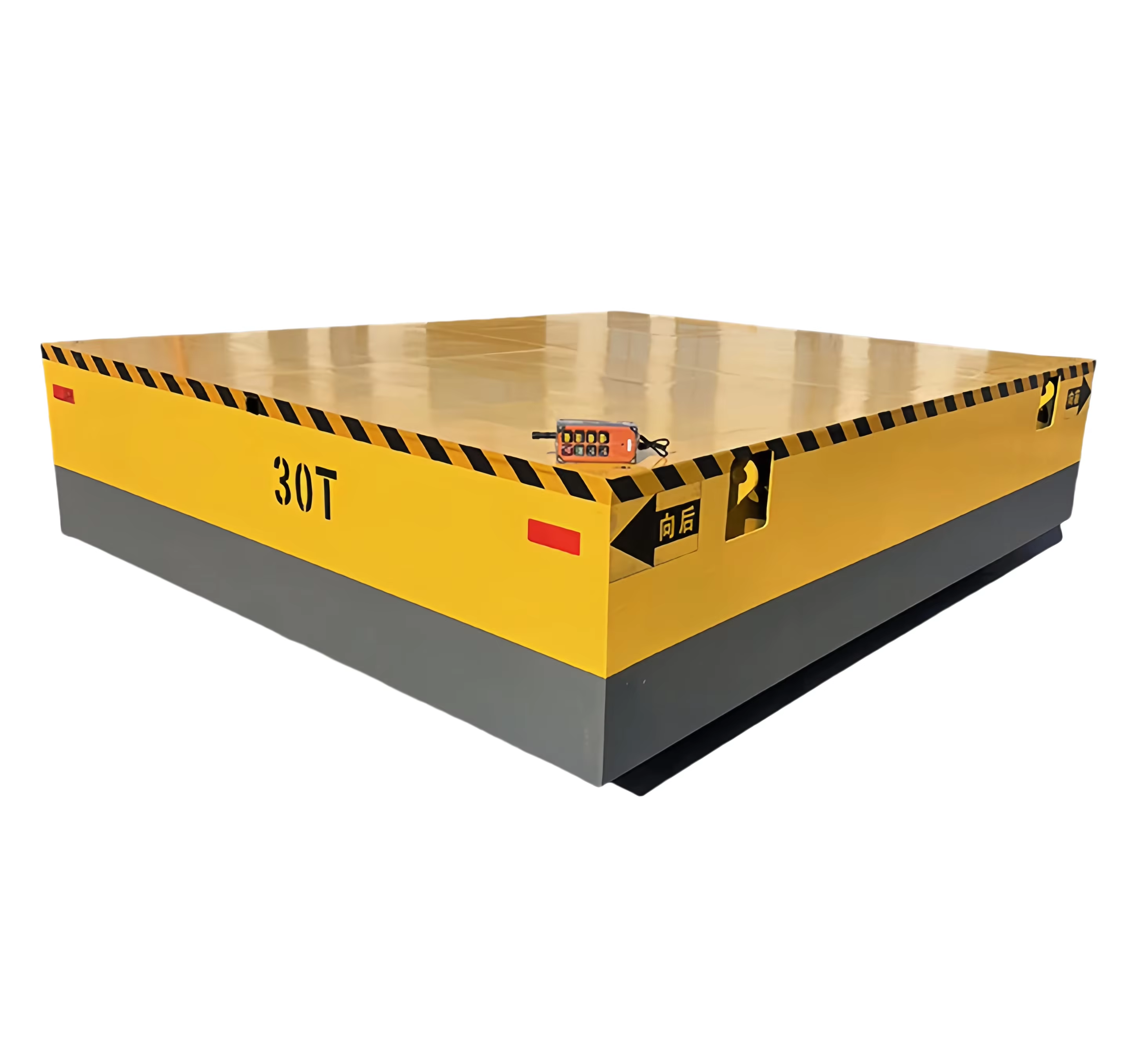
Why Electric Flat Car Systems Deliver Superior Precision Lifting in Automated Production
Sub-millimeter repeatability and dynamic load stability in high-mix, high-velocity assembly lines
Electric flat car systems can position themselves within fractions of a millimeter thanks to their servo driven lifting mechanisms. These systems stay stable even when handling loads over two tons, which is impressive considering what they're asked to do. The level of precision matters a lot on fast moving assembly lines. Traditional hydraulic or pneumatic lifters have problems keeping things aligned properly, leading to around 18% rework because parts don't fit right after all. Modern systems come equipped with anti sway tech plus real time feedback that helps counteract those pesky inertial forces whenever the system speeds up or slows down. This means factories running multiple product types at once still get consistent output without constant adjustments.
Performance comparison: Electric flat car vs. hydraulic/pneumatic lifters in cycle time, energy use, and maintenance overhead
Electric systems outperform hydraulic and pneumatic alternatives across three critical operational metrics:
| Performance Factor | Electric System | Hydraulic/Pneumatic |
|---|---|---|
| Cycle Time | 15% faster positioning | Lag from pump pressurization |
| Energy Consumption | 30% lower (regenerative braking) | Constant pump operation |
| Annual Maintenance | 8 hours (sealed bearings) | 40+ hours (fluid/valve servicing) |
Eliminating hydraulic fluid reduces contamination risks in cleanroom environments and cuts annual disposal costs by $7,200. Servo motors further support predictive maintenance through current monitoring—contrasting sharply with the reactive repair cycles of hydraulic systems, which incur three times more unplanned downtime.
Intelligent Monitoring and Predictive Capabilities Built into the Electric Flat Car
Real-time sensor fusion (load, tilt, vibration) for adaptive servo control and safety-critical feedback
Modern electric flat cars come equipped with multiple axis sensors that constantly check how loads are distributed across the platform, detect any tilting, and measure vibrations happening all around them. When these sensors work together, they allow for real time adjustments through servo controls. If there's a tilt detected, the system quickly redistributes torque to balance out weight shifts. Vibration analysis helps spot problems with surfaces or mounting points long before those issues start affecting where things end up positioned. Safety measures kick in automatically whenever unusual shaking goes beyond certain limits, which stops potential tip over accidents close to people working nearby while still keeping production moving at good speeds. What we get from this setup is consistent positioning accuracy down to fractions of a millimeter, plus round the clock safety standards maintained even when humans and machines share workspace areas.
Motor current signature analysis enabling predictive maintenance—reducing unplanned downtime by up to 42%
The shift from reactive to predictive maintenance comes through Motor Current Signature Analysis, or MCSA for short. When we look at those harmonic patterns in how servo motors draw current, MCSA can spot early signs of bearing wear or problems with windings long before anything actually breaks down. For instance, when sideband amplitudes start creeping upward, that's often an early warning sign. Most systems now come with dashboards built right in, showing alerts based on how serious the issue is. This lets maintenance crews plan their fixes around regular shutdown periods instead of scrambling at midnight. Plants that have implemented MCSA tell us they're seeing roughly 42% fewer unexpected stoppages, repairs cost way less money overall, and machines just last longer in general. These improvements translate directly into better production runs and getting more value out of those expensive automation systems over time.
Seamless Integration of Electric Flat Car Systems into Smart Factory Ecosystems
Native PLC and EtherCAT/PROFINET compatibility for synchronized operation with conveyors, AGVs, and collaborative robots
Modern electric flat car systems feature native PLC integration and support for industrial Ethernet protocols—including EtherCAT and PROFINET—enabling plug-and-play synchronization with broader material handling ecosystems. This open architecture eliminates proprietary gateways and reduces commissioning time by 30–50%. Real-time data exchange allows:
- Conveyor belt speeds to auto-adjust based on flat car position and velocity
- AGV routing algorithms to dynamically defer or reroute around active lifting zones
- Collaborative robots to receive precise, low-latency positional data for seamless part transfer
Unified control is achieved through a single HMI, granting production managers centralized visibility into material flow and maintenance teams cross-system diagnostic access. Such interoperability is essential for sub-second coordination in high-velocity assembly—and provides long-term scalability as production requirements evolve.
Scalable, Modular Electric Flat Car Platforms for Diverse Production Needs
Electric flat car systems built on modular architectures empower manufacturers to scale capacity incrementally—adding standardized lifting modules without facility retrofits. This phased approach mitigates capital risk during demand volatility while preserving line throughput.
Modularity also accelerates product changeovers: interchangeable fixtures and servo components enable full platform reconfiguration for new part variants in hours—not weeks. Automotive OEMs using standardized electric flat car bases report 40% lower retooling costs when shifting between sedan and SUV assembly.
The chassis frame has been designed with payload flexibility built right in, capable of handling servo lifting modules anywhere between 500 kilograms all the way up to 5 metric tons. What this means for operations is simpler management across several fronts. Spare parts become easier to stock since they're standardized rather than having different components for each model. Technicians need less time getting trained on various systems because there's basically just one platform to learn. Maintenance also becomes straightforward when everything follows the same pattern. Instead of dealing with multiple specialized machines that require separate inventories and expertise, companies get an adaptable solution that cuts down on costs. And let's face it, being able to respond quickly to changes in demand or production requirements gives manufacturers a real edge in today's fast moving markets.
FAQ
What are electric flat car systems used for?
Electric flat car systems are used for precision lifting and transportation in automated production environments. They deliver high repeatability and stability, even with heavy and varying loads.
How do electric flat car systems compare to traditional hydraulic or pneumatic lifters?
Electric flat car systems offer faster cycle times, lower energy consumption, and reduced maintenance overhead compared to traditional hydraulic or pneumatic lifters.
What is Motor Current Signature Analysis (MCSA)?
MCSA is a method used in electric flat car systems to conduct predictive maintenance by analyzing the current patterns drawn by servo motors to detect early signs of wear and potential issues.
Table of Contents
- Why Electric Flat Car Systems Deliver Superior Precision Lifting in Automated Production
- Intelligent Monitoring and Predictive Capabilities Built into the Electric Flat Car
- Seamless Integration of Electric Flat Car Systems into Smart Factory Ecosystems
- Scalable, Modular Electric Flat Car Platforms for Diverse Production Needs