
 EN
EN
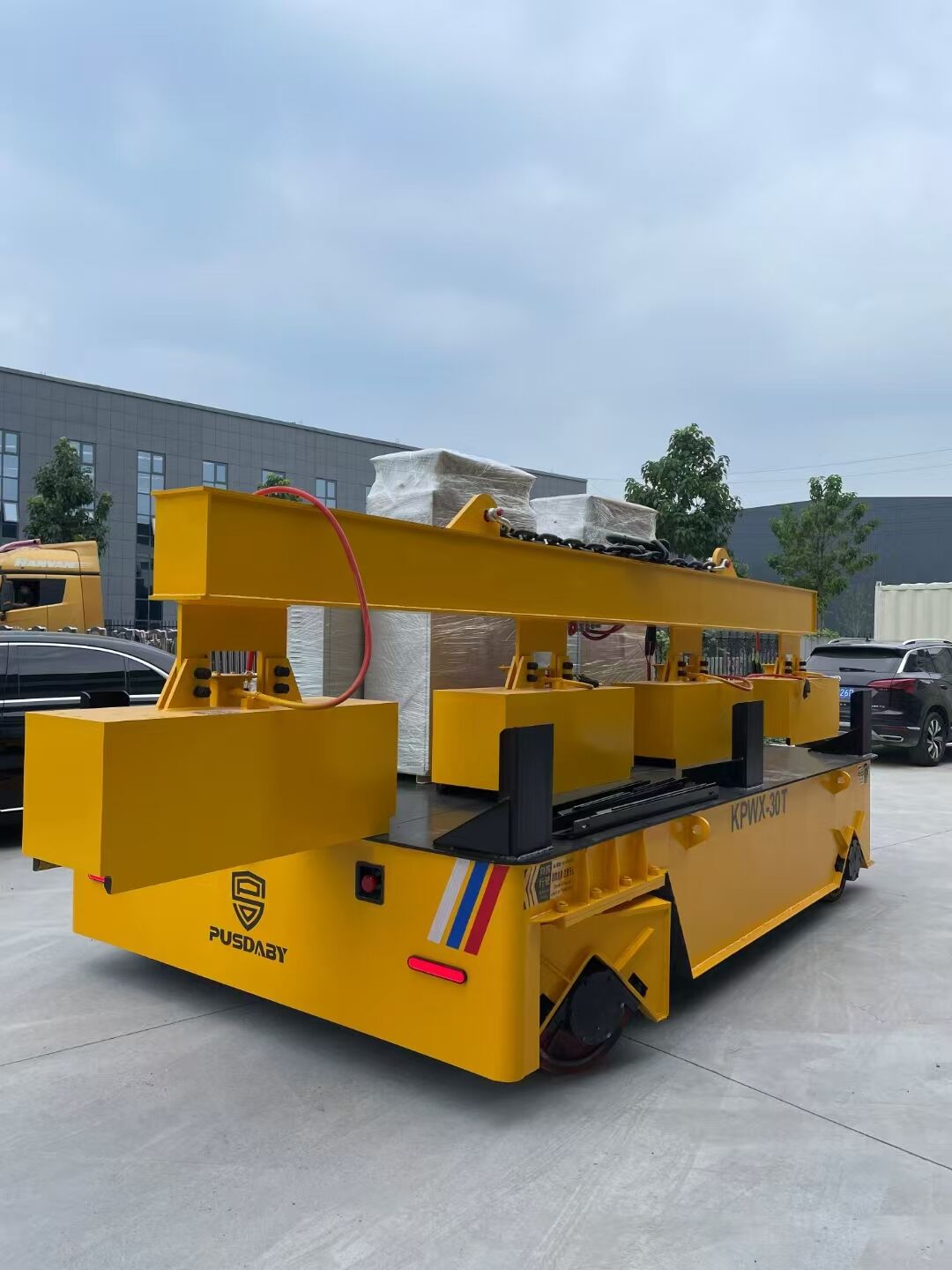
Matching Load Capacity and Structural Integrity to Your Heavy-Duty Application
Evaluating Payload Requirements Against Frame Rigidity, Axle Configuration, and Dynamic Load Distribution
When choosing an electric flat car, start by looking at what weight it needs to carry. Don't forget to factor in those unexpected situations where things get heavier than planned. Most experts suggest leaving around 25 percent extra capacity just in case something goes wrong during operation. The frame needs to be solid too. If it starts bending when loaded, everything gets misaligned, controls become unpredictable, and eventually the whole thing wears out faster. For building really strong frames without making them too heavy, high tensile steel alloys work best. These materials give good strength while keeping overall weight down, which makes all the difference when moving heavy loads day after day.
The way axles are arranged determines how much weight gets transferred down to the ground surface. When vehicles have two axles instead of just one, they spread out the pressure across the ground by roughly 40%. This matters a lot when driving over delicate floors or soft ground surfaces where damage could occur otherwise. Load distribution changes constantly though. As vehicles speed up, slow down, or take corners, the weight shifts around and puts extra strain on certain parts of the frame. Engineers use computer models to figure out where these stresses will hit hardest so they can adjust things like frame shape, where to place welds, and which areas need extra reinforcement. Take a situation where most of the weight lands on just one corner of the vehicle. That spot might see three times more stress than normal, causing wear and tear problems at connection points or attachment spots over time. Anyone working with heavy equipment should check whether the total weight balance point (including both cargo and the machine itself) stays inside the safe area determined by how far apart the axles are and the length between front and rear wheels.
| Design Factor | Impact on Performance | Optimization Strategy |
|---|---|---|
| Frame Material Rigidity | Prevents permanent deformation | High-strength steel alloys |
| Axle Count & Spacing | Distributes ground pressure | Dual/triple-axle configurations |
| Dynamic Load Shifting | Affects stability during movement | Computer modeling & counterweights |
Fatigue Life Validation and Real-World Stress Testing for 24/7 Industrial Use
Industrial operations running non-stop need much more than just standard fatigue checks. Top manufacturers actually test their products as if they've been used for ten years straight in the lab. These prototypes go through over a million load cycles while dealing with all sorts of variables like changing torque levels, vibrations, and temperature shifts. For real world testing, they put equipment through its paces in extreme conditions too. Think temperatures ranging from minus 20 degrees Celsius up to 50 degrees, getting wet, dusty environments, and even driving over rough terrain that mimics what happens on factory floors. Special sensors placed at key points like welds and bearings pick up tiny deformations. Most failures tend to start showing around half a million cycles at stress points. When companies follow standards like ISO 12100 for risk assessment and ASTM E466 for fatigue testing, their equipment hits about 99.8% reliability when running 24/7. Thermal cameras during long tests spot problem areas in drive systems early enough to install better cooling before breakdowns happen. Considering how expensive downtime really is ($740,000 per hour according to Ponemon Institute research from last year), these thorough testing phases protect both production schedules and bottom lines in manufacturing facilities everywhere.
Electric Flat Car Mobility Options: Trackless AGV vs. Rail-Guided Systems
Trade-Offs in Flexibility, Infrastructure Cost, Precision, and Scalability
The decision to go with trackless AGVs versus traditional rail systems really comes down to what matters most in day to day operations. Sure, mobility counts, but so does how well the system can adapt when things change, plus getting good precision work done without breaking the bank long term. What sets trackless AGVs apart is their ability to move around freely thanks to technologies like LiDAR scanning, visual recognition systems, and those fancy SLAM navigation setups. These vehicles can adjust routes almost instantly whenever factory layouts get rearranged or production processes need tweaking. That kind of responsiveness works wonders in factories that keep changing shape over time, particularly ones dealing with tight spaces where adding tracks would be a nightmare. The catch though? Getting all this tech up and running costs more upfront money for all sorts of sensors, specialized software packages, and detailed mapping of the entire facility before deployment.
Setting up rail guided systems means spending a lot of money upfront on those fixed tracks, but what they give back is amazing consistency in their movements. These systems can hold position within about 2 millimeters even when carrying heavy loads across long distances or going uphill, which makes them really important for things like putting together precision parts, moving castings between stations, or running automatic welding operations. When companies need to change how these systems work, it usually takes several weeks and stops regular production while workers adjust everything. Adding capacity means installing whole new sections of track along with extra power supplies. On the flip side, expanding an AGV fleet doesn't create nearly as much hassle. Most expansions happen pretty quickly, often taking just a few days thanks to software updates and simple battery replacement processes that keep operations running smoothly without major interruptions.
When it comes down to choosing between options, precision specs usually play a big role. Automated Guided Vehicles (AGVs) generally maintain around +/-10mm accuracy when things are running smoothly, though they tend to lose their way during periods of intense vibration or sudden direction shifts. On the flip side, traditional rail systems keep performing reliably no matter what kind of weight they carry or how fast they move along their tracks. Looking at payload efficiency tells another story entirely. AGVs manage to get about 92 to 95 percent utilization because they can adjust routes on the fly based on current conditions. Rail systems just don't offer that same flexibility, so their routing efficiency stays stuck somewhere between 85 and 88 percent. Industry research shows that companies using AGVs often see savings of roughly 15 to 30 percent over time in facilities where products change frequently and operations need to be nimble. That said, nobody beats rail systems when it matters most to maximize throughput in situations where everything follows a strict path from start to finish.
| Factor | Trackless AGVs | Rail-Guided Systems |
|---|---|---|
| Infrastructure Cost | Moderate (navigation systems) | High (fixed tracks) |
| Positioning Precision | ±10mm (variable conditions) | ±2mm (consistent) |
| Reconfiguration Time | Minutes (software updates) | Weeks (physical adjustments) |
| Payload Efficiency | 92–95% (dynamic routing) | 85–88% (fixed paths) |
This strategic balance determines whether operational agility or unwavering precision better serves your heavy-load transportation requirements.
Optimizing the Electric Drivetrain and Axle System for Traction, Gradeability, and Reliability
Dual-Motor vs. Central Drive: Performance, Redundancy, and Maintenance Implications
The dual motor setup versus central drive architecture shows two very different approaches to building electric flat cars, each better suited for particular tasks. With dual motors, every axle gets its own power source (sometimes even individual wheels), which allows for something called torque vectoring in real time. This means better grip when driving over rough ground or slippery spots. Plus there's this nice backup feature: should one motor go out, the car can still move forward, albeit slower. That matters a lot in situations where getting stuck could be dangerous or expensive, especially out in remote areas. On the downside though, these systems come with more parts to manage. More components mean more heat generated, so cooling becomes a bigger issue. And let's face it, all those extra bits also translate into more regular checkups and repairs down the road.
The central drive system typically features one powerful motor connected to a mechanical differential setup. These systems tend to be cheaper upfront, easier to maintain, and have shown good reliability for applications that don't change much over time. But there are some downsides worth mentioning. The traction control isn't as precise as it could be, and since everything depends on that single motor and differential, any failure means total loss of mobility. Some tests indicate that going with two motors instead can boost climbing ability by around 15 to 25 percent on hills steeper than 10 degrees, especially when combined with smart torque management software. Of course, this performance gain isn't free. Running at high loads for extended periods demands proper liquid cooling systems and attention to temperature management to prevent overheating issues.
Heavy-Duty Electric Axle Selection: Torque Density, Regenerative Braking, and Thermal Management
Electric axle (E-axle) selection must prioritize three interdependent engineering outcomes:
- Torque density: Compact, high-output axles delivering ¥12 kN·m per ton enable payloads exceeding 80 tons without overloading bearings or gearsets.
- Regenerative braking: Systems recovering ¥20% of kinetic energy during deceleration extend battery range and significantly reduce wear on friction brakes—cutting maintenance intervals by up to 40% in stop-start applications.
- Thermal resilience: Liquid-cooled stators, temperature-monitored gearboxes, and integrated heat dissipation pathways ensure sustained performance. Top-tier E-axles maintain >93% efficiency at 40°C ambient—avoiding thermal throttling during continuous duty cycles.
Battery System Design for Maximum Uptime and Payload Efficiency in Electric Flat Cars
LFP vs. NMC Chemistries: Safety, Cycle Life, and Low-Temperature Operation Under Continuous Duty
The type of battery chemistry used has a major impact on how reliable, safe, and adaptable to different environments batteries will be over time. Lithium Iron Phosphate, or LFP for short, stands out when it comes to staying cool under pressure. The flat voltage curve combined with those solid chemical bonds means it doesn't get into thermal trouble easily, which is why many industries choose this option when working close to flammable stuff or operating in really hot conditions. Another big plus for LFP is its impressive lifespan. We're talking about over 6,000 complete charge cycles before losing more than 20% of its original capacity. That translates to roughly a decade of non-stop use every single day without much performance drop off. For businesses looking at long term investments, these characteristics make LFP an attractive proposition despite some initial cost considerations.
Nickel Manganese Cobalt (NMC) batteries pack about 15 to 20 percent more specific energy compared to Lithium Iron Phosphate (LFP), which means lighter battery packs and more room for actual cargo or equipment. These NMC cells still work reasonably well even at temperatures as low as minus 20 degrees Celsius, giving them an edge over LFP batteries in cold storage facilities or during winter field operations. The downside though? NMC has a tighter temperature range and gets pretty upset if it's either overcharged or discharged too much, so these packs need smarter battery management systems to keep things running smoothly. For many heavy duty industrial jobs where safety and long life matter most, LFP remains the better choice despite its struggles in freezing conditions. Most operators find that adding simple heating elements around the battery enclosure or integrating coolant loops makes all the difference in maintaining performance through harsh winters.
Structural Integration Strategies (Cell-to-Pack, Cell-to-Chassis) to Preserve Load Capacity and Meet Safety Standards
The way batteries fit into a vehicle's structure makes a real difference when it comes to how much stuff can be carried, what safety features are possible, and whether maintenance will be easy down the road. With cell-to-pack technology, we're seeing manufacturers skip those bulky module housings altogether. The result? About 10 to maybe 15 percent better space utilization for energy storage while making the whole battery pack lighter too. Cargo space stays intact because there's less wasted room inside the vehicle. Taking things even further is cell-to-chassis design where batteries actually form part of the car's framework themselves. These packs sit right inside the frame rails instead of just being bolted on top. When this happens, the vehicle sits lower to the ground which means better handling characteristics. Some tests show improvements in torsional stiffness around 25% give or take depending on the specific application. And for trucks carrying heavy loads across long distances, this kind of structural integration really pays off in terms of overall stability and performance.
The two methods need to meet UN38.3 transport safety rules at minimum, though industrial applications typically require even stricter measures. Top quality designs feature things like fire resistant separators between cells, pressure distributing plates that stop multiple cells from failing all at once during impacts, plus backup thermal protection systems as an extra layer of defense. Getting this right means no need for those heavy outside battery cases that take up precious deck area and cut into what cargo can be carried. Properly integrated structures just blend into the overall design without wasting space or reducing payload capabilities.
FAQ Section
What is the recommended frame material for electric flat cars?
High tensile steel alloys are recommended due to their balance of strength and weight, which is critical when moving heavy loads.
How do trackless AGVs compare to rail-guided systems?
Trackless AGVs offer more flexibility and dynamic routing, while rail-guided systems provide precise movement and are better for specific paths with heavy loads.
Which battery chemistry is better for high-temperature operations?
Lithium Iron Phosphate (LFP) is more stable under heat and offers a longer life cycle making it ideal for high-temperature industrial use.
What are the benefits of the dual-motor setup in electric flat cars?
Dual-motors provide better grip and redundancy, ensuring the car can continue to move even if one motor fails.
Table of Contents
- Matching Load Capacity and Structural Integrity to Your Heavy-Duty Application
- Electric Flat Car Mobility Options: Trackless AGV vs. Rail-Guided Systems
- Optimizing the Electric Drivetrain and Axle System for Traction, Gradeability, and Reliability
- Battery System Design for Maximum Uptime and Payload Efficiency in Electric Flat Cars
- FAQ Section