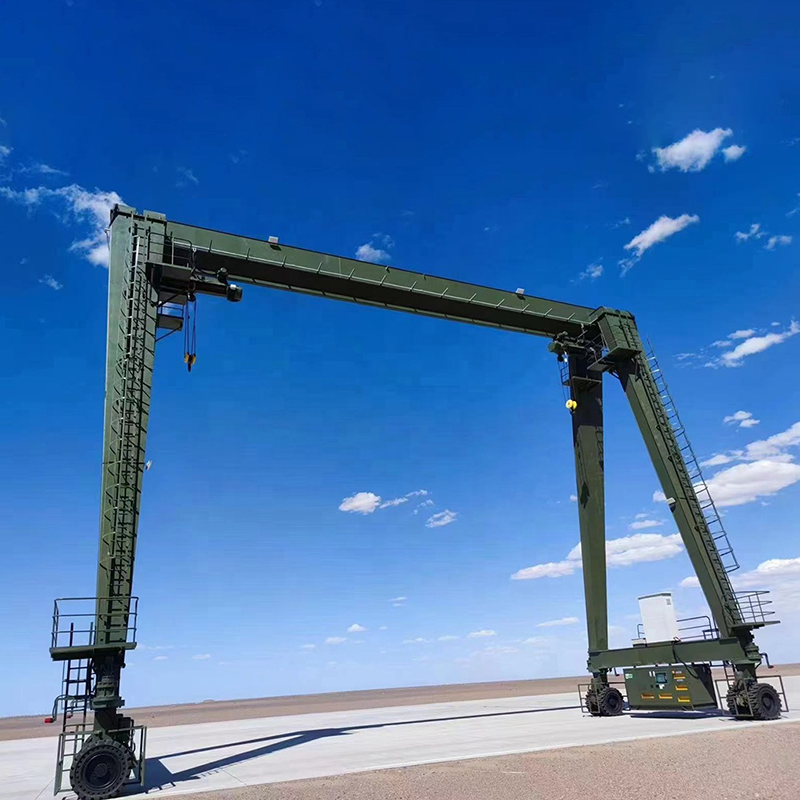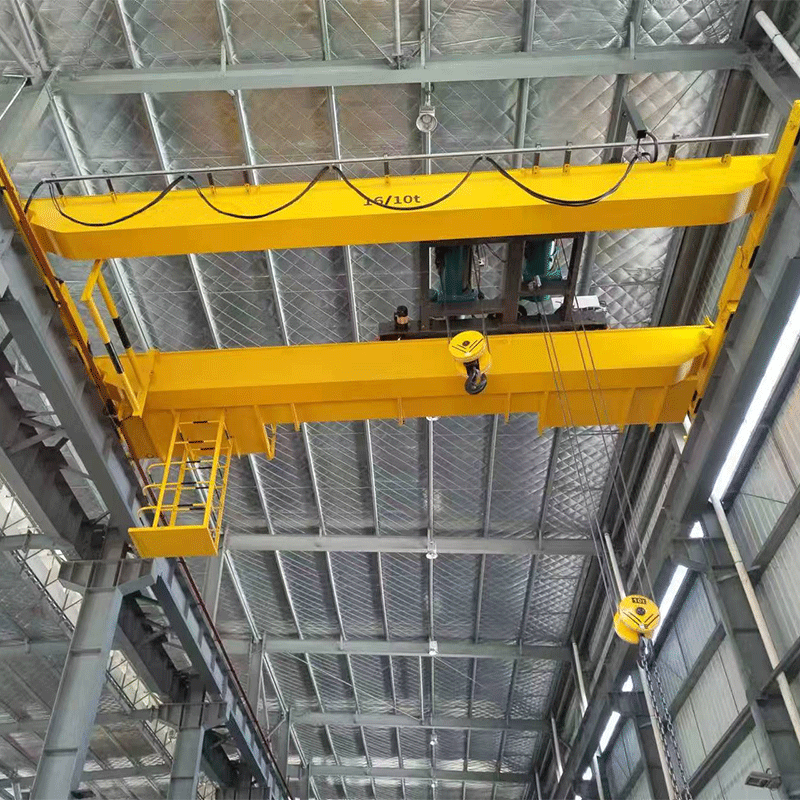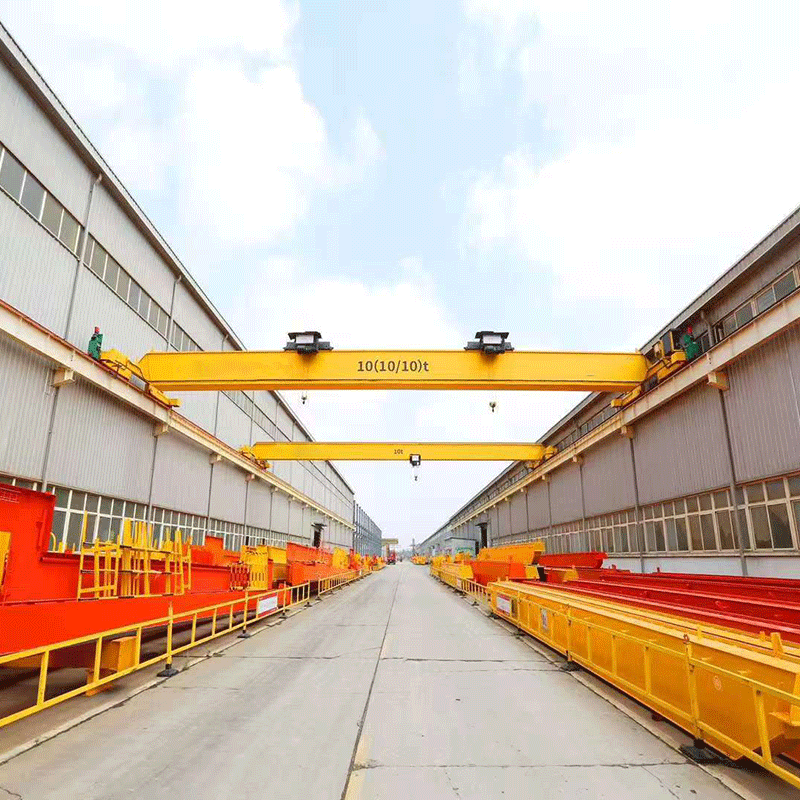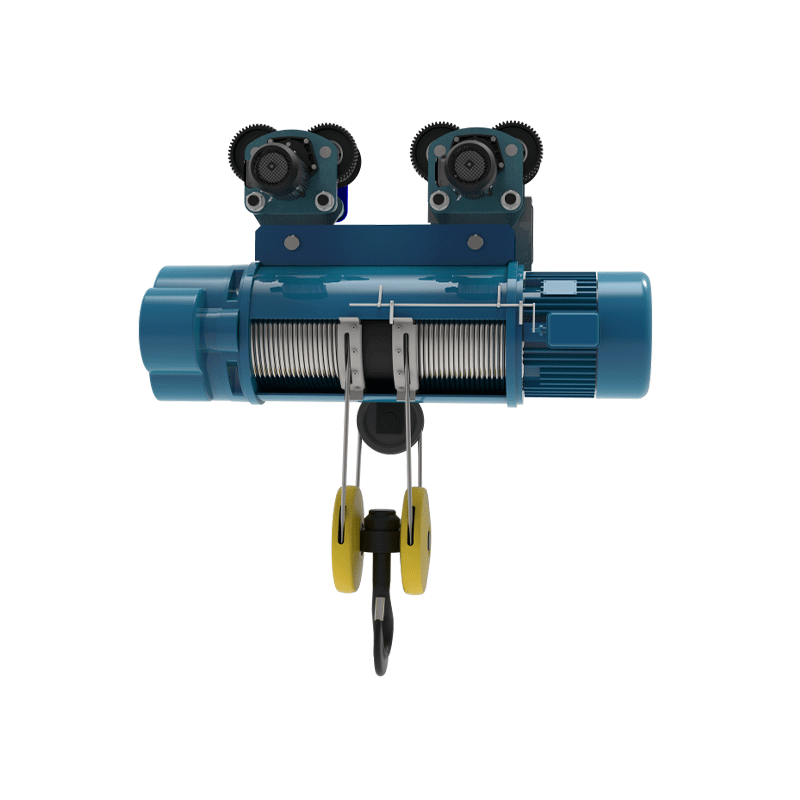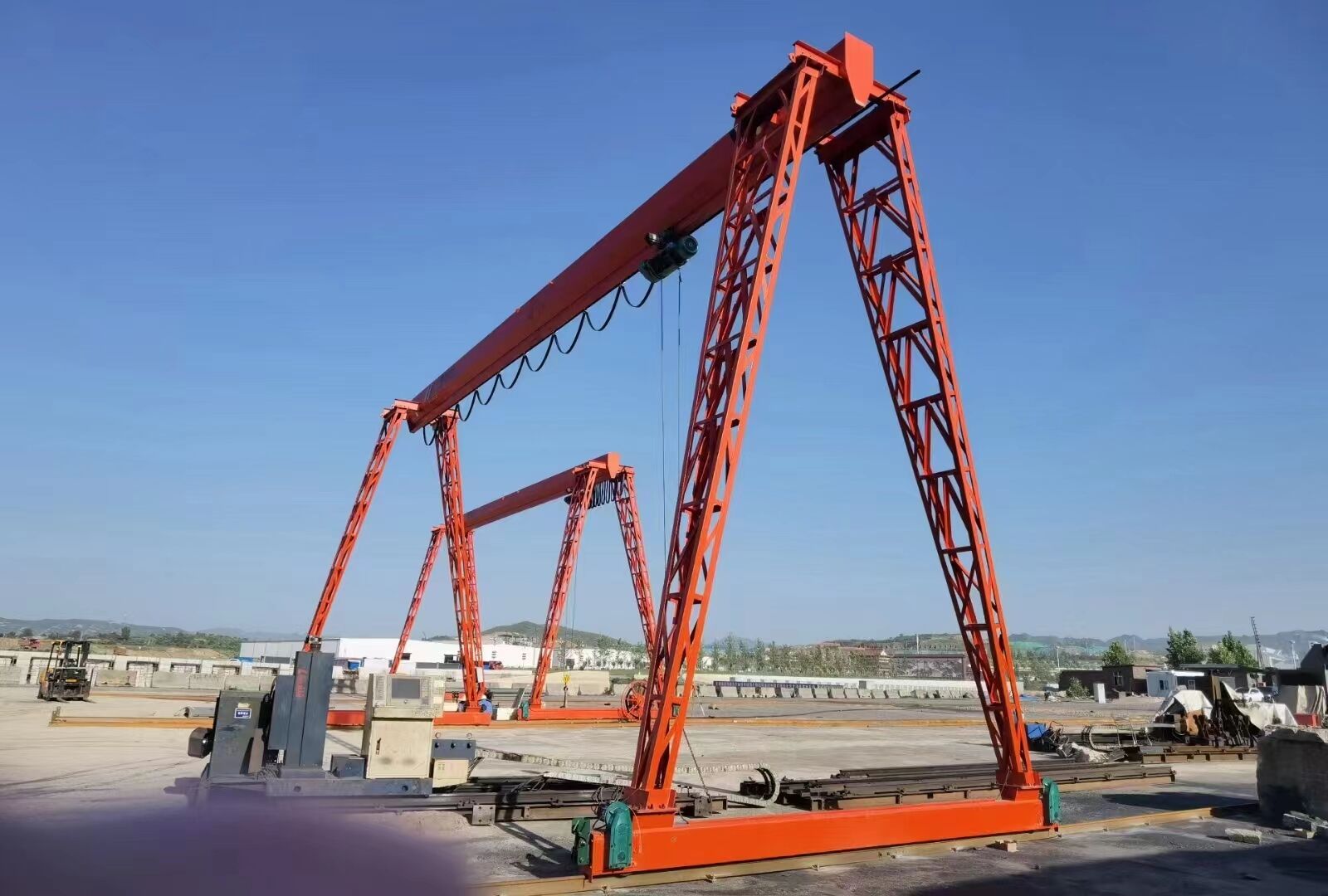
An overhead crane with a wire rope hoist is the most common configuration for heavy lifting in industrial settings, combining a travelling bridge structure with a hoisting mechanism that uses steel wire rope wound around a grooved drum. The wire rope hoist provides significant advantages over chain hoists for capacities above 5 tons, including longer lifting heights, higher duty cycles, and smoother operation under full load. This type of overhead crane typically features a trolley-mounted hoist that traverses along the bridge beams, providing full coverage of a rectangular workspace. The wire rope hoist itself consists of a motor, gearbox, drum, and rope guide, often equipped with multiple reeving configurations (2/1, 4/1, 8/1) to balance lifting speed and capacity. Applications are extensive: steel mills use them to handle coils and billets; automotive plants use them for die changes and engine lifts; warehouses use them for loading/unloading heavy pallets. Modern overhead cranes with wire rope hoists incorporate inverter drives for smooth speed control across all motions—hoisting, cross‑travel, and long‑travel. Safety features include mechanical load brakes, electrical overload protection, and limit switches to prevent over‑hoisting and over‑lowering. Because the wire rope is subject to wear and fatigue, periodic inspection schedules are critical for safe operation. The crane structure can be either single girder for moderate uses or double girder for heavy‑duty applications. As each industrial application presents unique constraints, we encourage you to contact us with your specific lifting height, span, and capacity requirements for a tailored overhead crane with a wire rope hoist solution.

06
Jun
15
Jul
28
Jul

 EN
EN