
 EN
EN
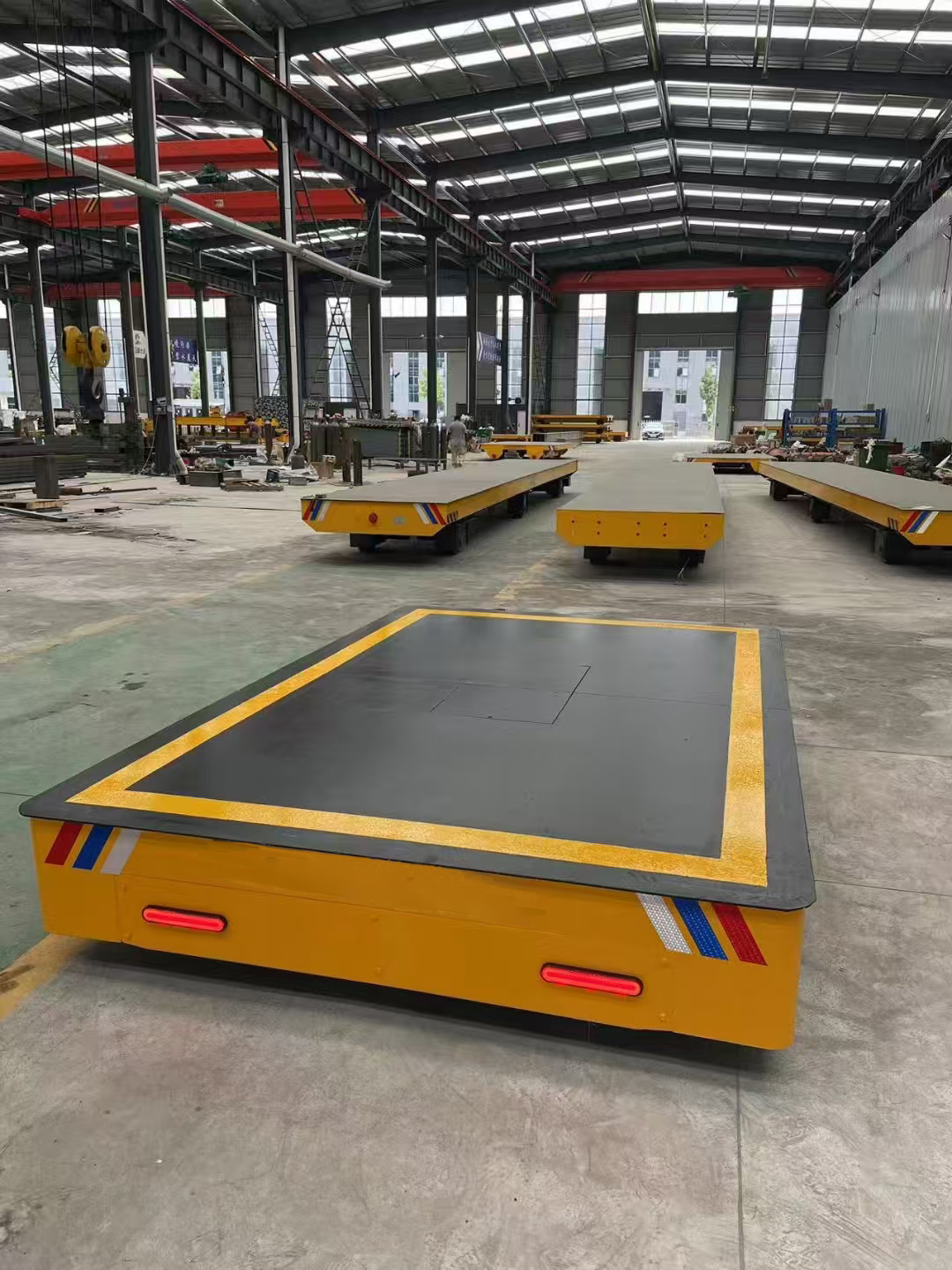
Unmatched Layout Flexibility: 360° Steering and Zero Rail Dependency
How Trackless Electric Flat Car Eliminates Fixed-Path Constraints
A trackless electric flat car replaces rigid rails with a 360° steering system, enabling navigation across any open floor space—no turntables, crossings, or embedded tracks required. Its zero-radius turning capability allows operation in aisles as narrow as the vehicle’s own width, making it ideal for congested shop floors and legacy facilities with tight column spacing. Factories can reconfigure workstations, storage zones, or assembly lines without breaking concrete or rerouting infrastructure. Material flow routes can be redeployed in hours—not weeks—freeing manufacturers from static, inflexible transport layouts.
Real-Time Route Adaptation for Dynamic Production Flow
Because routing is software-defined rather than physically constrained, adjustments happen instantly via a central console—no civil works needed. When bottlenecks arise or new equipment is added, operators update paths on demand. Onboard sensors and adaptive steering enable autonomous stopping, reversing, or detouring around temporary obstructions. This responsiveness supports just-in-time delivery across multiple destinations, reduces work-in-progress inventory, and maintains material flow alignment with fluctuating line speeds—transforming transport from a fixed constraint into a dynamic enabler of production agility.
Heavy-Duty Performance and Operational Efficiency
Load Capacity Up to 100+ Tons for Steel, Casting, and Heavy Machinery Logistics
Engineered for extreme loads—regularly exceeding 100 tons—the trackless electric flat car moves steel coils, large castings, and heavy machinery parts with precision and stability. Unlike rail systems that demand ground reinforcement, its robust wheel assemblies evenly distribute weight. A typical unit transports an 80-ton foundry mold with millimeter accuracy, all while retaining full maneuverability in confined spaces. For automotive stamping and aerospace forging operations, this eliminates reliance on overhead cranes—reducing bottleneck risks and supporting tight just-in-time schedules. Operators gain on-demand mobility for massive components, cutting idle time and improving throughput.
Lithium-Ion Powertrain and Intuitive Steering Wheel Control
Modern units feature lithium-ion battery packs delivering 8–12 hours of continuous runtime, with full recharge in under two hours—enabling seamless shift-based charging. The powertrain delivers consistent low-speed torque, essential for precise positioning of heavy loads. Steering uses a familiar wheel interface, minimizing operator training, and supports both manual and remote operation for navigating narrow passages. Regenerative braking recovers up to 15% of deceleration energy, extending battery life. With no diesel engines or hydraulic systems, the vehicle operates quietly and emission-free indoors. Fewer moving parts translate to longer maintenance intervals—often just annual inspections—delivering high power with exceptional operational simplicity.
Total Cost of Ownership Advantage Over Traditional Rail Systems
Installation Time Savings: Weeks vs. Months with No Civil Works
Trackless electric flat cars require no rail embedding, excavation, or concrete pouring—cutting installation from months to days. Traditional rail systems involve lengthy civil engineering projects that disrupt operations and incur hidden costs: permits, site prep, contractor fees, and downtime. In contrast, a trackless unit becomes operational immediately after delivery and battery charging—accelerating return on investment and lowering upfront capital expenditure. This rapid deployment is a decisive financial advantage when evaluating total cost of ownership.
Scalability and Future-Proofing Without Infrastructure Lock-In
As production needs evolve, so do material flow requirements. Trackless electric flat cars support instant route reprogramming—no physical modifications needed. Traditional rail infrastructure, once installed, is costly and disruptive to relocate or extend. Over its lifecycle, a trackless system avoids sunk costs tied to fixed rails and enables effortless scalability: additional units integrate seamlessly without civil engineering. This adaptability makes it a strategically future-proof solution for manufacturing environments where flexibility and responsiveness are non-negotiable.
Sustainable and Low-Maintenance Factory Logistics
The trackless electric flat car advances sustainable logistics by eliminating the environmental and resource burden of fixed rail infrastructure. Powered by lithium-ion batteries, it operates with zero operational emissions and leverages regenerative braking to reduce net energy consumption. Maintenance demands drop significantly—no tracks, switches, or cable networks require inspection or repair. Its simplified powertrain and solid-state electronics minimize unplanned downtime, while battery cycle life typically exceeds 3,000 charges—lowering replacement frequency and long-term operating costs. This combination of energy efficiency, durability, and low service requirements directly supports green manufacturing goals while ensuring predictable, stable logistics expenses.
FAQs
What is the main advantage of a trackless electric flat car?
The primary advantage of a trackless electric flat car is its 360° steering and zero rail dependency, allowing for unmatched flexibility in navigation and easy reconfiguration of production layouts without the need for extensive civil works.
How does the trackless electric flat car handle heavy loads?
Designed to transport extreme loads exceeding 100 tons, the trackless electric flat car utilizes robust wheel assemblies that evenly distribute weight and provide precise maneuverability even in confined spaces.
What makes trackless electric flat cars sustainable?
Trackless electric flat cars operate with zero emissions, powered by lithium-ion batteries, and utilize regenerative braking to recover energy. They require minimal maintenance and eliminate the need for fixed rail infrastructure, supporting green manufacturing goals.
How quickly can a trackless electric flat car be installed?
Unlike traditional rail systems that require months of installation, trackless electric flat cars are operational within days, eliminating civil engineering requirements and cutting downtime.
Are trackless electric flat cars future-proof?
Yes, their flexible routing capabilities and scalability make them adaptable to evolving production needs without costly expansions or modifications.