
 EN
EN
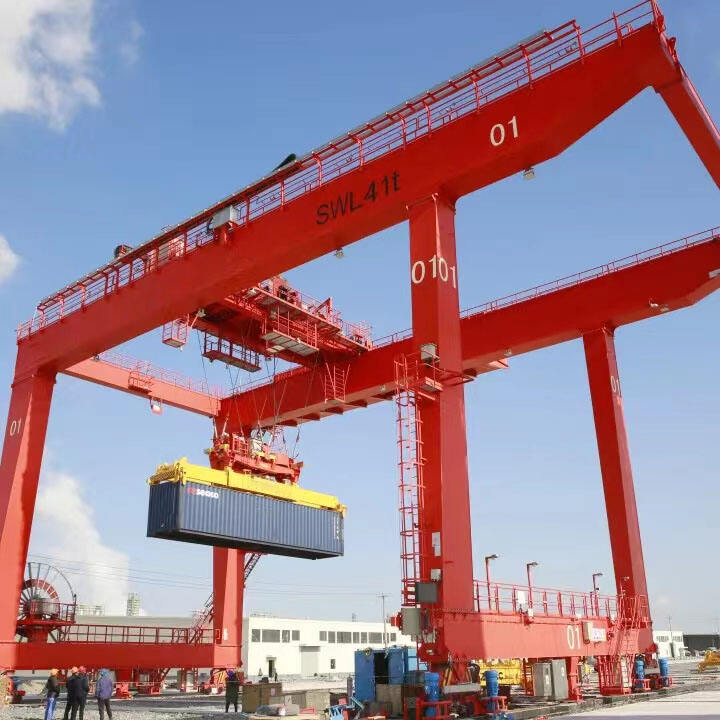
Crane Lifting Equipment Eliminates Material Flow Bottlenecks
Identifying Inefficiencies in Manual and Forklift-Based Handling
Many facilities still rely on manual labor or forklifts for repetitive material transport—approaches that slow throughput, increase injury risk, and create systemic bottlenecks. Manual handling limits load size and frequency while exposing workers to musculoskeletal strain. Forklifts require wide aisles, generate traffic congestion, and cannot access overhead storage efficiently. They also demand certified operators, frequent battery swaps, and substantial floor space—factors that compound delays when moving heavy or oversized items across long distances. Cycle times lengthen further as operators navigate obstacles, reposition loads, and perform sequential transfers—idling production lines and eroding Overall Equipment Effectiveness (OEE). Recognizing these choke points is the essential first step toward justifying a strategic shift to crane lifting equipment.
How Overhead Crane Systems Streamline Load Paths and Reduce Cycle Time
Overhead cranes eliminate ground-level obstructions by moving loads along fixed, elevated paths—cutting travel distance and enabling direct routing from receiving to storage or production without forklift intervention. Variable frequency drives (VFDs) deliver stepless speed control, soft start/stop functionality, and up to 15% energy savings via regenerative braking. Their hoists handle heavy, irregular, or oversized loads—such as transformer cores or tall stacks—with precision and clearance under low ceilings. By integrating crane lifting equipment into core material flow, companies achieve continuous, predictable movement. Cycle time reductions commonly exceed 30%, while eliminating forklift traffic improves safety and reclaims valuable floor space.
Selecting the Right Crane Lifting Equipment for Facility-Specific Needs
Selecting optimal crane lifting equipment requires aligning structural strength, dimensional constraints, and workflow dynamics—not applying generic specifications. Misalignment compromises safety margins and inflates cycle times: 47% of reported operational hazards stem from inappropriate equipment selection (ISTE Standard 2024). A deliberate integration process accounts for:
- Load characteristics: Weight, center of gravity, and fragility
- Environment: Temperature extremes, chemical exposure, and dust levels
- Movement patterns: Travel distance, frequency, and positioning precision
Bridge, Gantry, and Jib Cranes: Matching Structure, Span, and Load Capacity
Overhead crane systems form the backbone of modern material handling—where matching load capacity to span and travel distance is critical for sustained productivity. Bridge cranes (OHCs) excel in high-frequency, high-precision indoor transfers; gantry cranes support outdoor or relocatable applications like shipyards and large-scale assembly; jib cranes serve localized, lower-capacity tasks at workstations or in confined areas.
| Crane Type | Structural Span | Load Capacity Range | Optimal Usage Scenario |
|---|---|---|---|
| Bridge (OHC) | 15–150 ft | 1–500 tons | High-frequency indoor transfers |
| Gantry | 20–200 ft | 5–1,000 tons | Shipyard, assembly lines requiring relocation |
| Jib | ≤30 ft | 0.25–15 tons | Workstation feeding, confined-area handling |
Beyond rated capacity, engineers prioritize structural rigidity against harmonic vibration and container stability during oscillation. Units meeting ISO 4301:2023 A4 classification endure 400+ operating hours monthly without degradation. When paired with digital capacity meters—which prevent inadvertent overloading, the root cause in 84% of load-path failures—repair downtime drops by ~40% annually.
Specialized Attachments That Extend Crane Lifting Equipment Capabilities
Traditional lifting hooks often fail to secure irregular, fragile, or surface-sensitive loads without causing damage—costing industries an estimated $740k annually in preventable losses (Ponemon Institute 2023). This limitation underscores why crane lifting equipment must be augmented with purpose-built attachments to unlock full operational potential.
Electromagnetic, Vacuum, and Custom Grippers for Irregular or Sensitive Loads
Electromagnetic lifters provide instant, contact-free handling of ferrous materials—sheets, beams, and scrap—eliminating crushing, surface marring, and sling-related delays. Adjustable magnetic fields ensure cargo stability throughout transfer.
Vacuum grippers maintain regulated aerial suspension for glass panes, aerospace composites, granite slabs, and coated finishes. Integrated auto-seal monitors trigger safety interlocks upon pressure deviation—reducing glass shatter incidents by 27% compared to manual methods.
Engineered custom hooks adapt to complex geometries—including turbine blades, pipe bundles, and CNC-machined prototypes—using modular wings, pressure-sensitive frames, or sensor-aligned stabilizing jaws. Field validation shows these solutions cut load positioning time by over 40% while delivering zero-pressure contact on delicate surfaces.
Sustaining Efficiency: Predictive Maintenance and OEE Alignment for Crane Lifting Equipment
Sustained crane performance depends on predictive maintenance tightly aligned with Overall Equipment Effectiveness (OEE)—a metric tracking availability, performance, and quality. Facilities using predictive analytics consistently achieve OEE above 92%, versus sub-70% rates common with reactive approaches. Key improvements include MTBF rising from 450 to 1,200 hours, MTTR dropping from 8 to 2.5 hours, and energy waste reduced by two-thirds. For crane systems, this translates to fewer unplanned stoppages, faster fault recovery, and lower total cost of ownership. By anchoring maintenance schedules to OEE data—and targeting the Six Big Losses (breakdowns, setup delays, idling, reduced speed, defects, and startup losses)—operations teams systematically elevate reliability, throughput, and long-term ROI.
FAQ
What are the main inefficiencies of using manual labor and forklifts?
Manual labor increases injury risks and limits load size and frequency, while forklifts create traffic congestion, require wide aisles, and cannot access overhead storage. These inefficiencies lead to delayed cycle times and reduced productivity.
How do overhead crane systems improve material handling?
Overhead crane systems streamline load paths by moving materials along elevated routes, eliminating ground-level obstacles, and reducing travel distance. They enhance precision, improve safety, and reduce floor space requirements.
What factors determine the selection of crane lifting equipment?
Selection depends on load characteristics like weight and fragility, environmental conditions, and movement patterns such as travel distance and precision requirements.
What are the differences between bridge, gantry, and jib cranes?
Bridge cranes handle high-frequency indoor tasks, gantry cranes are best for outdoor or relocatable applications, and jib cranes are ideal for localized or confined areas.
How can crane lifting equipment be optimized for non-standard loads?
Specialized attachments like electromagnetic lifters, vacuum grippers, and custom-engineered hooks enable safe handling of irregular, fragile, or surface-sensitive loads.
What role does predictive maintenance play for crane systems?
Predictive maintenance enhances Overall Equipment Effectiveness (OEE) by reducing downtime, lowering repair costs, and improving system reliability through data-driven scheduling and analytics.
Table of Contents
- Crane Lifting Equipment Eliminates Material Flow Bottlenecks
- Selecting the Right Crane Lifting Equipment for Facility-Specific Needs
- Specialized Attachments That Extend Crane Lifting Equipment Capabilities
- Sustaining Efficiency: Predictive Maintenance and OEE Alignment for Crane Lifting Equipment
-
FAQ
- What are the main inefficiencies of using manual labor and forklifts?
- How do overhead crane systems improve material handling?
- What factors determine the selection of crane lifting equipment?
- What are the differences between bridge, gantry, and jib cranes?
- How can crane lifting equipment be optimized for non-standard loads?
- What role does predictive maintenance play for crane systems?