
 EN
EN
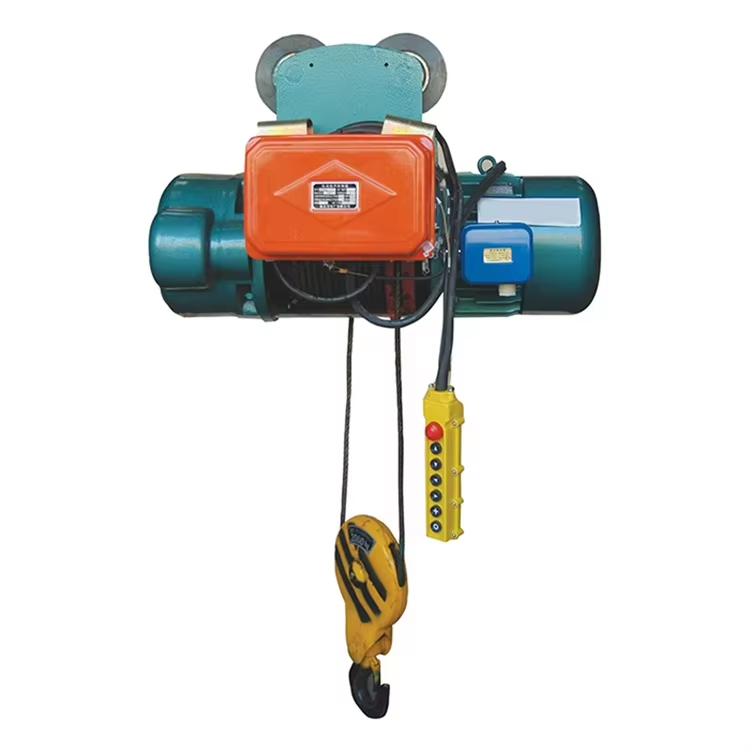
Hazardous Area Classification and Its Direct Impact on Wire Rope Selection
Zone 1/2 vs. Zone 21/22: Matching Rope Material and Coating to Gas or Dust Explosion Risks
Hazardous areas are classified into gas-related zones (0, 1, 2) and dust-related zones (20, 21, 22), each demanding distinct wire rope material and surface treatment strategies. In Zone 1 and Zone 2—where flammable gases or vapors may be present—the primary ignition risk stems from mechanical sparking. Galvanized or stainless steel ropes are preferred for their corrosion resistance and low-friction, non-sparking surface characteristics under normal operation.
In contrast, Zone 21 and Zone 22 environments involve combustible dust layers that can ignite from hot surfaces or static discharge. Here, polymer-coated or anti-static treated ropes help safely dissipate electrostatic charge while resisting dust adhesion. The coating must preserve flexibility, avoid insulating the rope from grounding paths, and withstand repeated bending without cracking or shedding particulate matter. Selecting an incompatible coating—such as a fully insulating polymer on a non-grounded hoist—can inadvertently create an ignition source rather than prevent one.
ATEX & IECEx Compliance: Why Wire Rope Must Be Validated as Part of the Full Explosion-Proof Wire Rope Electric Hoist System
Under ATEX (2014/34/EU) and IECEx standards, wire rope cannot be certified in isolation. It must be validated as an integral component of the complete explosion-proof wire rope electric hoist system—including motor, brakes, controls, and structural housing. Certification testing evaluates combined performance: the rope’s surface temperature rise under full-load duty cycles must remain within the designated temperature class (e.g., T3 ≤ 200°C, T4 ≤ 135°C) for the applicable gas group; its breaking force and fatigue behavior are assessed alongside brake response time and overload protection thresholds.
Swapping a rope—even with identical nominal specs—without re-validation voids the hoist’s certification. Traceable documentation linking the rope’s material grade, construction, coating, and test records to the original ATEX or IECEx certificate is mandatory. This system-level approach ensures intrinsic safety isn’t compromised by component-level assumptions. Selecting a certified rope isn’t best practice—it’s a legal requirement for operation in hazardous areas.
Key Technical Parameters for Safe and Compatible Wire Rope Integration
Duty Class (M4–M6) and Dynamic Load Cycles: Ensuring Adequate Breaking Force Margin for Hazardous-Duty Operation
Duty classes M4 through M6 define high-cycle, heavy-duty applications typical of continuous or frequent-start industrial lifting—often exceeding 600,000 dynamic load cycles over service life. These conditions accelerate rope fatigue, increasing the risk of micro-fractures that could generate sparks in explosive atmospheres. To mitigate this, engineers specify a minimum safety factor of 5:1 between breaking force and maximum working load. This margin accounts for cyclic stress, environmental degradation, and unexpected shock loads—ensuring the rope remains structurally intact and thermally stable throughout its operational lifespan. Fatigue testing under simulated hazardous-duty conditions (e.g., repeated bending over sheaves at rated load) is required for validation.
Lift Height, Speed, and Drum Geometry: Optimizing Rope Lay, Diameter, and Length to Prevent Spark-Generating Spooling Issues
Drum geometry directly influences spooling behavior—and therefore ignition risk—in explosion-proof wire rope electric hoists. A mismatch between rope diameter and drum groove width (exceeding ±2%) causes erratic layering, lateral shifting, and increased metal-on-metal contact—raising localized temperatures and spark potential. Similarly, excessive fleet angle (>1.5°) or incorrect lay direction (e.g., using right-lay rope on a left-wind drum) induces torsional instability and surface wear.
Lift height and speed further constrain rope selection: insufficient length risks over-spooling and flange contact; excess length promotes overlapping and crushing. Engineers must verify compatibility between rope construction (e.g., 6×36 IWRC for flexibility, 8×19 for abrasion resistance), drum groove pitch, sidewall clearance, and fleet angle. Proper alignment ensures smooth, predictable spooling—preserving both mechanical integrity and intrinsic safety.
Material, Construction, and Surface Treatment for Intrinsically Safe Performance
Galvanized, Stainless Steel, and Polymer-Coated Ropes: Balancing Corrosion Resistance, Conductivity, and Static Dissipation in Zone 21/22 Environments
Material selection for explosion-proof wire rope electric hoists involves balancing three interdependent properties: corrosion resistance, electrical conductivity, and static dissipation capability. Galvanized ropes provide cost-effective sacrificial protection against moisture and mild chemicals while maintaining reliable grounding continuity—making them suitable for many Zone 21/22 applications where dust and humidity coexist.
Stainless steel ropes excel in aggressive chemical or wash-down environments but require verification of electrical continuity; some austenitic grades exhibit higher resistivity, potentially compromising static dissipation unless integrated with supplemental grounding paths. Polymer-coated ropes enhance chemical isolation and reduce dust adhesion—but only if the coating is specifically formulated as conductive or semi-conductive (e.g., carbon-loaded polyethylene) and validated per EN 60079-32-1 for electrostatic hazard mitigation.
All constructions—rotation-resistant or standard lay—undergo anti-rotation and bend fatigue testing to confirm no spark generation occurs during spooling or under load. Critically, surface treatments must not impede the hoist’s grounding system: ATEX and IECEx require verified path continuity from rope terminations through anchorage points to earth, confirmed via resistance measurement (<10 Ω).
System-Level Safety Features That Constrain Wire Rope Design and Installation
The explosion-proof wire rope electric hoist functions as a closed-loop safety system—where the rope’s physical and electrical properties directly affect multiple protective mechanisms. Overload protection relies on predictable rope elongation and tensile response; braking performance depends on consistent modulus and minimal stretch to ensure precise, timely engagement. Limit switches and slack rope detectors require uniform rope diameter and lay stability to maintain positional accuracy—false trips or missed detections can disable critical safeguards.
Rope bendability, resistance to metal loss, and fatigue life must align precisely with the drum and sheave geometry engineered for the hoist. Even installation parameters—such as initial tension, termination torque, and splice integrity—are safety-critical: deviations compromise load distribution, increase localized stress, and risk premature failure. Validation occurs only within the full-system context, confirming compliance with ATEX and IECEx requirements for integrated design, testing, and traceability.
FAQ
What are the main zones for hazardous area classification?
Hazardous areas are classified into gas-related zones (0, 1, 2) and dust-related zones (20, 21, 22), each having distinct properties and risks that determine the required material and design of wire ropes.
Why is wire rope selection critical to explosion-proof systems?
Wire ropes are vital components in explosion-proof systems and must meet ATEX and IECEx standards to ensure operational and intrinsic safety. Incorrect ropes can introduce ignition risks.
Can wire rope be certified independently for use in hazardous areas?
No. Wire rope must be validated as part of the entire explosion-proof system—including motor, brakes, and structural components. Certification is system-level, not component-level.
What are the key safety factors in wire rope material and design?
Key considerations include material (galvanized, stainless steel, or polymer-coated ropes), corrosion resistance, static dissipation, and proper integration with system-level components.
What happens if a wire rope is replaced without system re-validation?
Replacing a rope without re-validation voids certification, compromises safety, and risks operational failure in hazardous environments.
Table of Contents
- Hazardous Area Classification and Its Direct Impact on Wire Rope Selection
- Key Technical Parameters for Safe and Compatible Wire Rope Integration
- Material, Construction, and Surface Treatment for Intrinsically Safe Performance
- System-Level Safety Features That Constrain Wire Rope Design and Installation
- FAQ