
 EN
EN
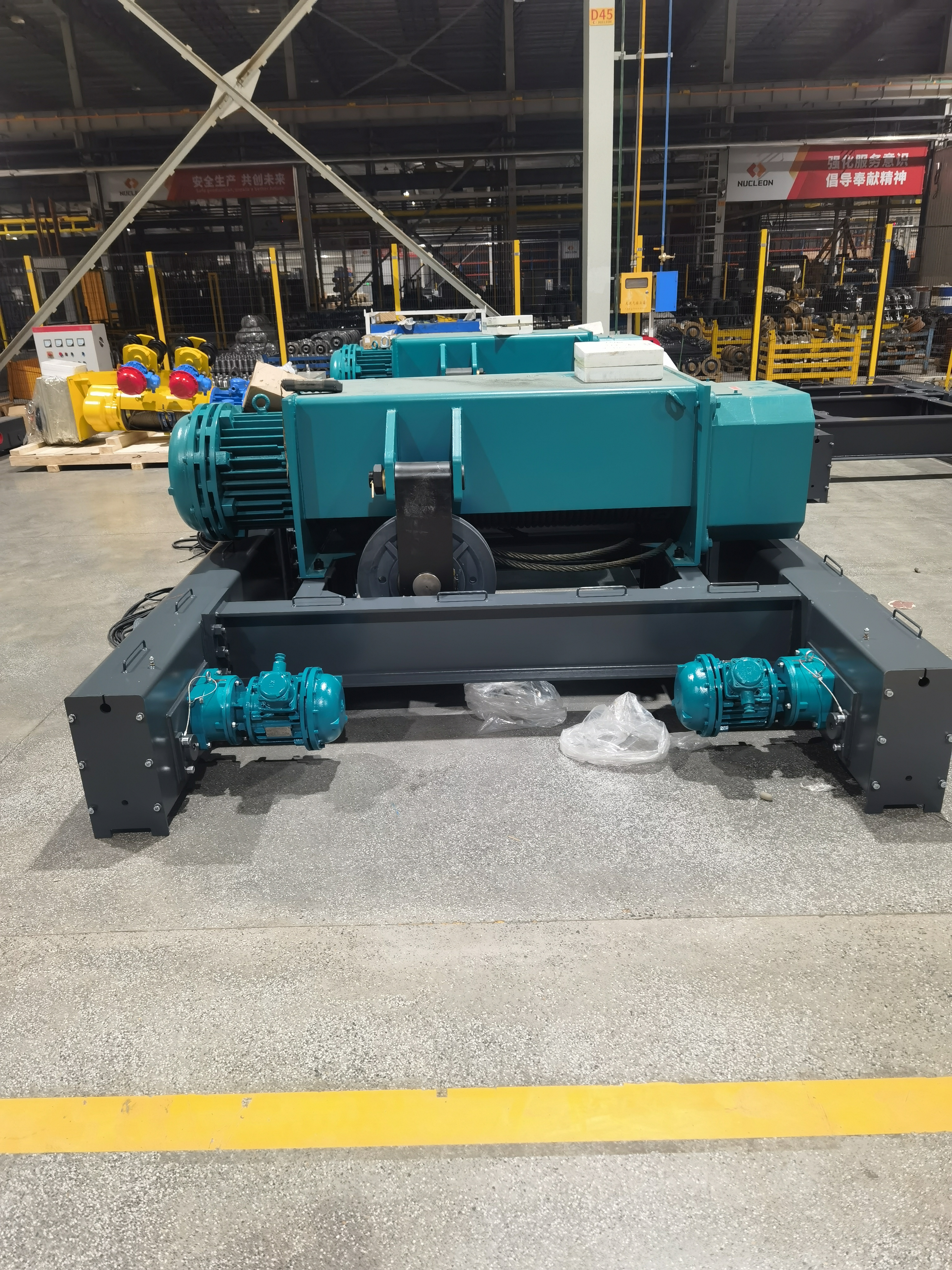
Global Regulatory Frameworks for Explosion-Proof Electric Chain Hoist
ATEX Directive 2014/34/EU: EU Mandate for Equipment in Hazardous Areas
An explosion-proof electric chain hoist sold or operated within the European Economic Area must comply with ATEX Directive 2014/34/EU. This legislation requires all equipment intended for potentially explosive atmospheres to undergo rigorous conformity assessment by a recognized Notified Body. Manufacturers must demonstrate that the hoist’s design eliminates ignition sources—such as sparks, hot surfaces, or static discharge—under normal and fault conditions. Once certified, the hoist receives ATEX type-examination certification and bears the distinctive hexagonal Ex mark, accompanied by a classification string indicating protection method, gas group, temperature class, and equipment protection level (e.g., Ex d IIC T4 Gb). EU member states enforce this directive uniformly; non-compliant products cannot be placed on the market. Procurement teams routinely require a valid ATEX certificate before purchasing lifting gear for oil refineries, chemical plants, or grain silos.
IECEx Certification: International Conformance and Cross-Border Acceptance
IECEx is a globally harmonized certification scheme administered by the International Electrotechnical Commission, aligned with the IEC 60079 series of explosion-protection standards. While ATEX is mandatory in Europe, IECEx provides an internationally recognized benchmark accepted across Asia-Pacific, Africa, Latin America, and other regions. For explosion-proof electric chain hoists deployed internationally, IECEx certification streamlines compliance by eliminating redundant country-specific testing. The process includes both detailed equipment assessment and audit of the manufacturer’s quality management system—resulting in an IECEx Certificate of Conformity and test report widely accepted by national authorities without further modification. This cross-border recognition reduces time-to-market and certification costs, making IECEx especially valuable for engineering contractors delivering turnkey projects or exporters navigating diverse regulatory landscapes.
U.S. and Chinese National Standards for Explosion-Proof Electric Chain Hoist
NEC 500/505 & NFPA 70: U.S. Classification, Testing, and Installation Requirements
In the United States, explosion-proof electric chain hoists are governed by the National Electrical Code (NEC), particularly Articles 500 and 505, under the broader NFPA 70 framework. Hazardous locations are classified by substance type (Class I: gases/vapors; Class II: dusts; Class III: fibers) and frequency of hazardous presence (Division 1: normal operation; Division 2: abnormal conditions). A hoist rated for Class I, Division 1 must prove its enclosure can safely contain an internal explosion and prevent external ignition. The NEC also mandates that associated components—including wiring, conduit seals, and control systems—meet explosion-proof specifications to ensure system-wide integrity. Installers must follow the manufacturer’s control drawings and select a temperature class (e.g., T4, T5) compatible with the auto-ignition temperature of the surrounding atmosphere. Final verification typically requires inspection by the Authority Having Jurisdiction (AHJ) before commissioning—ensuring the hoist remains safe even during electrical faults or mechanical failure.
GB 3836 Series and JB/T Standards: China’s Explosion-Proof Design and Lifting-Specific Safety Rules
China’s regulatory framework centers on the GB 3836 series, which adapts international explosion-protection principles while incorporating domestic technical and administrative requirements. GB 3836.1 sets general requirements for electrical equipment in explosive atmospheres, while GB 3836.2 specifies flameproof (“d”) enclosures—the most common protection method for electric chain hoists. A marking such as Ex d IIC T4 Gb confirms flameproof construction suitable for hydrogen- and acetylene-class atmospheres, with surface temperatures capped at 135°C and high-integrity protection for Zone 1 environments. Complementing these electrical standards, JB/T 1022–2011 addresses mechanical and operational safety specific to explosion-proof electric hoists, covering structural strength, load performance, and critical safety devices including overload limiters and upper/lower limit switches. Manufacturers must obtain certification from accredited bodies such as the National Explosion-proof Electrical Product Quality Supervision and Inspection Center, and each unit must carry a permanent nameplate displaying its Ex marking and certificate number.
Matching Explosion-Proof Electric Chain Hoist Ratings to Hazardous Area Classifications
Decoding Markings (e.g., Ex d IIC T4 Gb) and Aligning with Zone/Division Systems
Selecting the right explosion-proof electric chain hoist demands precise alignment between equipment markings and site-specific hazard classifications. A typical marking like Ex d IIC T4 Gb conveys four essential parameters: “Ex” confirms certified explosion protection; “d” denotes flameproof enclosure—engineered to contain internal explosions and cool escaping gases below ignition thresholds; “IIC” identifies suitability for the most flammable gas group, including hydrogen and acetylene; and “T4” limits maximum surface temperature to 135°C, ensuring compatibility with vapors having higher auto-ignition points. The “Gb” suffix indicates high protection for Zone 1 (gas) or Zone 21 (dust) environments—where explosive atmospheres are expected during normal operation. Proper matching ensures neither over-engineering nor unsafe under-specification, directly supporting operational reliability and regulatory compliance across global sites.
FAQ
What is the ATEX Directive, and why is it important?
The ATEX Directive 2014/34/EU is a European Union mandate requiring equipment intended for hazardous areas to be certified for safety. It ensures that explosion risks are mitigated in industrial environments like chemical plants and oil refineries.
What does IECEx certification signify?
IECEx certification is an internationally recognized standard for explosion-proof equipment, streamlining compliance across global markets. It eliminates the need for redundant testing and is widely respected by regulators.
How do the NEC 500/505 standards classify hazardous locations in the U.S.?
The NEC 500/505 standards classify locations based on substance type (gases, dusts, fibers) and the frequency of hazardous substance presence during operation (Division 1 or 2).
What markings should I look for on an explosion-proof hoist?
Key markings include the type of protection (e.g., "Ex d" for flameproof), gas group (e.g., IIC), and temperature class (e.g., T4). These indicate the hoist’s safety capabilities and conformity with applicable regulations.