
 EN
EN
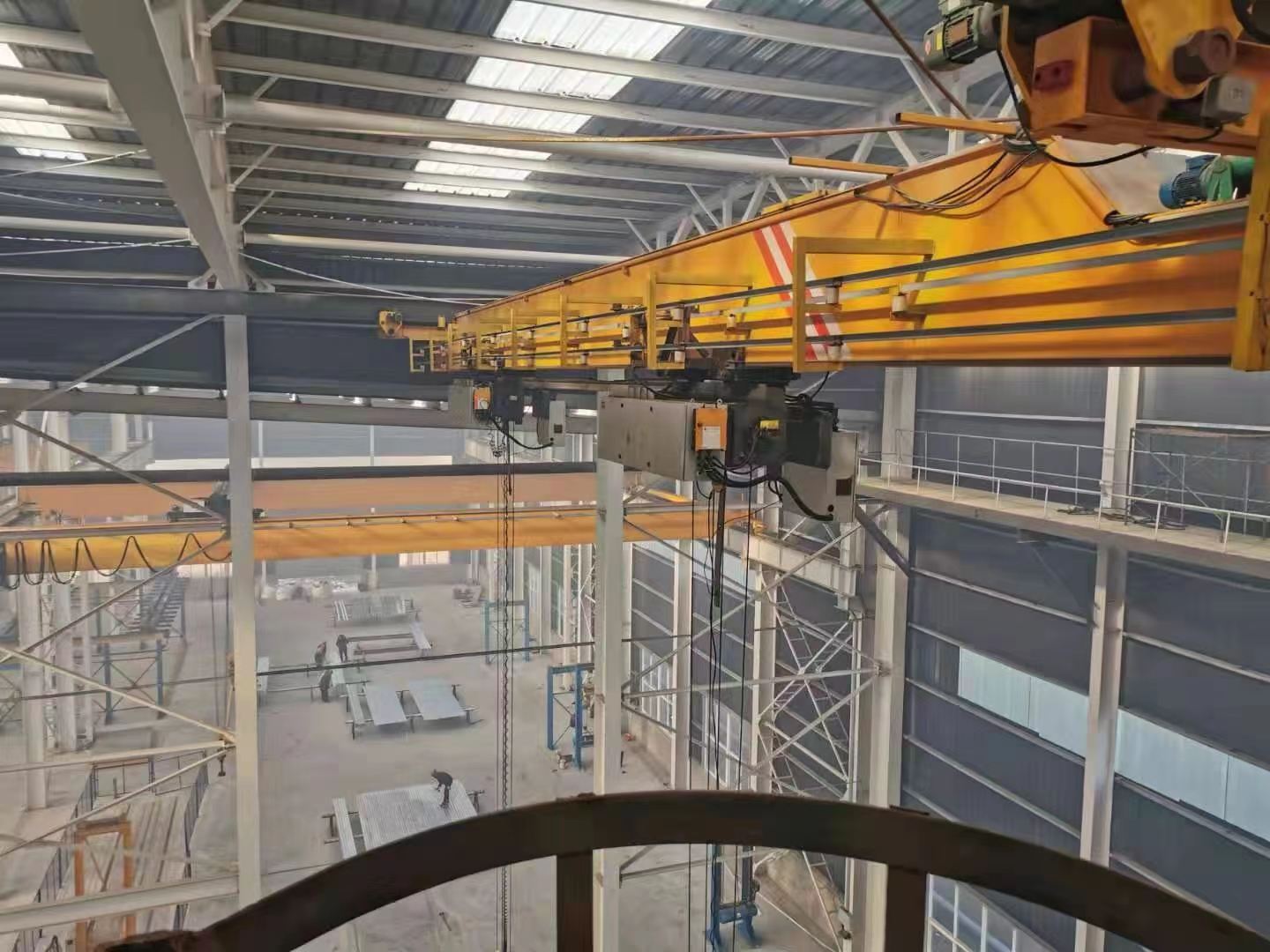
Material Science Foundation: Why High-Strength Steel Elevates Structural Performance
Yield Strength, Toughness, and Fatigue Resistance of ASTM A514/A656 and Q690D Grades
High-strength steel grades such as ASTM A514, ASTM A656, and Q690D deliver minimum yield strengths of 690 MPa—double that of conventional structural steels like Q345B (345 MPa). This elevated yield strength directly raises the threshold for permanent deformation under operational loads, a foundational requirement for explosion-proof single girder cranes where structural integrity must be preserved even under extreme or unexpected loading. Enhanced toughness ensures effective energy absorption and resistance to crack initiation and propagation—critical in hazardous environments where brittle fracture could trigger catastrophic failure. Fatigue resistance is equally vital for cyclic lifting; post-weld treatments such as stress-relieving or shot peening can elevate the fatigue strength of welded joints from ~100 MPa to ~150 MPa at 2 million cycles, per industry-validated testing (LBF Report, 2020). These performance gains stem from controlled microalloying with niobium and vanadium, which refine grain structure and improve long-term reliability under repetitive stress.
Critical Role of Weldability and Low-Temperature Impact Resistance in Hazardous Environments
Welded joints represent the most vulnerable points in a girder’s load path—especially in explosion-proof designs where discontinuities or residual stresses could compromise flameproof integrity. ASTM A514 and Q690D achieve reliable weldability through low carbon equivalent values (CEV < 0.42), minimizing hydrogen-induced cracking risk without demanding excessive preheat—supporting consistent, high-integrity welds across the main beam. Equally essential is low-temperature impact resistance: in ATEX/IECEx-certified applications, steel must retain ductility and fracture resistance in cold ambient conditions to prevent spark-generating fragmentation. Leading manufacturers specify a minimum Charpy V-notch impact value of 40 J at –20°C for primary girder plates—a benchmark validated to ensure shock absorption without brittle fracture during sudden loading events, such as emergency stops or load drops.
Structural Optimization: Maximizing Load-Bearing Capacity Without Compromising Explosion Safety
Thickness-to-Strength Tradeoffs: Reducing Girder Weight While Maintaining Deflection Limits at 1.5× Rated Load
Leveraging 690-MPa-grade steel enables significant reductions in girder depth and flange thickness while maintaining compliance with the industry-standard deflection limit of L/800 under 1.5× rated load. Compared to Q345B-based designs, this yields a 20–30% reduction in girder weight per meter—lowering wheel loads on runways, reducing motor sizing requirements, and easing thermal and mechanical constraints within explosion-proof enclosures. The key engineering challenge lies in preserving stiffness: thinner sections demand precise optimization of web stiffener spacing, flange-to-web ratios, and rib placement to control flexural deformation. Because high-strength steels maintain the same elastic modulus (~200 GPa) but offer higher strength-to-density ratios, designers can achieve target rigidity with less material—ensuring alignment of spark-free internal components remains intact and flameproof gaps stay sealed under service loads.
Finite Element Validation of Deformation Control Under Dynamic and Static Loads
Finite element analysis (FEA) is non-negotiable for verifying structural performance in ATEX-compliant single girder cranes. Models simulate combined static and dynamic loading—including hoist acceleration, trolley traverse inertia, and bridge travel forces—to map stress concentrations, strain distribution, and total deflection. Critical validation criteria include peak strain remaining below the elastic limit and total vertical deflection staying within the L/800 envelope—even under amplified 1.5× rated load conditions. Excessive flexing risks compromising flameproof enclosure integrity by opening micro-gaps or inducing component rubbing, both potential ignition sources. Through iterative digital refinement of stiffener layout, end-carriage geometry, and connection detailing, engineers confirm that the optimized high-strength girder delivers not only enhanced load capacity but also the dimensional stability required for safe, spark-free operation in explosive atmospheres.
Real-World Implementation: Case Evidence from ATEX-Compliant Explosion-Proof Single Girder Crane Models
32-Ton Explosion-Proof Single Girder Crane with Q690D Steel: 27% Higher Load-Bearing Margin vs. Q345B
At a Zone 1 ATEX-certified chemical processing facility, a 32-ton explosion-proof single girder crane fabricated with Q690D steel demonstrated a 27% greater load-bearing margin compared to an otherwise identical design using Q345B. Third-party static load testing at 1.5× rated capacity confirmed deflection remained well within L/800 limits, while FEA correlated closely with physical results. The full system—including flameproof motors, non-sparking running wheels, and certified explosion-proof electrical enclosures—met EN 60079-1 and EN 60079-7 requirements. Crucially, the increased margin wasn’t achieved through heavier construction; instead, it resulted from Q690D’s superior strength enabling more efficient section utilization. This case validates that high-strength steel allows single-girder configurations to safely handle demanding payloads in hazardous areas—without sacrificing certification integrity or operational flexibility.
Industry Trends and Practical Constraints in Adopting High-Strength Steel
Thermal Stress, Welding Procedure Qualification, and the ATEX Certification Impact on Material Choice
Adopting high-strength steels like Q690D introduces practical challenges centered on thermal management during fabrication. Heat-affected zone (HAZ) softening and cold cracking susceptibility require tightly controlled welding parameters—including preheat, interpass temperature, and cooling rates—making formal Welding Procedure Qualification (WPQ) mandatory. ATEX certification further constrains material selection: standards mandate non-sparking composition, limit heat input to avoid localized ignition risks, and require traceable filler metals compatible with base steel chemistry. As a result, manufacturers must invest in pre-qualified procedures, rigorous non-destructive testing (e.g., ultrasonic inspection of all critical welds), and documented process controls. While regulatory complexity slows adoption, the trend toward advanced high-strength steels continues—driven by efficiency gains and safety imperatives. Ultimately, successful implementation hinges on balancing material performance with verifiable compliance—not just meeting ATEX requirements, but embedding them into the structural design philosophy from material selection onward.
FAQ
What are the key benefits of using high-strength steel like Q690D in structural applications?
High-strength steel like Q690D offers elevated yield strength, enhanced toughness, and fatigue resistance. These properties make it ideal for applications requiring high structural integrity, such as explosion-proof cranes, while also enabling significant material and weight savings.
Why is weldability crucial for explosion-proof designs?
Weldability ensures the creation of high-integrity joints with minimal risk of hydrogen-induced cracking or stress-related failures. This is critical in explosion-proof designs, which require high durability and resistance to spark-generating mechanical failures.
How does Q690D steel maintain performance in low-temperature environments?
Q690D steel achieves low-temperature performance through enhanced ductility and fracture toughness, validated by Charpy V-notch impact testing, ensuring safety and structural integrity in cold conditions.
What role does finite element analysis (FEA) play in structural optimization?
FEA simulates real-world static and dynamic loading scenarios to validate stress, strain distribution, and deflection limits. This ensures the optimized design meets both structural performance and regulatory requirements.
What challenges are involved in adopting high-strength steels like Q690D?
Challenges include managing thermal stress during fabrication, qualifying welding procedures, and meeting ATEX certification standards. Balancing these constraints with efficiency gains is key to successful implementation.
Table of Contents
- Material Science Foundation: Why High-Strength Steel Elevates Structural Performance
- Structural Optimization: Maximizing Load-Bearing Capacity Without Compromising Explosion Safety
- Real-World Implementation: Case Evidence from ATEX-Compliant Explosion-Proof Single Girder Crane Models
- Industry Trends and Practical Constraints in Adopting High-Strength Steel
-
FAQ
- What are the key benefits of using high-strength steel like Q690D in structural applications?
- Why is weldability crucial for explosion-proof designs?
- How does Q690D steel maintain performance in low-temperature environments?
- What role does finite element analysis (FEA) play in structural optimization?
- What challenges are involved in adopting high-strength steels like Q690D?