
 EN
EN
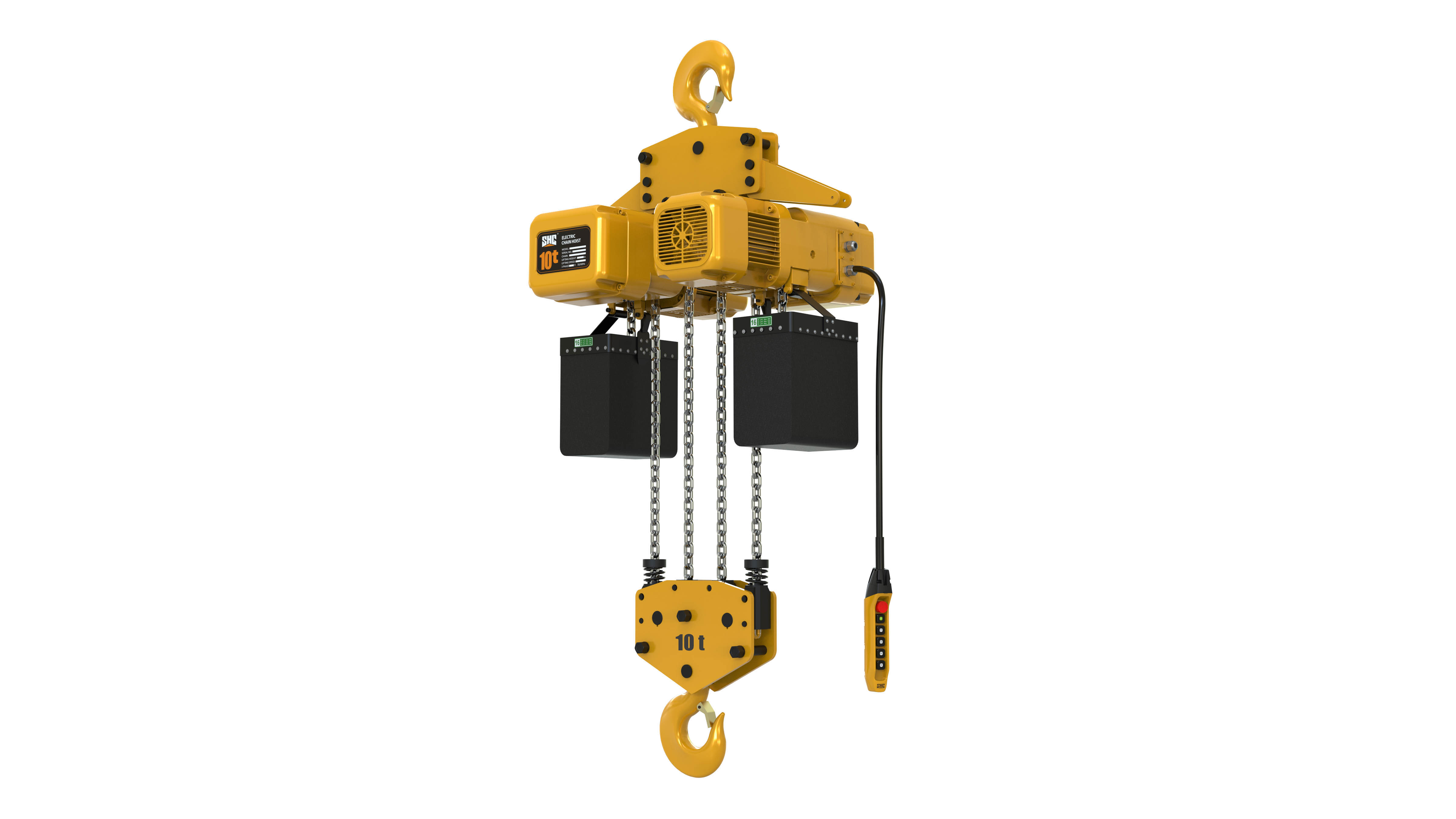
Compact Structure: Optimized for Space-Constrained Industrial Environments
Low Headroom (LHR) Design Principles That Maximize Vertical Clearance Efficiency
Achieving maximum lift height in facilities with low ceilings is a persistent challenge. An electric wire rope hoist engineered with low-headroom (LHR) principles solves this by integrating the hoist and trolley into a single, ultra-compact unit—positioning the hoist between or above the runway beams rather than suspending it below. This reorientation reduces the distance from the bottom of the runway to the hook’s highest position by up to 30% compared to standard monorail hoists, according to a 2023 crane engineering analysis. The result is several hundred millimeters of reclaimed vertical clearance—critical when every centimeter matters.
Key design elements include shortened drum lengths, offset rope reevings, and integrated upper limit switches that halt travel precisely at the safe maximum point. These innovations preserve hook speed, control responsiveness, and lifting capacity without compromising safety. LHR-equipped hoists turn wasted overhead space into usable working height—enabling productivity gains in retrofitted manufacturing lines, low-clearance warehouses, and cramped process bays.
High Load Capacity in Minimal Footprint: Engineering Trade-Offs and Material Innovations
Packing high tonnage into a minimal footprint demands careful engineering—not compromise. Once assumed to require sacrificing durability or lifting power, compact hoists now leverage advances in material science and mechanical design to deliver both strength and density. High-strength, low-alloy steels reduce structural weight by roughly 20% while maintaining or exceeding load ratings in drum and gearbox housings. Advanced helical gear sets and hardened load sheaves transmit high torque efficiently within tight envelopes, and optimized rope drum profiles extend wire rope service life.
Still, thermal management remains a key constraint: tighter component spacing limits natural heat dissipation, requiring duty cycle alignment with application intensity. A 10-ton unit in a footprint previously reserved for a 6-ton conventional hoist is now commercially viable, as confirmed in the 2024 Industrial Lifting Equipment Review. This enables plant engineers to upgrade lifting capacity within existing structural steel—avoiding costly building modifications. Success hinges on matching the hoist’s material specifications and thermal limits to its assigned duty class, ensuring space savings never undermine reliability.
Easy Operation: Intuitive Control and Operator-Centric Ergonomics
The operational simplicity of an electric wire rope hoist is not incidental—it’s foundational to safety, precision, and throughput. By designing around how operators naturally interact with machinery, modern hoists convert complex lifts into intuitive, reflexive actions. This human-centric approach lowers cognitive load and physical strain, helping operators sustain focus during repetitive, safety-critical tasks across full shifts.
Push-Button Pendant and Remote Controls for Precise, Fatigue-Reducing Electric Wire Rope Hoist Operation
Ergonomic push-button pendants and wireless remote controls serve as the primary human-machine interface. Designed to fit naturally in the hand, they feature tactile, clearly labeled buttons that minimize visual reliance—keeping the operator’s attention on the load and environment. Layouts follow logical motion groupings (hoist, trolley, bridge), aligning with instinctive directional expectations. This reduces training time and prevents errors during high-stakes maneuvers.
A 2023 survey by the Material Handling Institute found that facilities upgrading to ergonomic remotes achieved a 15% average improvement in final load placement accuracy. Equally important, operators gain flexibility to position themselves safely and effectively—reducing awkward postures and repetitive strain. As noted in the Liberty Mutual Workplace Safety Index (2023), ergonomic interventions are the most effective strategy for preventing musculoskeletal disorders—the leading cause of lost workdays in industrial settings.
Variable Frequency Drives (VFDs) and Smooth Acceleration/Deceleration for Safer, More Responsive Lifting
Responsiveness is integral to ease of operation—and VFDs fundamentally elevate performance. Replacing abrupt starts and stops with controlled, fluid motion, VFDs enable infinite speed modulation, allowing operators to inch heavy components into place with surgical precision. Smooth acceleration and deceleration eliminate shock loading, which is the primary trigger for dangerous, uncontrolled load swing.
A 2024 case study at a turbine maintenance facility demonstrated that VFD integration reduced load settling time by 20% and eliminated micro-shocks capable of damaging sensitive components. For operators, this translates to predictable behavior, fewer corrective adjustments, and significantly lower mental stress—especially when handling high-value, unstable loads.
Real-World Performance: How Compactness and Ease of Operation Deliver ROI in Critical Applications
Automotive Assembly Line Retrofit Case Study: <2.5m Headroom Electric Wire Rope Hoist Integration
A major automotive manufacturer needed to install a transfer station in an engine assembly bay with only 2.4 meters of overhead clearance. Standard hoists would have required expensive structural reinforcement. Instead, engineers deployed a low-headroom (LHR) electric wire rope hoist featuring a compact double-girder trolley and integrated VFD control—achieving total height under 2.5 m while sustaining a 5-tonne capacity.
The VFD’s smooth motion eliminated load swing, cut positioning time by 18%, and reduced operator fatigue—feedback showed a 30% drop in reported strain complaints after switching to the ergonomic pendant. Installation was completed in three days with zero production stoppage. Within the first year, throughput increased by 12%, material-handling-related downtime fell by 20%, and energy use dropped 18% thanks to regenerative braking. Modular design further accelerated maintenance: critical components like limit switches were replaced in under 15 minutes. Total annual savings of $48,000 delivered full payback in just seven months—proving that intelligent, space-saving hoist design delivers rapid, measurable ROI in constrained environments.
Future-Ready Evolution: Smart Features and Modular Design in Modern Electric Wire Rope Hoists
Modern electric wire rope hoists are evolving into intelligent, connected systems built for Industry 4.0. Embedded IoT sensors monitor load cycles, motor temperature, rope condition, and real-time positioning—feeding data to predictive maintenance platforms that flag wear before failure causes unplanned downtime. Integrated safety features—including anti-sway algorithms, overload protection, and fail-safe electromagnetic brakes—work in concert with AI-assisted diagnostics to reduce accident risk during high-cycle operations.
A modular architecture separates the hoist into interchangeable subassemblies—drive units, control modules, and rope reeving systems—enabling customization for tight headroom or specialized workflows without replacing the entire unit. VFDs continue to enhance responsiveness and energy efficiency, while open communication protocols (e.g., EtherNet/IP, Modbus TCP) support seamless integration with plant-wide automation and SCADA systems. This adaptability extends equipment lifecycle, lowers total cost of ownership, and supports agile reconfiguration as production needs shift—making future-ready hoists a strategic asset for modern manufacturing and logistics operations.
FAQs
1. What is the primary advantage of low-headroom (LHR) electric wire rope hoists?
LHR electric wire rope hoists maximize vertical clearance by integrating the hoist and trolley into a compact design, allowing for efficient use of overhead space in low-ceiling facilities.
2. How do material innovations impact the performance of compact hoists?
Advanced materials like high-strength, low-alloy steels reduce structural weight without compromising load capacity, enabling compact designs that deliver high lifting power and durability.
3. What benefits do Variable Frequency Drives (VFDs) provide in hoist systems?
VFDs enable smooth motion control, reduced load swing, and precise positioning, which improve operational safety and efficiency in lifting operations.
4. How do ergonomic controls improve operator performance?
Ergonomic control designs reduce physical strain, make operation intuitive, and minimize errors, leading to enhanced productivity and safety.
5. What features make modern hoists suitable for Industry 4.0?
Features like IoT integration, predictive maintenance, modular design, and compatibility with automation systems prepare modern hoists for the demands of Industry 4.0 environments.
Table of Contents
- Compact Structure: Optimized for Space-Constrained Industrial Environments
- Easy Operation: Intuitive Control and Operator-Centric Ergonomics
- Real-World Performance: How Compactness and Ease of Operation Deliver ROI in Critical Applications
- Future-Ready Evolution: Smart Features and Modular Design in Modern Electric Wire Rope Hoists
- FAQs