
 EN
EN
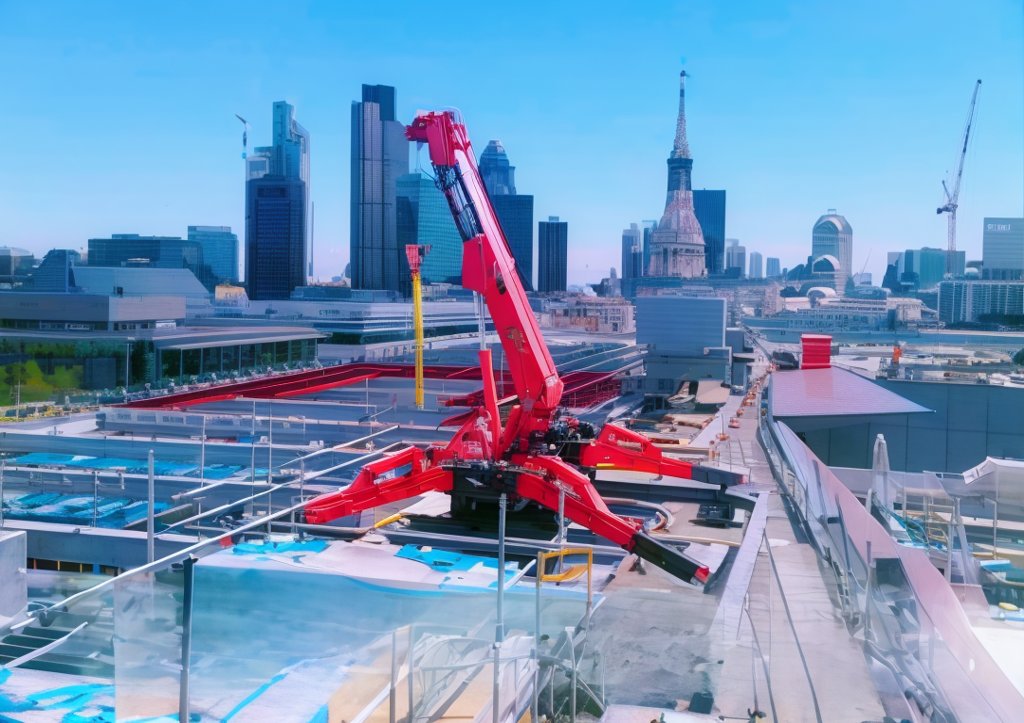
Enabling Industry 4.0 with Servo Lifting Systems and Smart Connectivity
Integration of Servo Technology in High-Speed Automation
Today's servo lifting systems can hit around 0.05 mm accuracy when moving materials quickly, which is actually three times better than what old pneumatic systems could manage according to IFR data from 2023. They work really well alongside conveyor belts running at about 1.2 meters per second too. Even better, these systems keep loads stable with less than 2 degrees of tilt, something that helps car factories cut down on their production cycles by nearly 20 percent. What makes this possible? A direct drive setup that gets rid of those pesky gear issues. This means machines can adjust power instantly whenever they need to change direction suddenly in packaging operations, making everything run smoother and faster across the board.
Industry 4.0 and Connectivity in Servo-Driven Systems
Modern servo lifters come equipped with OPC UA communication protocols that can send and receive over 120 operational parameters every single second when talking to manufacturing execution systems (MES). This connection allows for predictive maintenance because we can analyze things like motor winding temperatures and bearing vibrations in real time, comparing them against past failure data patterns. Facilities that have implemented these connected servo hoists report cutting down on unexpected downtime by around 34%, according to research from last year. For those looking at even faster performance, there are EtherCAT enabled models available too. These handle cycle times as short as 250 microseconds, which means all the different parts of an automation cell stay perfectly synchronized during operation.
Closed-Loop Feedback for Real-Time Control in Smart Factories
Modern servo controllers handle around 2,000 feedback signals every single second coming from those fancy high-res encoders and strain gauges. This lets them automatically adjust for different weights all the way up to 1,500 kilograms. When it comes to really precise machining work, these systems keep things locked in place with amazing accuracy - we're talking just 5 microns of variation even when cutting forces change constantly during operations. Factory floor reports show something pretty impressive too. Companies that switch to servo systems equipped with smart vibration control tech see their rejection rates drop by about 27% in CNC loading setups. That kind of improvement makes a real difference in bottom line costs over time.
PLC Integration with Lifting Systems for Synchronized Operations
New servo lifters come equipped with built-in CODESYS runtime environments, which means engineers can program directly to PLCs without needing those extra protocol conversion boxes. What does this mean practically? Response times drop below 2 milliseconds between safety sensors and motor brakes, something absolutely critical when working with collaborative robots on factory floors. Look at what's happening in the automotive industry too. Major Tier 1 suppliers using these unified control systems are seeing some impressive results. Their production lines now switch configurations 22 percent quicker because they've standardized how all those servo-driven lifts and transfer mechanisms get set up. Makes sense really - when everything talks the same language, setup becomes much less of a headache.
Precision Motion Control: Torque, Speed, and Accuracy in Dynamic Loads
Modern servo lifting systems achieve unprecedented precision by balancing three critical performance factors: torque output, speed modulation, and positioning accuracy. These capabilities are essential in automated environments where dynamic loads demand real-time adjustments to maintain operational stability.
Torque and Speed Control of Servo Motors in Dynamic Loads
Servo motors can produce varying amounts of torque between 2 Newton meters and all the way up to 150 Nm, and they manage to keep spinning at impressive speeds reaching 6,000 revolutions per minute. What makes these motors so valuable is their ability to control both torque and speed simultaneously. This means lifting equipment can cope with changing loads without coming to a sudden stop, which matters a lot when dealing with oddly shaped items or when there are unexpected movements during operation. The system's smart software actually tweaks how much torque gets applied every half millisecond, something that stops things from going too far on those conveyor belts used in manufacturing plants.
Precision Control in Manufacturing Through Servo Actuators
Closed-loop feedback systems achieve positioning accuracies of ±0.01 mm in multi-axis lifting operations. High-resolution encoders with up to 24-bit resolution provide 16.7 million discrete position measurements per revolution, making such precision vital in semiconductor manufacturing, where robotic arms require micron-level repeatability for wafer handling.
Efficiency Gains in Automated Motion Control Workflows
Smart servo systems reduce energy consumption by 18–32% compared to traditional hydraulic lifts through regenerative braking and load-adaptive power management. Facilities using servo-powered spider cranes report 22% faster cycle times in confined spaces while maintaining strict safety margins.
| Performance Metric | Servo System | Traditional System | Improvement |
|---|---|---|---|
| Energy Consumption | 2.1 kWh | 3.4 kWh | 38% reduction |
| Positioning Error | ±0.015mm | ±0.25mm | 16x tighter |
| Maintenance Cycles | 12,000 hrs | 4,000 hrs | 3x longer |
These advancements help manufacturers meet ASME B30.26 compliance in lifting operations while aligning with Industry 4.0 production targets.
Integrating Servo Lifting Systems with Robotics and AGVs
Servo Motor Integration in Robotic Arms for Coordinated Lifting
Today's robotic arms can handle materials with incredible precision down to fractions of a millimeter thanks to their servo-driven joints. When these systems work alongside conveyor belts, they maintain position differences under half a millimeter while still running at around 85% efficiency when moving back and forth repeatedly. Servo motors have a big advantage over older pneumatic systems because they can adjust on the fly. This means factories don't need to stop production lines just to switch between handling small parts weighing about 5 kilograms and heavy items up to 2 tons without changing any physical components.
Servo-Powered Lifting in AGVs and AMRs for Flexible Material Handling
Autonomous Guided Vehicles with built-in servo lifts can move pallets around crowded warehouses about 25% quicker than traditional hydraulic systems. Modern Automated Mobile Robots now feature closed loop servo controls that fine tune lifting power within roughly plus or minus 2% when dealing with odd shaped car parts or delicate electronic equipment. For instance, these robots can gently handle those tricky engine blocks without crushing them. According to industry research from Ponemon back in 2023, this kind of flexibility cuts down on damaged goods during car manufacturing processes by almost half, which makes a big difference for production line efficiency.
AGV and AMR Compatibility with Compact Servo Lifting Solutions
Facilities where space is at a premium find these compact servo lift modules really useful, especially since they can be as short as 300 mm tall and fit right into AGV chassis designs without any issues. The systems handle vertical movement of up to three full meters, plus they comply with those important ISO 13849 safety requirements needed when humans work alongside machines. What makes them stand out though is their modular design that connects directly to PLC controllers using EtherCAT communication. This allows for seamless timing coordination between these lifts and spider crane systems when different types of automation need to work together in the same workspace.
Spider Crane Applications Enabled by High-Precision Servo Actuators
How Servo Actuators Power Agile Spider Crane Systems in Automation
High-precision servo actuators enable spider cranes to achieve exceptional agility in industrial automation, delivering ±0.05 mm repeatability (IFT 2023) for precise load positioning in robotic assembly and logistics hubs. Closed-loop feedback dynamically adjusts torque and speed in response to load variations, reducing sway during lateral movements by 63% compared to hydraulic alternatives.
According to a 2023 MHI report, servo-equipped spider cranes improved cycle times by 30% in automotive part handling while maintaining 99.5% positional accuracy. Key benefits include:
- Real-time load compensation: Automatically adjusts lifting force during uneven load shifts
- Energy-efficient operation: Regenerative braking recovers 18–22% of power during descent phases
- Seamless integration: Direct communication with PLCs through EtherCAT protocols eliminates control latency
Compact Lifting Solutions for Constrained Spaces in Manufacturing and Logistics
Servo-driven spider cranes optimize material handling in space-limited settings, with modular configurations fitting aisles as narrow as 1.8 meters. Decentralized drive systems eliminate bulky gearboxes, reducing footprint by 40% versus traditional overhead cranes—all while supporting 2-ton lifting capacities.
In pharmaceutical cleanrooms and micro-fulfillment centers, these systems deliver Z-axis positioning accuracy within 0.1 mm, crucial for handling sensitive components. A 2024 Warehousing Efficiency Study found that servo-actuated spider cranes increased vertical space utilization by 57% in facilities with ceiling heights under 8 meters, thanks to adaptive multi-layer stacking algorithms.
FAQ
What are the benefits of servo lifting systems compared to traditional systems?
Servo lifting systems offer numerous advantages, including improved accuracy, reduced energy consumption, and longer maintenance cycles. They also enhance precision in material handling and reduce rejection rates in manufacturing processes.
How do servo systems communicate with manufacturing execution systems?
Servo systems use OPC UA communication protocols to exchange over 120 operational parameters every second, facilitating predictive maintenance and real-time monitoring.
Can servo systems handle heavy loads and dynamic conditions?
Yes, modern servo controllers can automatically adjust for different weights up to 1,500 kilograms with high precision, and they offer flexibility for handling dynamic loads through advanced torque and speed control.
Are servo systems compatible with robotics and AGVs?
Absolutely. Servo motors integrate seamlessly with robotic arms and autonomous guided vehicles, facilitating precise and flexible material handling without the need for production line stoppages.
How do servo lifting systems contribute to Industry 4.0?
Servo lifting systems enable smart connectivity and real-time control with integrated communication protocols and feedback mechanisms, aligning with Industry 4.0 production targets and enhancing automation efficiency.
Table of Contents
- Enabling Industry 4.0 with Servo Lifting Systems and Smart Connectivity
- Precision Motion Control: Torque, Speed, and Accuracy in Dynamic Loads
- Integrating Servo Lifting Systems with Robotics and AGVs
- Spider Crane Applications Enabled by High-Precision Servo Actuators
-
FAQ
- What are the benefits of servo lifting systems compared to traditional systems?
- How do servo systems communicate with manufacturing execution systems?
- Can servo systems handle heavy loads and dynamic conditions?
- Are servo systems compatible with robotics and AGVs?
- How do servo lifting systems contribute to Industry 4.0?