
 EN
EN
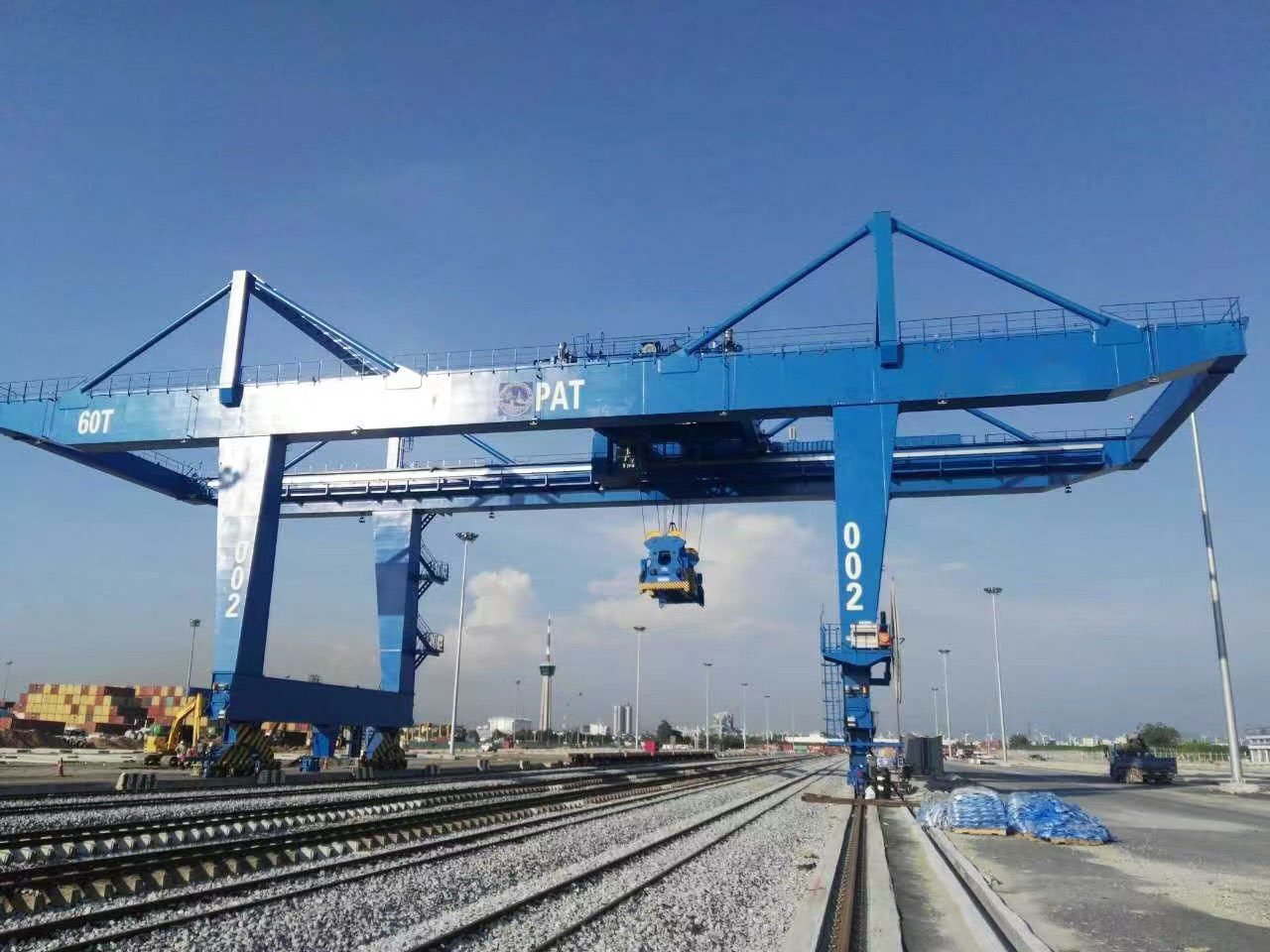
Core Architecture of Intelligent Control Modules for Remote Control Crane Systems
Integration of PLCs, real-time sensors, and low-latency wireless protocols
At the foundation of every modern remote control crane lies a tightly integrated control module that merges programmable logic controllers (PLCs), real-time sensor arrays, and ultra-reliable wireless links. The PLC acts as the central processing hub, continuously ingesting data from load cells, encoder-based position feedback, tilt sensors, and vibration monitors. These inputs are fused in microseconds to execute precise motion commands—anti-sway algorithms, synchronized multi-axis travel, and gradual acceleration profiles—all governed by variable frequency drives.
The entire loop depends on deterministic, low-latency communication: industrial Wi-Fi 6 and 5G Ultra-Reliable Low-Latency Communication (URLLC) maintain round-trip times consistently below 20 ms—a threshold critical for preserving real-time control fidelity in electrically noisy environments. Achieving sub-50 ms latency has been shown to improve lift-cycle precision by over 25% (CraneTech Analysis 2023). This closed-loop architecture eliminates reliance on legacy wired pendants and enables seamless handover between access points, ensuring responsiveness during complex maneuvers across large worksites.
AI-augmented decision logic: From reactive automation to predictive crane behavior
Intelligent modules embed AI inference engines running on edge processors—shifting crane operation from reactive automation to predictive behavior. Machine learning models, trained on historical load-cycle data, ambient temperature trends, and motor-current signatures, anticipate dynamic responses before they occur. For example, instead of reacting to sway after a wind gust, the system predicts swing magnitude using real-time wind sensor input and applies feed-forward torque compensation to adjust hoist speed proactively. Field data shows such predictive anti-sway functions reduce incident triggers by 32% compared to conventional systems (2024 Material Handling Intelligence report).
On the maintenance side, AI analyzes subtle deviations in vibration spectra and thermal gradients to forecast component wear—alerting operators to impending bearing failure or brake drift well before operational impact. Because this logic runs locally within the control module, full autonomy is preserved even during cloud connectivity loss. The result is a remote control crane that operates with foresight, significantly elevating both safety margins and asset availability.
Enhancing Operator Experience and Safety in Remote Control Crane Operations
Human-centered HMI design: Reducing cognitive load during complex multi-axis maneuvers
A human-centered Human-Machine Interface (HMI) is essential for safe remote crane operation—especially when managing concurrent hoist, trolley, and slewing movements. Intelligent control modules reduce cognitive load by filtering sensor data and presenting only context-relevant information through adaptive dashboards. During high-speed transit, the display prioritizes boom angle, speed, and sway limits; as the load approaches its destination, it shifts focus to fine-positioning cues and obstacle proximity warnings.
Real-time load-moment indicators and predicted swing-radius overlays are fused directly onto live camera feeds, eliminating mental switching between disparate readouts. Haptic feedback—such as joystick stiffening or vibration near weight thresholds—conveys warnings tactilely, keeping visual attention on the load. Predictive path visualization draws the intended trajectory seconds ahead, helping operators anticipate and refine commands before execution. Voice controls for routine functions keep hands on manipulators and eyes on the crane. By aligning with established ergonomic standards, these design principles lower operator error rates and accelerate response times in multi-axis trials—transforming raw machine data into intuitive, prioritized insights that safeguard personnel and assets.
Latency-critical thresholds (<120ms) and their impact on situational awareness and incident prevention
In remote crane operations, latency directly shapes situational awareness: delays exceeding 120 milliseconds disrupt natural hand–eye coordination, prompting overcorrection and misjudged momentum. An operator seeing delayed swing may apply excessive reverse input—amplifying oscillation rather than damping it. Intelligent control modules mitigate this by performing real-time sensor processing at the edge, bypassing cloud-dependent latencies. Combined with advanced wireless protocols and onboard compute, round-trip response remains reliably under 80 ms—even in metal-rich port settings.
At that speed, visual feedback and haptic resistance feel instantaneous, preserving the perception of direct control. This immediacy empowers rapid, accurate adjustments during delicate load placement near structures or personnel. Field testing confirms that sub-100-millisecond response correlates strongly with reduced near-miss events. Ultimately, strict latency control transforms remote operation from a delayed, screen-mediated task into an instinctive, real-time extension of the operator’s intent.
Ensuring Uninterrupted Uptime: Network Resilience and Remote Diagnostics for Remote Control Crane
Dual-band wireless redundancy, failover protocols, and >99.99% uptime in harsh RTG port environments
Network resilience is foundational to continuous uptime—particularly in harsh RTG port environments where metal structures and electromagnetic interference frequently degrade wireless signals. Intelligent control modules address this with dual-band wireless redundancy (2.4 GHz and 5 GHz), paired with instantaneous failover protocols. When signal quality degrades on one band, the system switches seamlessly to the other—maintaining latency below 120 ms and uninterrupted control. Reinforced by leaky cable transmission for uniform coverage, this architecture routinely achieves availability exceeding 99.99%, meeting the stringent demands of 24/7 terminal operations.
Onboard remote diagnostics continuously monitor link health, packet loss, and hardware status—feeding actionable insights to cloud-based dashboards that alert maintenance teams before failures occur. This proactive approach prevents costly downtime while reinforcing safety and productivity across every remote control crane on site.
Scalable Fleet Management: Multi-Crane Coordination via Intelligent Remote Control Tower Crane Systems
Modern construction and logistics sites increasingly rely on coordinated fleets of tower cranes operating in tight spatial proximity. Intelligent control modules serve as the central orchestration layer—enabling operators to oversee and direct multiple remote control cranes from a single interface. Real-time data streams from each unit—including load weight, boom position, and wind speed—feed AI-driven scheduling algorithms that dynamically optimize task sequencing, prevent collisions, minimize idle time, and route payloads along the most efficient paths.
Industry evidence supports these gains: a 2023 study on smart crane deployments found that coordinating just three tower cranes with predictive logic increased throughput by 25% while cutting energy consumption by 15%. Role-based access allows supervisors to assign tasks and dedicated operators to execute high-precision maneuvers as needed. Crucially, the modular architecture supports plug-and-play scalability—new cranes join the fleet simply by network registration, without reprogramming. This flexibility future-proofs operations whether expanding from two to ten cranes—or integrating mobile cranes into the same command ecosystem.
FAQ
Q: What is the role of PLCs in a remote control crane system?
A: PLCs act as the central processing hub, ingesting real-time data from sensors and executing motion commands like anti-sway algorithms, synchronized axis travel, and gradual acceleration profiles.
Q: How do AI modules ensure predictive crane behavior?
A: AI modules use machine learning models to analyze data like wind sensor input and predict behavior. They help anticipate issues such as sway or component failures, reducing incidents and improving safety.
Q: How do intelligent control modules enhance operator experience?
A: Intelligent modules use human-centered HMI design to reduce cognitive load, provide context-focused displays, integrate haptic feedback, and enable predictive path visualization for safer operations.
Q: Why is low latency critical in remote crane operations?
A: Latency below 120 milliseconds ensures natural hand–eye coordination, preventing overcorrection and enhancing response accuracy. This helps reduce near-miss events and maintains situational awareness.
Q: How is network resilience achieved in RTG ports?
A: Network resilience is achieved using dual-band wireless redundancy and failover protocols. These measures ensure uninterrupted connectivity even in electromagnetically noisy environments.
Q: Can intelligent modules scale across multiple cranes?
A: Yes, the modular architecture supports plug-and-play scalability, allowing fleets of cranes to be coordinated seamlessly from a single interface without the need for extensive reprogramming.
Table of Contents
- Core Architecture of Intelligent Control Modules for Remote Control Crane Systems
- Enhancing Operator Experience and Safety in Remote Control Crane Operations
- Ensuring Uninterrupted Uptime: Network Resilience and Remote Diagnostics for Remote Control Crane
- Scalable Fleet Management: Multi-Crane Coordination via Intelligent Remote Control Tower Crane Systems