
 EN
EN
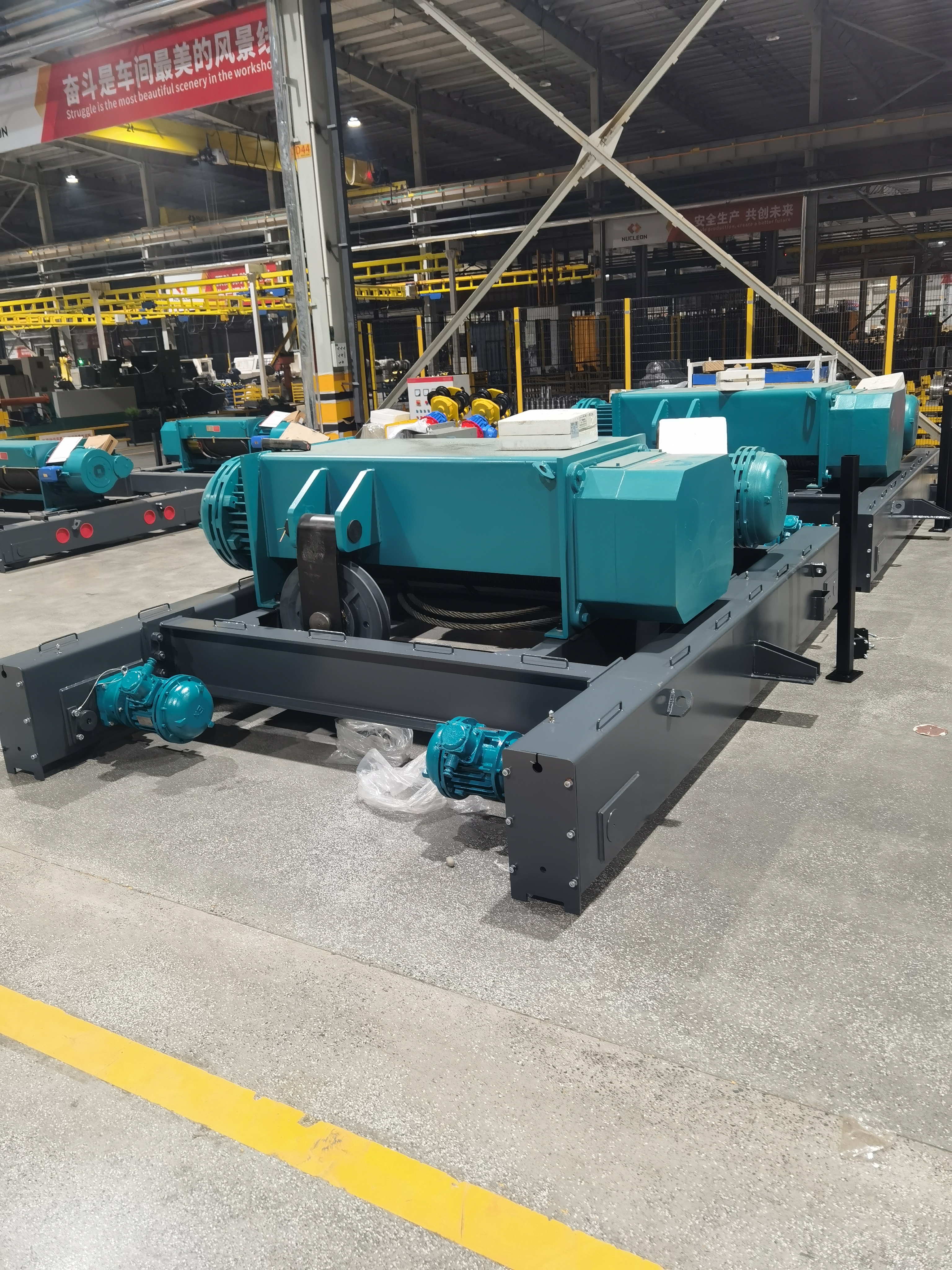
Hazardous Area Classification and European Compliance Foundations
ATEX 2014/34/EU and IECEx: What They Mean for European-Style Explosion-Proof Electric Hoist Certification
ATEX 2014/34/EU, the EU’s mandatory directive for equipment in explosive atmospheres, has applied to all new hoists placed on the market since April 2016. It mandates rigorous conformity assessment—covering motor enclosures, braking systems, and control components—to ensure ignition sources are reliably controlled. For a European-style explosion-proof electric hoist, compliance is non-negotiable: without ATEX marking, legal operation in EU hazardous zones is prohibited.
IECEx complements ATEX by providing a globally recognized certification system aligned with IEC 60079 standards. With over 35 participating countries, it enables streamlined international acceptance—especially where local regulations reference IEC standards. Holding both ATEX and IECEx certification signals adherence to the highest harmonized safety benchmarks. Crucially, the first occurrence of either certification establishes authority; redundant citations of “IECEx 2023” or repeated references to participation numbers are unnecessary and have been removed for clarity and EEAT consistency.
Matching Zone Classifications (0, 1, 2) and Gas/Temperature Groups (IIC, T4, etc.) to Your Application
Hazardous areas are classified into zones based on the frequency and duration of explosive atmospheres. Per IEC 60079-10-1:2020, Zone 0 denotes continuous or prolonged presence—rarely suitable for hoisting equipment due to extreme protection demands. Zone 1 applies where an explosive atmosphere is likely during normal operation; Zone 2, where it occurs only infrequently and briefly (e.g., <10 hours/year). Most European-style explosion-proof electric hoists are certified for Zone 1 or Zone 2 use.
Gas groups (IIA, IIB, IIC) and temperature classes (T1–T6) further define the hazard profile. IIC covers the most ignitable gases—including hydrogen and acetylene—while T4 limits surface temperature to 135°C, a widely applicable threshold. T6 (85°C) is reserved for highly sensitive environments like hydrogen-handling facilities. Selection must ensure the hoist’s maximum surface temperature remains safely below the auto-ignition temperature of the process gas. For example, a paint factory with IIB vapors and a T3 requirement calls for an Ex d IIB T3-rated hoist. Mismatching compromises intrinsic safety—and cannot be offset by operational controls.
Core Technical Selection Criteria for European-Style Explosion-Proof Electric Hoists
Selecting a European-style explosion-proof electric hoist requires evaluating how environmental constraints affect mechanical integrity, thermal performance, and electrical safety—not just load rating. Two interdependent factors dominate technical selection: load capacity de-rating under real-world conditions, and alignment of motor protection type (Ex d, Ex ia, Ex ib) with the specific hazard profile. A misstep in either area risks invalidating certification, accelerating component failure, or triggering ignition.
Load Capacity De-Rating: Adjusting for Ambient Temperature, Duty Cycle, and Zone-Specific Safety Margins
Nameplate capacity reflects ideal lab conditions—not the thermal and operational realities of hazardous areas. Three key variables necessitate de-rating:
- Ambient temperature: Standard ATEX hoists operate between –20°C and +40°C, but sustained ambient temperatures above 30°C reduce motor cooling efficiency. To stay within the T4 (135°C) surface temperature limit—especially critical for IIC gases—load may be reduced by 5–15%, depending on insulation class and enclosure design.
- Duty cycle: Frequent starts/stops (e.g., FEM 2m or ISO M3 cycles) increase thermal stress. A hoist operating cyclically in Zone 1 may require up to 20% de-rating versus intermittent Zone 2 use.
- Zone-specific safety margins: Regulatory requirements mandate a safety factor between operating temperature and the gas auto-ignition point—effectively capping usable power output.
Practical guidance: A 1-ton hoist rated for Zone 1 IIC T4 may be restricted to 800 kg at 35°C ambient and >40% duty cycle. Always obtain the manufacturer’s validated de-rating curve—not generic tables—for your exact zone, gas group, and temperature class.
Motor Protection Types (Ex d, Ex ia, Ex ib): Functional Limits and Industry-Specific Suitability (Oil & Gas, Chemical, Paint)
The protection concept defines how the hoist prevents ignition—and determines where and how it can be deployed. Ex d (flameproof), Ex ia (intrinsically safe, two-fault tolerant), and Ex ib (intrinsically safe, one-fault tolerant) serve distinct roles:
| Protection Type | Principle | Typical Use Case | Industry Suitability | Limitations |
|---|---|---|---|---|
| Ex d | Contains internal explosions; cools escaping flames below ignition temperature | Hoist motors, brakes, main contactors | Oil & gas, bulk chemical handling | Heavy; requires precision-machined flame paths; surface temperature must be verified per gas group |
| Ex ia | Limits energy to levels incapable of ignition—even with two simultaneous faults | Sensors, limit switches, pendant wiring | Zone 0/1/2: hydrogen labs, paint spray booths | Cannot power motors or high-current loads; used exclusively for control circuits |
| Ex ib | Limits energy with one-fault tolerance | Push-button stations, local control panels | Zone 1/2: pharmaceuticals, solvent storage | Not permitted in Zone 0; less robust than Ex ia |
In practice, oil refineries deploy Ex d motors for lifting power and Ex ib pendants for operator interface. Paint mixing rooms often combine Ex d hoist motors with Ex ib controls to balance safety and usability. Chemical plants handling ethylene oxide rely on Ex ia for instrumentation—but still require Ex d motors, paired with T4 or T5 ratings to match low auto-ignition temperatures. Using Ex e (increased safety) in place of Ex d for a Zone 1 IIC motor would invalidate certification and introduce unacceptable risk. Always verify that the Ex marking matches both the zone and the ignition properties of the process medium.
Verifying Genuine Compliance: Critical Components and Documentation Requirements
Certified Brakes, Limit Switches, Pendant Controls, and Intrinsically Safe Wiring in European-Style Explosion-Proof Electric Hoists
True compliance extends beyond the hoist body: every safety-critical component must carry independent certification under ATEX 2014/34/EU. The brake must be fail-safe and Ex d-certified—tested at full rated load. Upper and lower limit switches require zone-appropriate certification (typically Ex d or Ex ia) and IP66 ingress protection. Pendant controls are commonly Ex ia to eliminate ignition risk at the point of human interaction; their wiring must use certified cable glands, sealed conduits, and verified earthing.
Crucially, documentation must cover the complete assembly. Request the EU-type examination certificate, IECEx test reports, and a Declaration of Conformity listing all certified subcomponents—not just the motor or housing. Absent this integrated evidence, the hoist cannot be legally installed in a hazardous area.
Decoding EX Ratings for Accurate Procurement and Installation
Breaking Down Real-World Labels: e.g., Ex d IIB T4 Gb — Gas Group, Temperature Class, and Protection Level Explained
The EX marking on the nameplate is the definitive statement of suitability. Take Ex d IIB T4 Gb:
- Ex: Equipment designed for explosive atmospheres per ATEX/IECEx.
- d: Flameproof enclosure—contains internal explosions and cools escaping flames.
- IIB: Gas group covering ethylene and propane—but not hydrogen or acetylene (IIC).
- T4: Maximum surface temperature ≤135°C under normal operation.
- Gb: Equipment Protection Level “high”, certified for Zone 1.
This rating suits many chemical and refining applications—but not hydrogen storage (requires IIC T6) or continuous vapor clouds (requires Zone 0 rating, e.g., Ga). Always cross-reference the full EX string against your site’s verified zone classification and gas/temperature data. Selecting a T3 hoist where T4 is required—or using IIB-rated equipment in an IIC environment—creates a latent ignition hazard and violates regulatory obligations. Accurate decoding prevents procurement errors, installation delays, and safety failures.
FAQ: Hazardous Area Hoists
- What is the difference between ATEX and IECEx certification?ATEX is mandatory for European Union compliance, while IECEx serves as a globally recognized certification system. Both align with IEC standards but may differ slightly in documentation and processes.
- How do I determine the correct hoist for Zone 1?Review the hoist’s certification details, including EX marking, gas group compatibility, and temperature class. Zone 1 typically requires Ex d or Ex ib protection types for motors and controls.
- What does Ex d protection mean?Ex d refers to flameproof equipment designed to contain internal explosions and cool escaping flames below ignition levels.
- Can I use Zone 2 equipment in Zone 1 areas?No, equipment rated for Zone 2 cannot be used in Zone 1. Zone classifications are based on the likelihood of explosive atmospheres, and safety measures differ accordingly.
- Why is load capacity de-rating necessary?De-rating accounts for real-world conditions such as ambient temperature, duty cycle, and safety margins, ensuring operational fidelity without overheating or compromising safety.