
 EN
EN
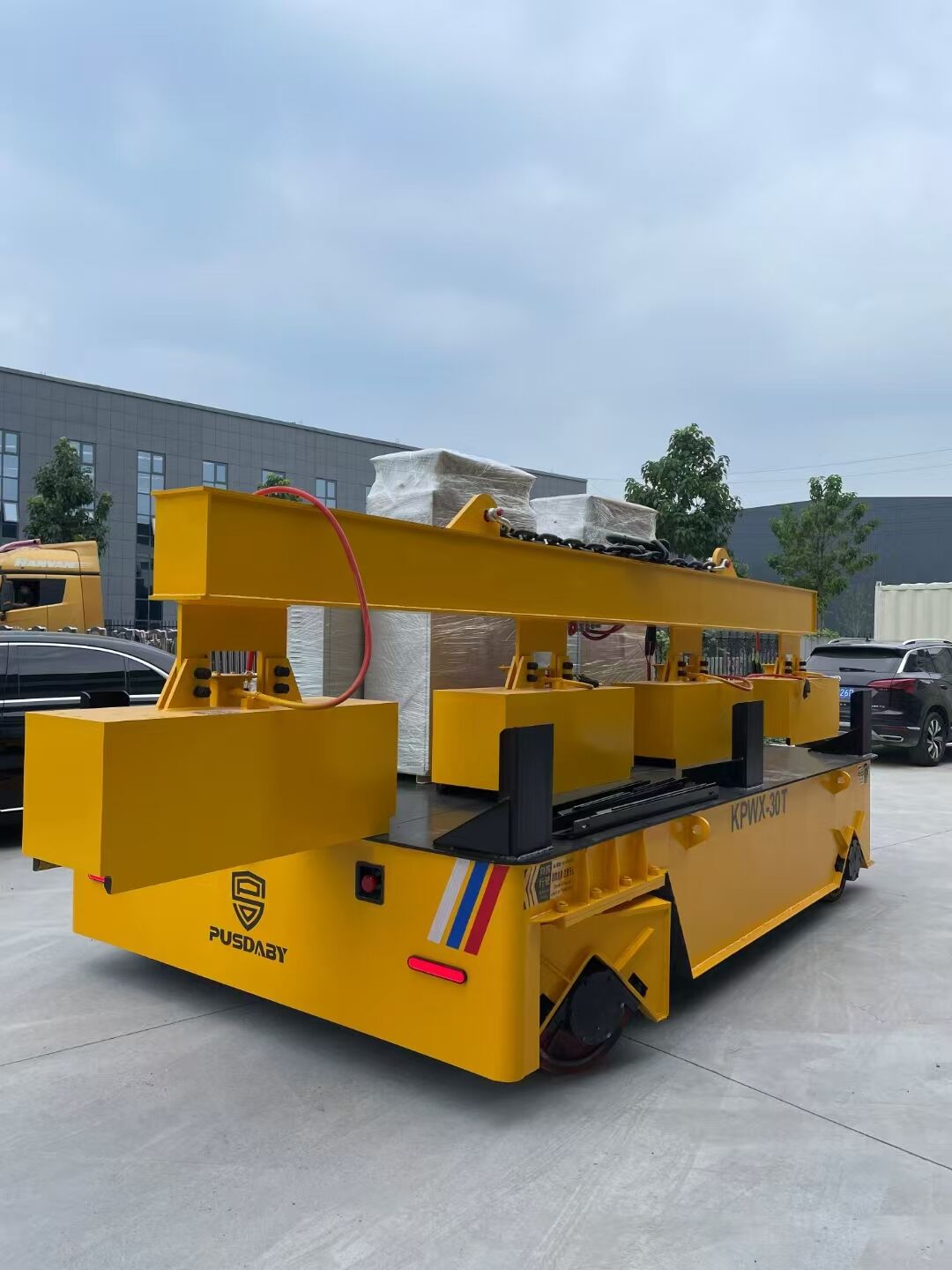
Fundamentals of Electric Motor Speed Control in Travel Lifts
The Role of Electric Motor Speed Control in Travel Lift Efficiency
Getting speed just right matters a lot when it comes to how well travel lifts work in different industries. When motors are controlled properly, they can cut down on energy use somewhere around 24 percent in systems that handle materials, plus make sure loads end up exactly where they need to be. The way these machines accelerate and slow down smoothly actually helps protect both what's being carried and the equipment itself, which means safer operations overall and longer lasting gear. These days most travel lifts come with variable speed settings because they have to deal with all sorts of weights ranging from maybe 1 ton up to as much as 50 tons. This flexibility proves really important at places like busy docks or big shipyards where conditions change constantly throughout the day.
DC Motor Speed Control Through Voltage and Current Modulation
Industrial DC motors used in flat car systems apply Ohm's Law principles to achieve precise speed adjustments. By modulating voltage, current, or armature resistance, operators can fine-tune motor behavior for specific tasks:
| Control Method | Speed Impact | Energy Efficiency |
|---|---|---|
| Voltage reduction | Linear RPM decrease | Maintains torque stability |
| Current limitation | Prevents overspeed | Reduces heat generation |
| Armature resistance | Stepwise control | Requires heat dissipation planning |
This flexibility allows travel lifts to maintain 0.5 m/s positioning accuracy even when managing unbalanced loads during vessel launch or recovery operations in tidal zones.
How PWM Enables Precise and Efficient Motor Regulation
Pulse-width modulation (PWM) transforms electric flat car control by using high-frequency switching (2–20 kHz) to regulate average voltage delivery without significant power loss. Unlike resistive methods that waste energy as heat, PWM rapidly cycles full voltage in microsecond intervals, preserving motor torque while improving efficiency.
A 2024 analysis found that travel lifts equipped with PWM technology achieve:
- 92% power conversion efficiency compared to 78% in rheostat-controlled systems
- 40% less brake lining wear due to smoother operation
- ±0.2 RPM speed consistency despite load fluctuations
These advantages make PWM particularly valuable in demanding environments like tidal ports, where immediate torque response is critical during vessel deployment.
AC and Brushless DC Motor Technologies for Industrial Flat Cars
Advantages of AC Motors with Variable Frequency Drives in Travel Lifts
When AC motors work together with variable frequency drives (VFDs), they give travel lifts much better control over their speed. These drives adjust both the frequency and voltage in a way that lets operators control speeds anywhere between 10% and full power. What this means is smoother operation when starting or stopping, even when dealing with really heavy loads. According to some research published last year about how efficient industrial motors are, systems using VFDs actually cut down wear and tear on lifting parts by around 30% compared to older fixed speed systems. That kind of reduction makes a real difference over time for maintenance costs and equipment longevity.
The brushless design of AC motors also eliminates maintenance associated with brush replacement, making them ideal for continuous-duty operations. In marine settings, where unplanned downtime costs average $740 per hour (Ponemon Institute, 2022), the reliability of AC-VFD systems significantly improves operational uptime and cost-efficiency.
Performance Benefits of Brushless DC Motors in Precision Flat Car Systems
Brushless DC (BLDC) motors deliver exceptional precision and efficiency in industrial flat cars through electronic commutation and advanced torque management. Without physical brushes, these motors eliminate friction losses, achieving up to 92% energy efficiency—15–20% higher than brushed DC motors in load-bearing tests.
Their sealed construction resists contamination from dust, moisture, and debris, making them well-suited for harsh environments like shipyards. Integrated encoders provide positional accuracy within ±0.5 mm, enabling exact alignment of heavy cargo on rail-guided transporters—a crucial capability for synchronized gantry operations.
Role of Inverters and Electronic Control Units (ECUs) in Real-Time Speed Management
Modern flat car systems use three-phase inverters and modular electronic control units (ECUs) to dynamically align motor output with real-time demands. These components support key functions such as:
- Adjusting current (0–500A) based on live load sensor data
- Activating anti-sway algorithms for suspended loads
- Enabling predictive maintenance via vibration monitoring
Processing over 2,000 data points per second, ECUs ensure sub-millisecond response times and maintain ±1% RPM stability regardless of payload variation. When integrated with CAN bus networks, they allow centralized supervision of multi-motor configurations—essential for coordinated motion in large-scale travel lifts.
Closed-Loop Feedback Systems for Stable Speed Regulation
Industrial electric flat cars depend on closed-loop feedback systems to sustain consistent speed despite changing loads and environmental conditions. By continuously comparing actual motor performance against setpoints, these systems correct deviations in real time, ensuring safe and reliable operation in critical lifting scenarios.
Principles of Closed-Loop Speed Control in Electric Flat Cars
Closed-loop controllers measure actual motor speed via encoders and compare it to target values, making 500–1,200 corrections per second to minimize error. A 2024 motion control study showed this approach cuts speed fluctuations by 63% in heavy-load operations compared to open-loop systems.
| Control Type | Error Correction | Load Adaptability | Energy Efficiency |
|---|---|---|---|
| Open-Loop | None | Limited | 82% |
| Closed-Loop | Real-Time | High | 94% |
This real-time correction enhances both energy efficiency and process reliability, especially in variable-duty cycles.
Maintaining Speed Stability Under Variable Load Conditions
Travel lifts can sometimes deal with unexpected load shifts of around 25 tons while they're on the move. The dual loop control system helps manage these situations because it controls both the electrical current needed for torque and also keeps track of how fast things are spinning. This setup maintains pretty good speed accuracy within about half a percent even if there's a sudden change happening. Such precision matters a lot when handling loads that aren't balanced properly or positioned away from center points in shipyards. Without proper control, instability becomes a real problem that might affect worker safety as well as getting everything aligned correctly for operations.
Sensors and Signal Processing in Feedback-Driven Motor Control
Three core sensor types enable high-fidelity feedback:
- Magnetic encoders: Deliver 12-bit resolution for accurate position tracking
- Hall-effect sensors: Monitor current flow every 0.1ms
- Vibration analyzers: Detect early signs of mechanical resistance or imbalance
Data from these sensors is processed by 32-bit motor control units executing PID algorithms with 98% parameter accuracy, ensuring rapid and stable responses to operational disturbances.
Case Study: Enhancing Travel Lift Performance With Dynamic Feedback Loops
A European port operator upgraded 18 electric flat cars with adaptive closed-loop control featuring neural network-based prediction. The system anticipates load imbalances up to 0.8 seconds before they occur, enabling preemptive torque adjustments. Results included:
- 41% fewer emergency braking events
- 29% improvement in energy efficiency
- 83% faster response to load shifts
These gains underscore the value of intelligent feedback systems in enhancing safety, responsiveness, and overall system resilience.
Integration of PWM and Power Electronics for Smooth Operation
Pulse-Width Modulation (PWM): Mechanism and Efficiency in Speed Control
PWM works by changing how long voltage stays on versus off during each pulse cycle, which adjusts the overall power reaching the motor. Travel lifts benefit from this because they can keep going at consistent speeds even when things get heavier or lighter, plus it wastes way less energy compared to older methods. Studies show that switching from traditional analog resistance control to PWM saves around 30% in energy costs. The microcontrollers that handle these signals do more than just save power too they actually help manage torque better and keep components cooler during those tough operating conditions where equipment runs nonstop for days on end.
Designing Robust Power Electronics for Reliable Motor Control
Reliable PWM operation depends on robust power electronics built around insulated-gate bipolar transistors (IGBTs) and advanced thermal solutions. Key engineering priorities include:
- Voltage and current tolerance margins exceeding operational needs by 25–40%
- Multi-stage protection against surges and short circuits
- Liquid-cooled heat sinks to sustain over 90% efficiency at switching frequencies above 500 Hz
These features ensure durability in industrial settings exposed to dust, moisture, and vibration, reducing failure risks and extending service life.
Impact of PWM Frequency on Torque Response and Speed Precision
| Frequency Range | Torque Ripple | Switching Losses | Use Case |
|---|---|---|---|
| 5–10 kHz | ±12% | Moderate | Low-precision positioning |
| 15–20 kHz | ±4.5% | Elevated | Medium-load handling |
| 25–50 kHz | <±1.8% | Significant | High-precision flat car alignment |
Higher frequencies reduce audible noise and torque ripple but increase semiconductor stress. To balance performance and longevity, modern systems use adaptive frequency scaling, automatically shifting between 8–30 kHz based on real-time load data.
Cascaded Torque and Speed Control for Optimal Travel Lift Performance
Modern travel lifts need to balance two important factors at once: saving energy while keeping operations safe. They do this through what engineers call cascaded control systems these days. Basically, it's like having multiple layers of feedback working together. There's an inner loop that handles torque control right inside another loop that manages speed control. The way these systems work lets operators adjust both force and movement separately but still in harmony. When flat cars suddenly have different loads to carry, they can respond almost immediately without losing their balance or becoming unstable during operation.
Balancing Torque, Speed, and Efficiency in Electric Flat Car Motors
Getting motors to perform at their best means getting the torque just right for what the machinery actually needs, without letting speeds get out of control. Newer control systems use smart algorithms that tweak how much electricity goes to the motor based on what's happening in real time. Tests from last year show these advanced systems can save between 12 and 18 percent more energy than older single loop approaches. For places like shipyards where machines constantly stop and start throughout the day, this kind of fine tuning makes all the difference. Components don't overheat as quickly, so they last longer before needing replacement or repair.
Implementing Cascaded Control Strategies for Responsive Operation
Many top manufacturers have adopted dual loop designs in their equipment. The system works with speed controllers that create torque reference signals which then get passed along to the current regulators below them. This setup allows for pretty quick torque changes, typically responding within around 100 to 200 milliseconds, all while maintaining lift speeds that stay close to what's needed, usually within plus or minus 2%. When we look at actual field tests, there's some impressive results too. Cascaded systems seem to cut down those annoying jerky motions by about three quarters when moving loads that aren't evenly spread out across sloped tracks. For anyone working with heavy machinery, this kind of smooth operation makes a world of difference in day to day operations.
Coordinating Motor Control Units in Multi-Axis Flat Car Systems
Getting multiple drive axes to work together needs fast communication between motor controllers, usually handled through industrial Ethernet systems like EtherCAT. At the heart of this setup sits a central processor that sends out torque commands after checking where loads actually are via encoders. This keeps everything moving smoothly, even when dealing with massive transport vessels that can weigh around 200 tons or more. The way these systems coordinate helps avoid problems with differential slippage. Plus, balanced load distribution across all axles means gearboxes last significantly longer too, somewhere in the range of 40 to 60 percent extra lifespan according to industry data.
Frequently Asked Questions (FAQ)
1. What is the significance of motor speed control in travel lifts?
Motor speed control is crucial for travel lifts as it ensures energy efficiency, precise load positioning, and reduced equipment wear, which enhances operational safety and longevity.
2. How does PWM technology improve travel lift performance?
PWM technology improves performance by delivering regulated voltage without significant power loss, maintaining torque, and ensuring efficiency and smoother operation, especially in demanding environments.
3. Why are AC motors with VFDs preferred in travel lifts?
AC motors with VFDs provide better speed control, smoother operation during start and stop phases, reduced wear and tear, and eliminate maintenance associated with brush replacements, enhancing reliability and cost-efficiency.
4. How do closed-loop feedback systems benefit electric flat cars?
Closed-loop feedback systems provide real-time error correction to maintain speed stability, energy efficiency, and reliable operations under variable load conditions.
Table of Contents
- Fundamentals of Electric Motor Speed Control in Travel Lifts
- AC and Brushless DC Motor Technologies for Industrial Flat Cars
- Closed-Loop Feedback Systems for Stable Speed Regulation
- Integration of PWM and Power Electronics for Smooth Operation
- Cascaded Torque and Speed Control for Optimal Travel Lift Performance