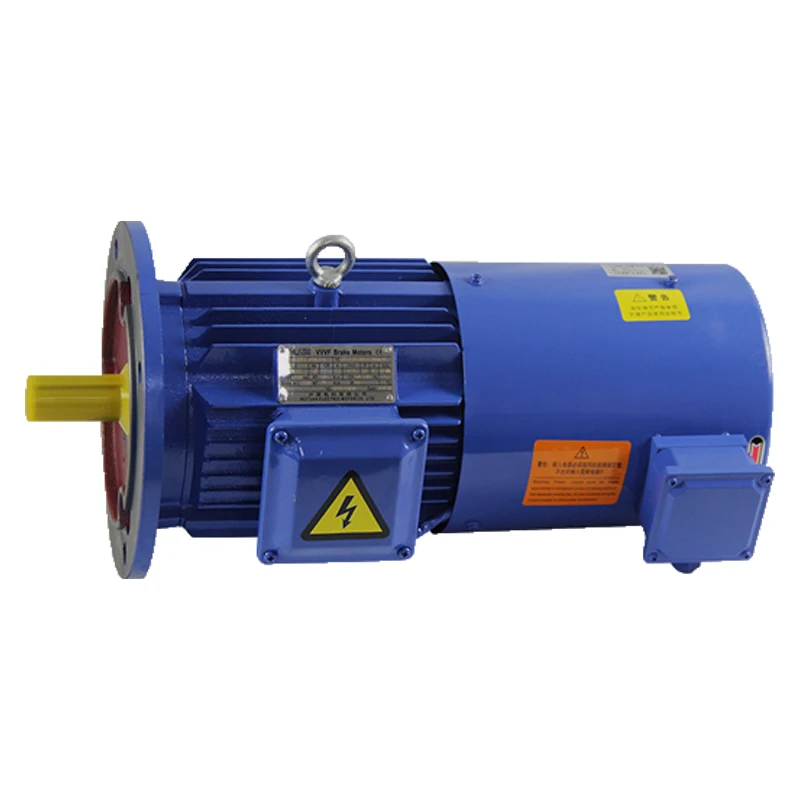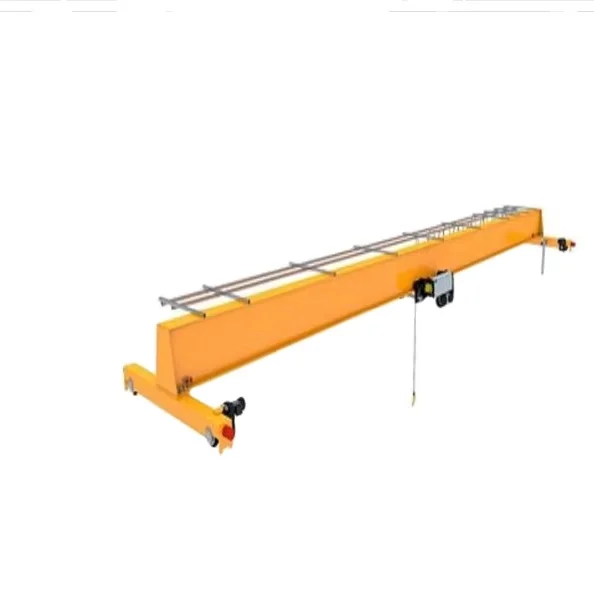
Overhead cranes are widely recognized as a fundamental element in the optimization of industrial workflows and material movement. These cranes are designed to operate in a defined area, moving along tracks that are either attached to the ceiling structure or supported by independent columns. The versatility of overhead cranes lies in their ability to handle various load types and sizes, making them suitable for diverse industrial environments. In a food processing plant, overhead cranes are used to move large bags of raw materials, such as grains and sugars, from storage areas to the processing lines. The cranes can lift these heavy bags with precision, ensuring a continuous supply of materials to the production process. This helps in maintaining a consistent production rate and reducing downtime. The bridge of an overhead crane is engineered to distribute the load evenly and withstand the stresses generated during lifting and movement. In a mining operation, where overhead cranes are used to lift and transport ore - filled containers, the bridge's strength and stability are crucial. The cranes can handle the extreme weights of the ore containers, moving them from the mining area to the processing or storage facilities. The trolley and hoist combination on an overhead crane enables multi - directional movement of the load. In a warehouse storing heavy machinery parts, the trolley can move along the bridge to reach the desired part, and the hoist can lift it for storage or retrieval. This flexibility in movement allows for efficient space utilization in the warehouse, as parts can be stored at higher levels and accessed easily when needed. Overhead cranes can be customized to meet specific industry requirements. For example, in a cleanroom environment in the semiconductor industry, overhead cranes can be designed with special materials and coatings to prevent contamination. These cranes can lift and position delicate semiconductor wafers and equipment with high precision, ensuring the quality of the manufacturing process. The safety features of overhead cranes have evolved to meet strict industry standards. Modern cranes are equipped with limit switches that prevent over - traveling, ensuring the crane stays within its designated operating area. In a chemical storage facility, where overhead cranes are used to move hazardous chemicals, these safety features are vital to prevent spills and accidents. Additionally, cranes can be fitted with anti - sway systems that reduce the swing of the load during movement, improving safety and accuracy. In conclusion, overhead cranes are a crucial asset in the industrial sector, providing efficient, versatile, and safe material handling solutions for a wide range of applications.
06
Jun
06
Jun
28
Jul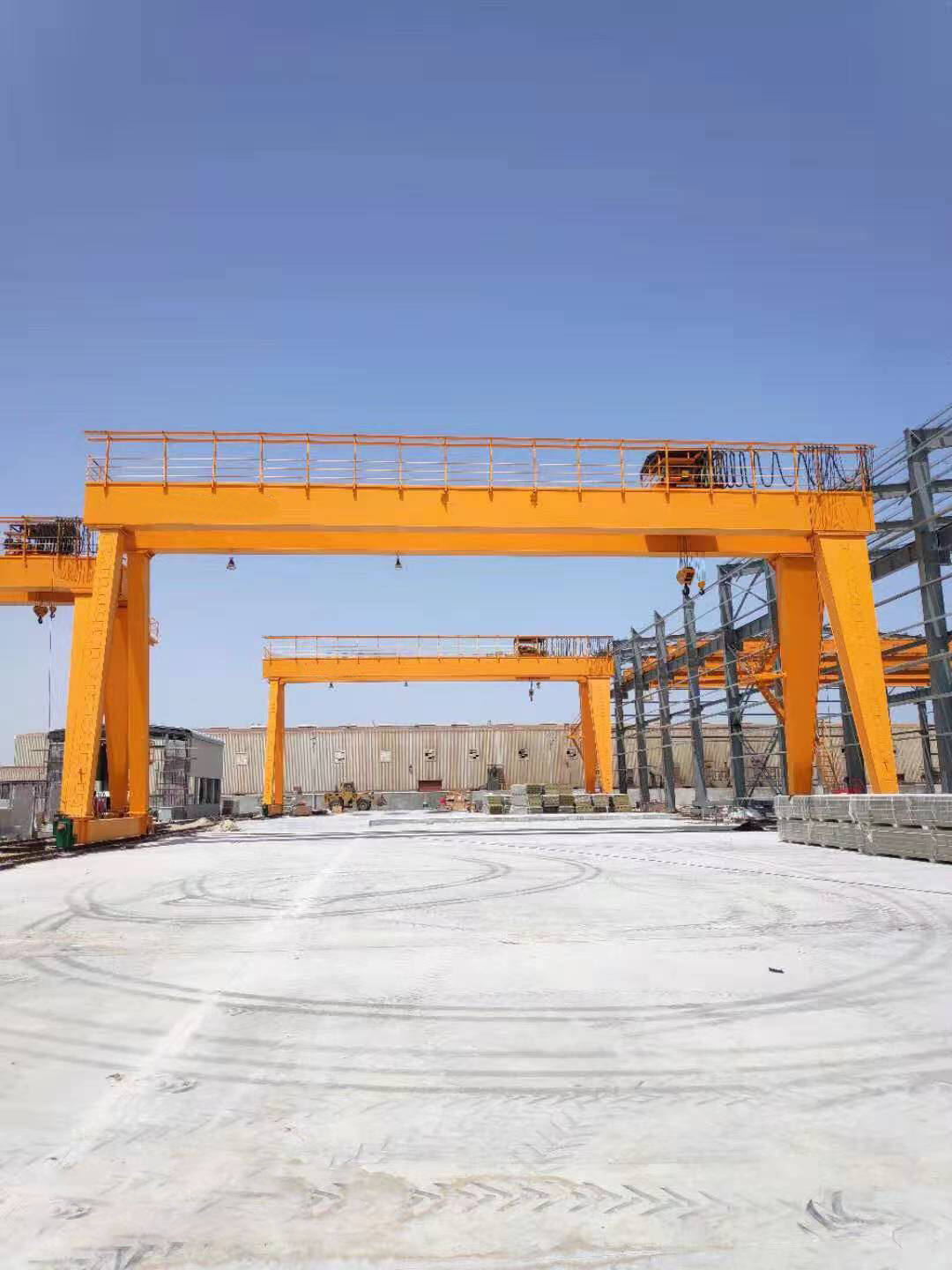

 EN
EN