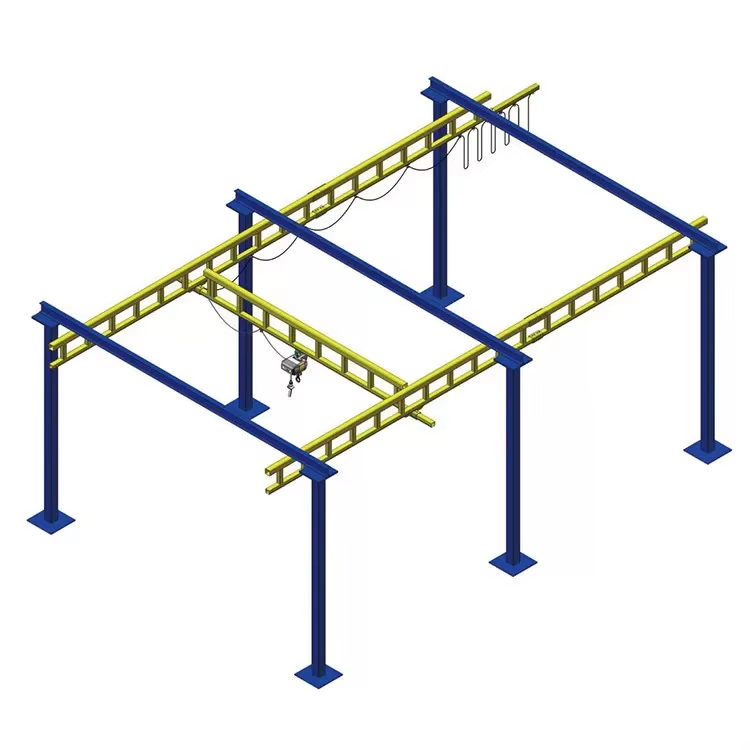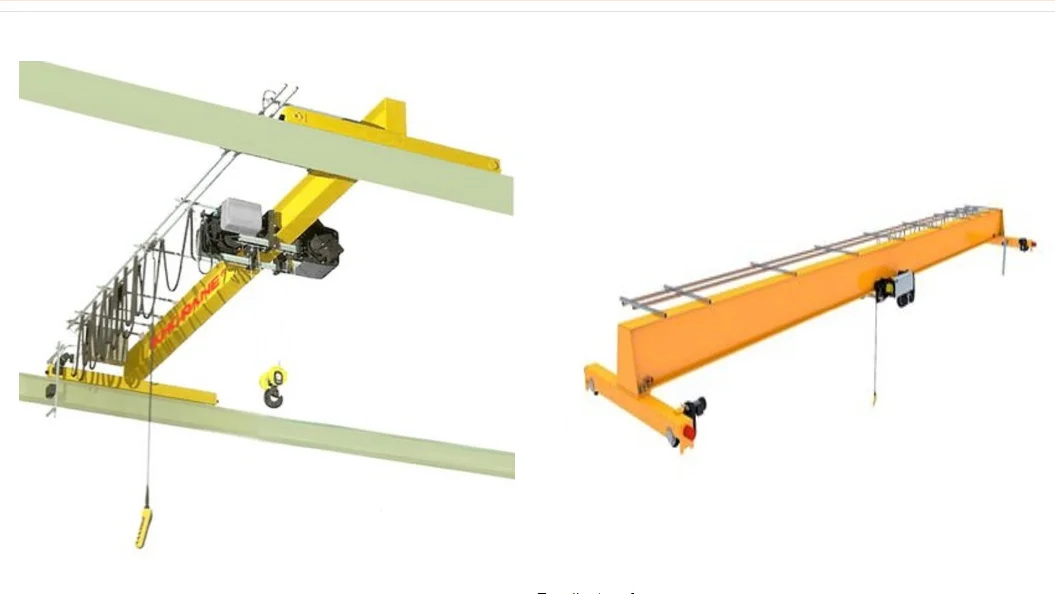
An overhead crane, also known as a bridge crane, is a vital piece of equipment in industrial and manufacturing settings. It operates on tracks mounted on the ceiling or elevated structure of a facility, enabling it to move horizontally along the length of the building. This type of crane is composed of several key components, including the bridge, which spans the width of the work area, the trolley that travels along the bridge, and the hoist that lifts and lowers loads. In a typical automotive manufacturing plant, overhead cranes are extensively used. For instance, during the assembly of car bodies, these cranes can precisely lift and position heavy metal frames onto the assembly line. Their ability to handle large and heavy loads with accuracy ensures a smooth production process. Moreover, in a steel mill, overhead cranes play a crucial role in moving raw materials like iron ore and finished products such as steel coils. The cranes can lift tons of materials at once, improving efficiency and reducing manual labor. The design of overhead cranes can vary based on the specific requirements of the application. Some are designed for high - speed operations to keep up with fast - paced production lines, while others are built for heavy - duty lifting in environments where extremely large and heavy objects need to be moved. The control systems of overhead cranes have also evolved over time. From traditional pendant controls to modern radio remote controls and even automated systems, these advancements have enhanced the safety and ease of operation. In a large warehouse, an overhead crane with an automated control system can be programmed to pick and place goods on high shelves, reducing the risk of human error and increasing storage capacity utilization. Additionally, the maintenance of overhead cranes is of utmost importance. Regular inspections and preventive maintenance ensure that the crane operates safely and efficiently. For example, checking the wear and tear of wires, gears, and brakes can prevent unexpected breakdowns that could disrupt production. In a shipyard, where overhead cranes are used to lift and position large ship components, any downtime due to crane failure can lead to significant delays in the ship - building process. Overall, overhead cranes are indispensable in various industries, providing a reliable and efficient means of moving heavy loads within a defined workspace.

 EN
EN