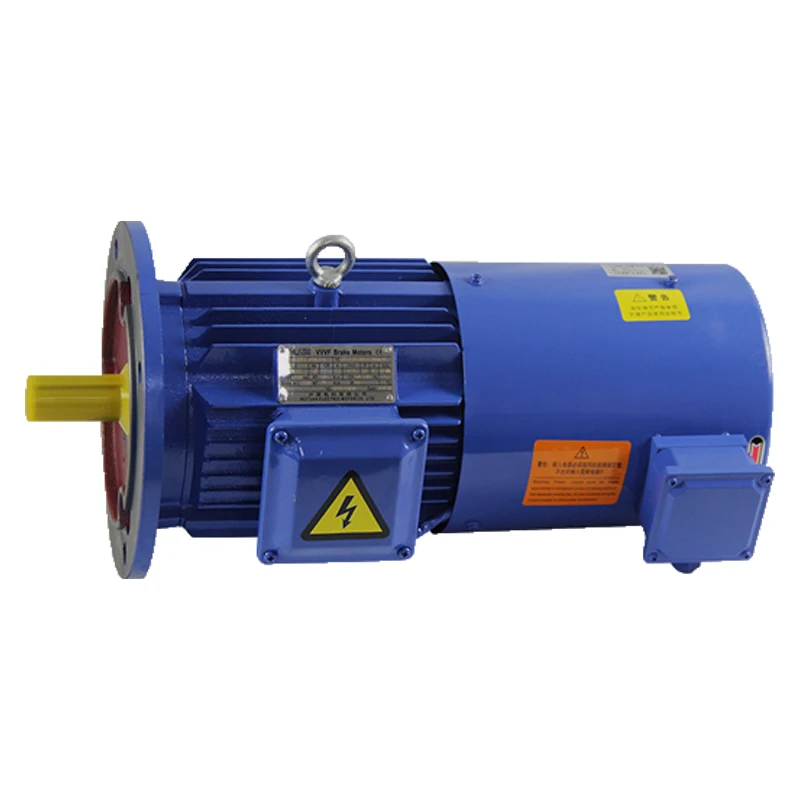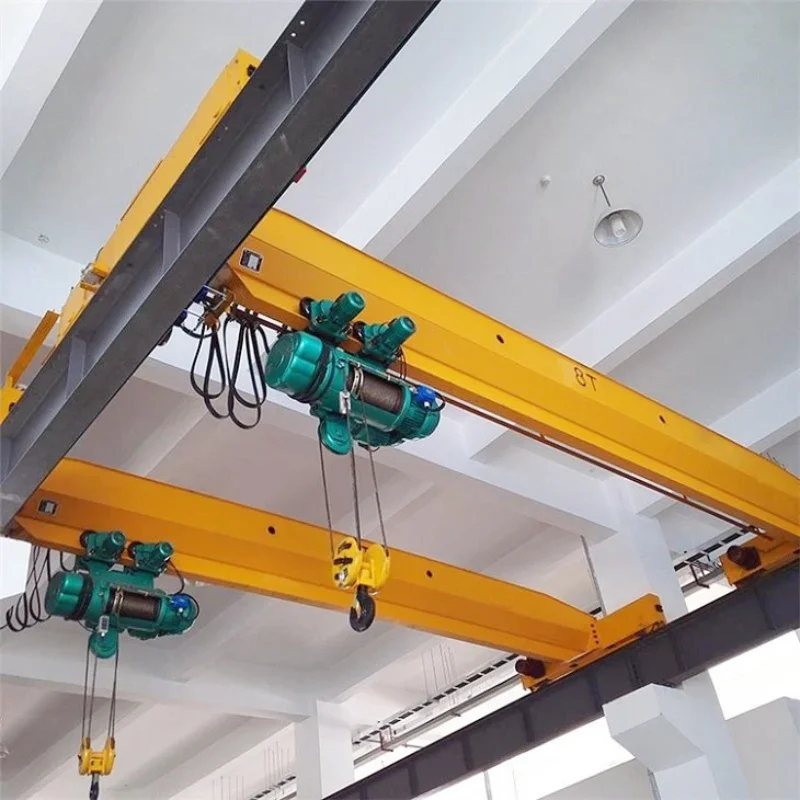
The overhead crane stands as a symbol of industrial strength and efficiency in material handling operations. It is a type of crane that moves along a horizontal path, supported by beams or columns, and is capable of lifting and transporting heavy loads within a defined workspace. In a large - scale manufacturing facility for aerospace components, overhead cranes play a pivotal role. These cranes can lift and position large aircraft parts, such as wings and fuselage sections, with high precision. The ability to move these heavy and delicate parts accurately is essential for the assembly of aircraft, ensuring that each component is placed in the correct position for a seamless fit. The design of an overhead crane takes into account various factors, including the load capacity, span, and lifting height. In a port terminal, where overhead cranes are used to load and unload containers from ships, the cranes need to have a high load capacity to handle the weight of the full containers. The span of the crane should be sufficient to cover the width of the ship's deck, and the lifting height should allow for the containers to be stacked on top of each other. The trolley on an overhead crane can be equipped with different types of hoists, depending on the application. For example, in a waste - treatment plant, where overhead cranes are used to move large bins of waste, a chain hoist may be more suitable due to its durability and ability to handle rough conditions. The chain hoist can lift the heavy waste bins and move them to the appropriate processing areas. Overhead cranes can also be integrated with automation systems to improve efficiency. In a high - volume distribution center, automated overhead cranes can be programmed to pick and place goods on conveyor belts or into storage racks. This reduces the need for manual labor and speeds up the order - fulfillment process. The cranes can operate continuously, 24 hours a day, to meet the high demand for product distribution. The maintenance of overhead cranes requires specialized knowledge and skills. Regular inspections of the crane's structure, electrical components, and mechanical parts are necessary to ensure safe operation. In a power generation plant, where overhead cranes are used to handle heavy turbine components, any malfunction of the crane could lead to significant downtime and costly repairs. Therefore, a preventive maintenance program is implemented to identify and address potential issues before they cause problems. In summary, overhead cranes are an integral part of industrial operations, providing reliable and efficient material handling solutions for a variety of industries.
06
Jun
06
Jun
28
Jul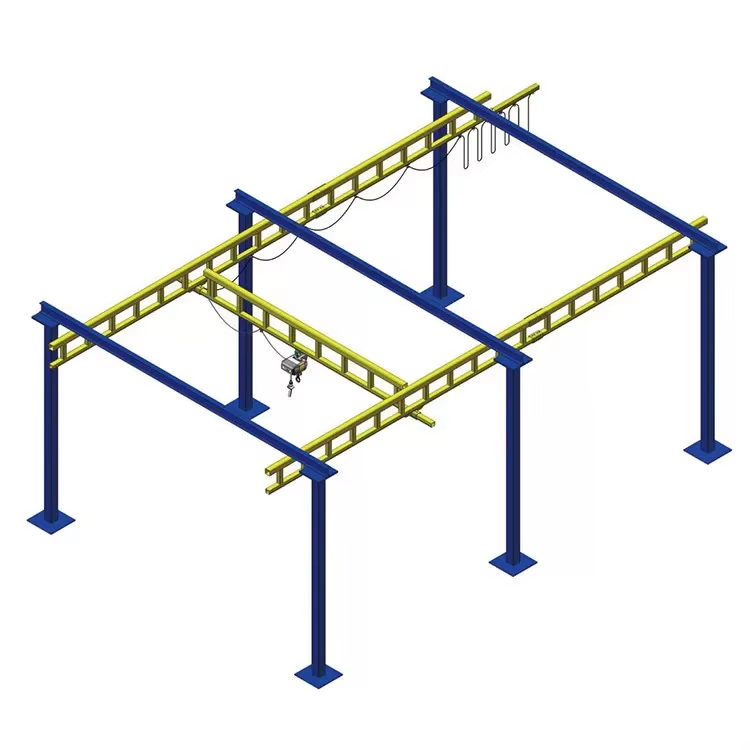
06
Aug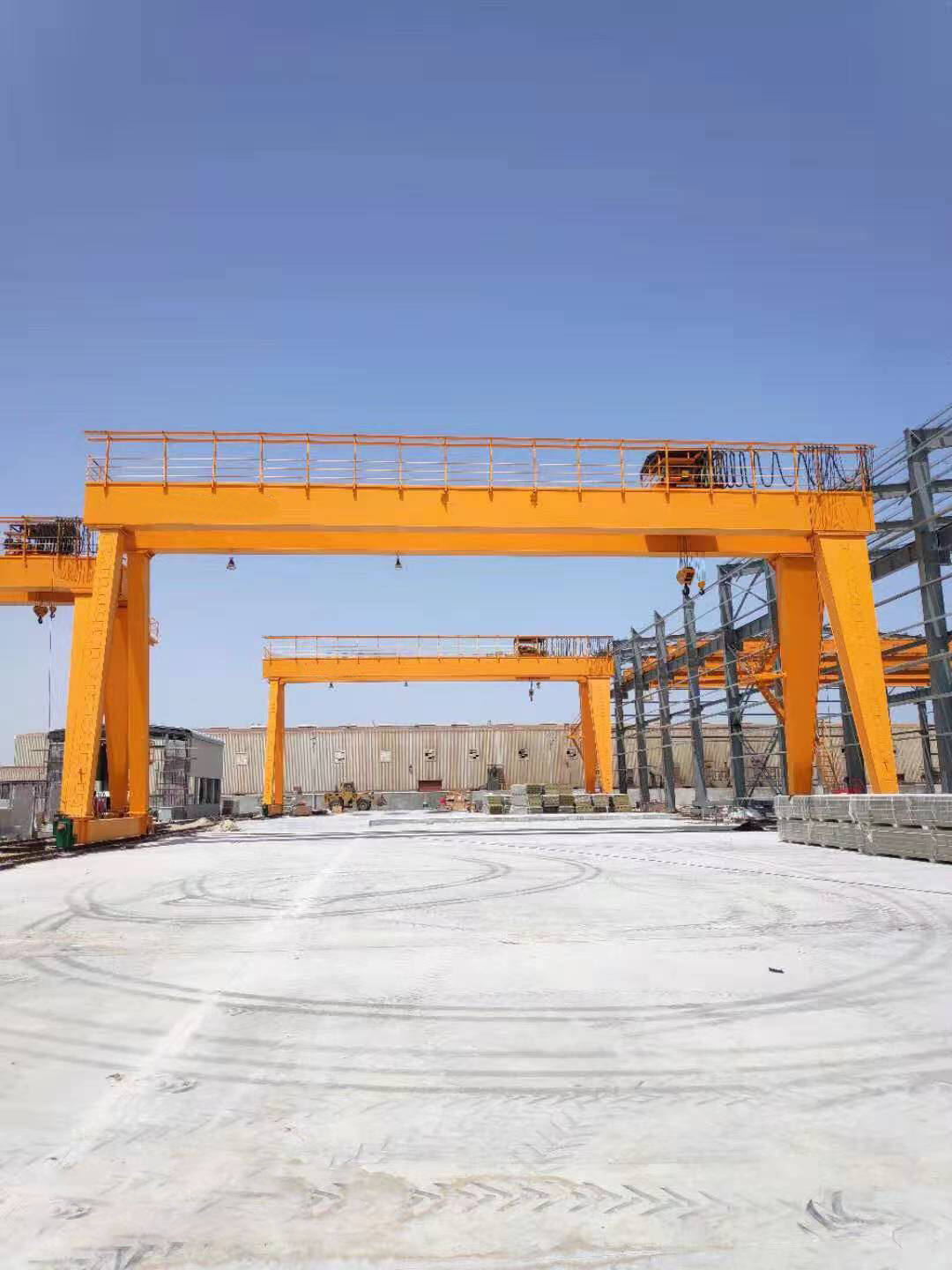

 EN
EN