EOT Gantry Crane Solutions for Heavy-Duty Industrial Lifting [Up to 100t]

Henan Yixing Lifting Machinery Co., Ltd. is a professional supplier of material handling equipment.

Overhead Crane: Overhead Rail-Mounted Lifting Solution

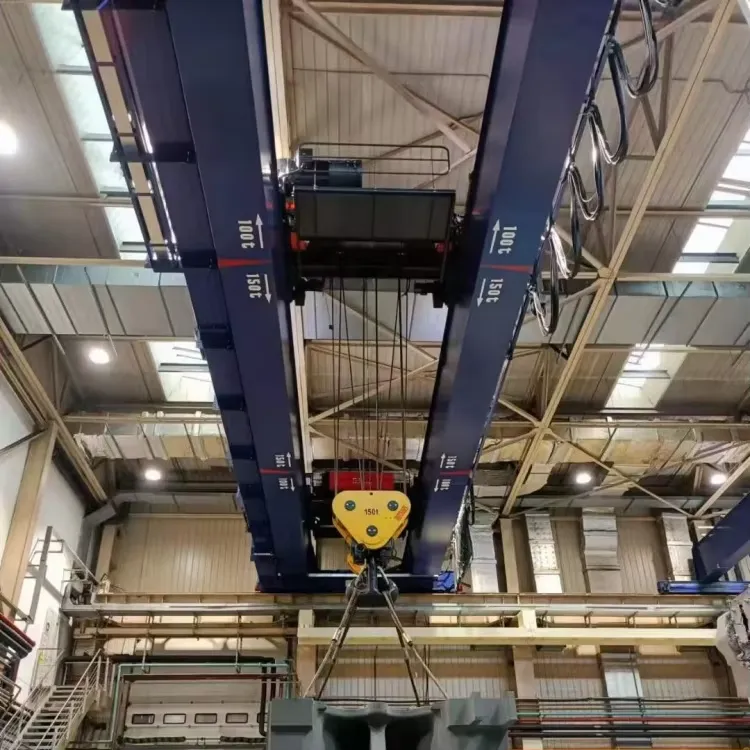
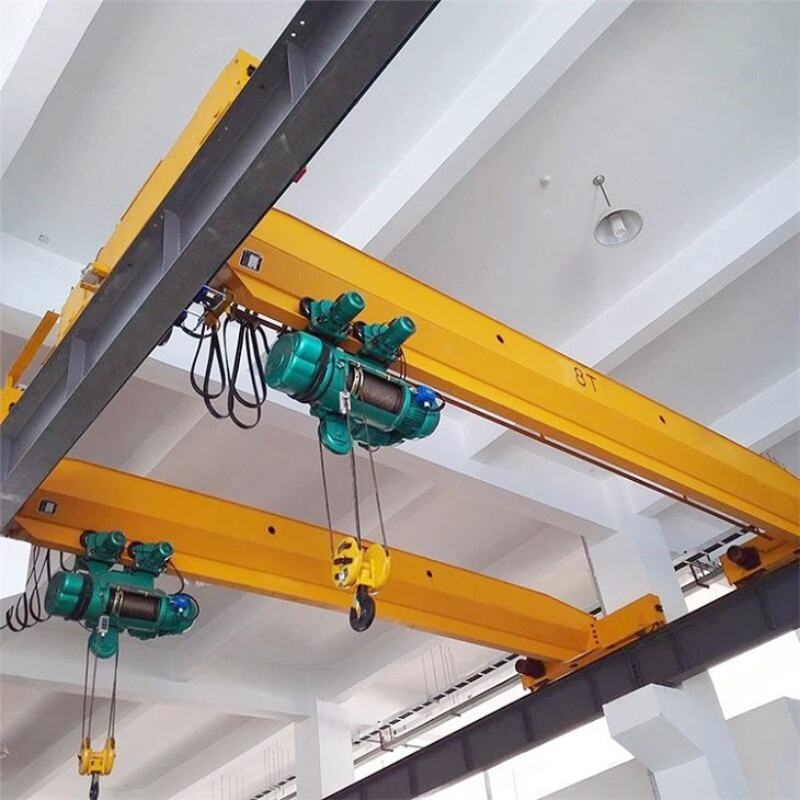
Also known as a bridge crane or "tian che," an overhead crane operates on rails installed at the top of industrial buildings like factories or warehouses. Comprising a bridge frame, cart running mechanism, trolley running mechanism, and lifting mechanism, it enables material hoisting within a specified range, serving as a cornerstone in industrial production and logistics for its stability and efficiency.
Get A Quote

Advantages

Heavy-Duty Rail-Mounted Lifting

Provides continuous operation on fixed overhead rails, ideal for large factories/warehouses. Capable of handling repetitive heavy loads (up to 600 tons per factory specs), enhancing production line efficiency in manufacturing facilities.

Multi-Axis Movement Flexibility

Combines bridge/trolley travel with hoisting motion for 3D material handling. Enables precise positioning in large work zones, reducing manual labor in logistics and heavy industry.

Durable Construction & Low Vibration

Built with welded steel girders and anti-sway control systems, ensuring stability during high-speed operation. Reduces product damage risks when transporting sensitive equipment or bulk materials.

Related products

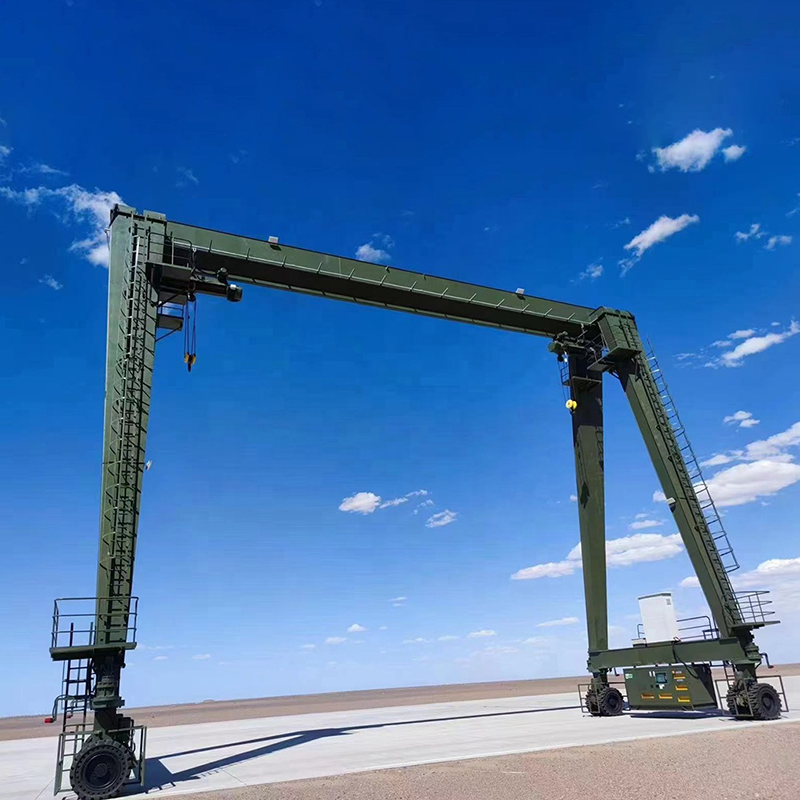
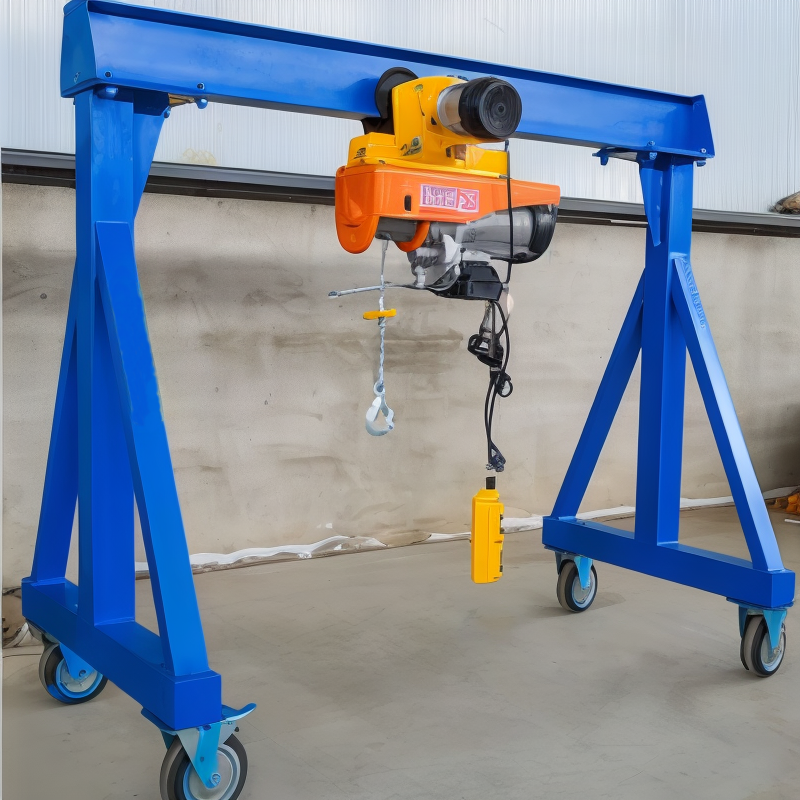
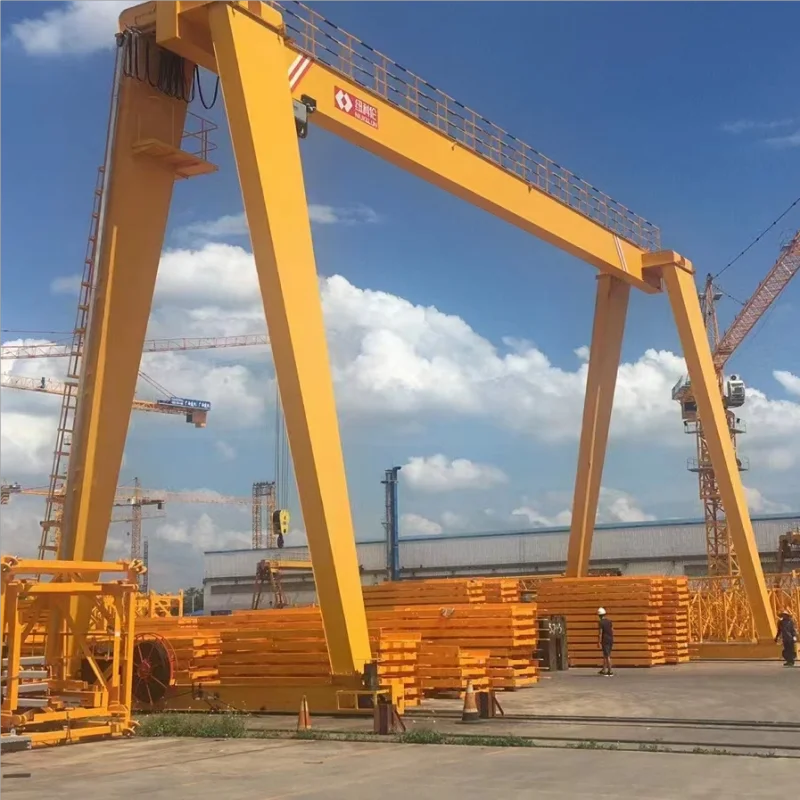
The EOT (Electric Overhead Traveling) gantry crane by Henan Yixing Lifting Machinery Co., Ltd. is a heavy - duty and highly efficient lifting solution designed to meet the rigorous demands of industrial material handling. This type of gantry crane features a sturdy gantry structure that supports the overhead bridge and trolley, allowing for the movement of heavy loads both longitudinally along the gantry rails and transversely across the bridge. The EOT gantry crane is powered by an electric drive system, which offers smooth, precise, and energy - efficient operation. The crane's lifting capacity can range from a few tons to several hundred tons, making it suitable for a wide variety of applications, including shipyards, steel mills, construction sites, and large warehouses. One of the key features of this EOT gantry crane is its high - level of automation. Equipped with advanced control systems, it can be operated manually from a cab mounted on the crane or remotely using a radio - control device. The automated features include functions such as automatic positioning, anti - sway control, and load - weighing systems, which enhance the safety and efficiency of the lifting operations. The crane's gantry structure is constructed from high - strength steel, ensuring excellent stability and load - bearing capacity. The gantry legs are designed to move smoothly along the rails, providing reliable and consistent travel. The bridge and trolley are also built with precision - engineered components, allowing for accurate and controlled movement of the load. Safety is a top priority in the design of the EOT gantry crane. It is equipped with multiple safety devices, including limit switches, emergency stop buttons, overload protection systems, and anti - collision devices. These safety features work together to prevent accidents and ensure the protection of both the equipment and the operators. Henan Yixing Lifting Machinery Co., Ltd. also offers customization options for the EOT gantry crane. Customers can specify requirements such as the span of the gantry, the lifting height, the speed of operation, and the type of control system to meet their specific application needs. The company's team of experienced engineers will work closely with customers to design and manufacture a crane that fits their exact requirements. With its combination of heavy - duty performance, advanced automation, and high - level safety features, the EOT gantry crane from Henan Yixing Lifting Machinery Co., Ltd. is a reliable and efficient solution for large - scale material handling in various industrial sectors.

Frequently Asked Questions

Where are overhead cranes mainly used?

Overhead cranes are mainly used in industrial production and logistics fields. In manufacturing plants, they are essential for moving raw materials, components, and finished products within the facility, facilitating assembly lines and production processes. In logistics centers and warehouses, overhead cranes help with loading and unloading goods from trucks, trains, or storage racks, improving the efficiency of material handling and inventory management.
An overhead crane consists of several main components. The bridge frame is the main structure that spans the workspace. The bridge traveling mechanism enables the bridge to move horizontally along the tracks on the building's supporting structures. The trolley traveling mechanism moves the hoisting mechanism along the bridge. The hoisting mechanism, which includes the hoist, drum, and lifting device, is responsible for lifting and lowering the load. Additionally, there are control systems, safety devices, and electrical components for operation and safety.
The working range of an overhead crane is determined by the length of the runway beams (where the bridge moves) and the travel range of the trolley on the bridge. The length of the runway beams defines the horizontal movement range of the crane along the building, while the trolley's movement on the bridge allows for lateral movement. Together, these factors determine the area within which the crane can lift and transport loads, and it can be customized according to the specific needs of the industrial facility.
Single - girder overhead cranes have a single main beam, making them simpler in structure, lighter in weight, and more cost - effective. They are suitable for light - to - medium - duty applications with lower load - capacity requirements and smaller spans. Double - girder overhead cranes, with two main beams, offer higher load - bearing capacities, greater stability, and can handle heavier loads and larger spans. They are typically used in heavy - duty industrial environments, such as large factories and ports.

Related Articles

The overhead traveling crane in our company is simply amazing!

06

Jun

The overhead traveling crane in our company is simply amazing!

View More
Double Girder Crane: Powerhouse for Heavy - Duty Lifting Tasks

25

Apr

Double Girder Crane: Powerhouse for Heavy - Duty Lifting Tasks

What is a Double Girder Crane? Core Components and Design Double girder cranes have two main girders that give them extra strength and better stability than their single girder counterparts. These cranes can handle much heavier loads because of this...
View More
New Technological Innovations in Overhead Crane Design

25

Apr

New Technological Innovations in Overhead Crane Design

Synthetic Rope Advancements in Overhead Crane Design Breaking Strength: Synthetic vs Steel Rope Comparisons In recent years, synthetic ropes have become a serious contender against traditional steel cables for overhead crane systems, mainly because...
View More

Customer Reviews

Catherine Harris
Efficient and Durable Crane

This overhead crane has proven to be a durable and efficient solution for our warehouse. It operates quietly and smoothly, reducing the noise level in our facility. The installation process was seamless, and the after-sales service provided by the supplier was excellent. It has increased our productivity and reduced labor costs.

Susan Clark
Reliable and Productivity-Boosting

The overhead crane has been a reliable workhorse since its installation. It can handle a variety of materials and loads, improving our production efficiency. The safety features are comprehensive, giving us confidence in its operation. It's a high-quality product that meets all our expectations.

Get a Free Quote

Our representative will contact you soon.
Email
Mobile/WhatsApp
Name
Company Name
Message
0/1000
Scalable Design for Future Expansion

Scalable Design for Future Expansion

Modular components allow easy upgrades (e.g., higher lifting capacity, longer spans) as business needs grow. Suitable for enterprises planning long-term production scaling without full system replacement.